
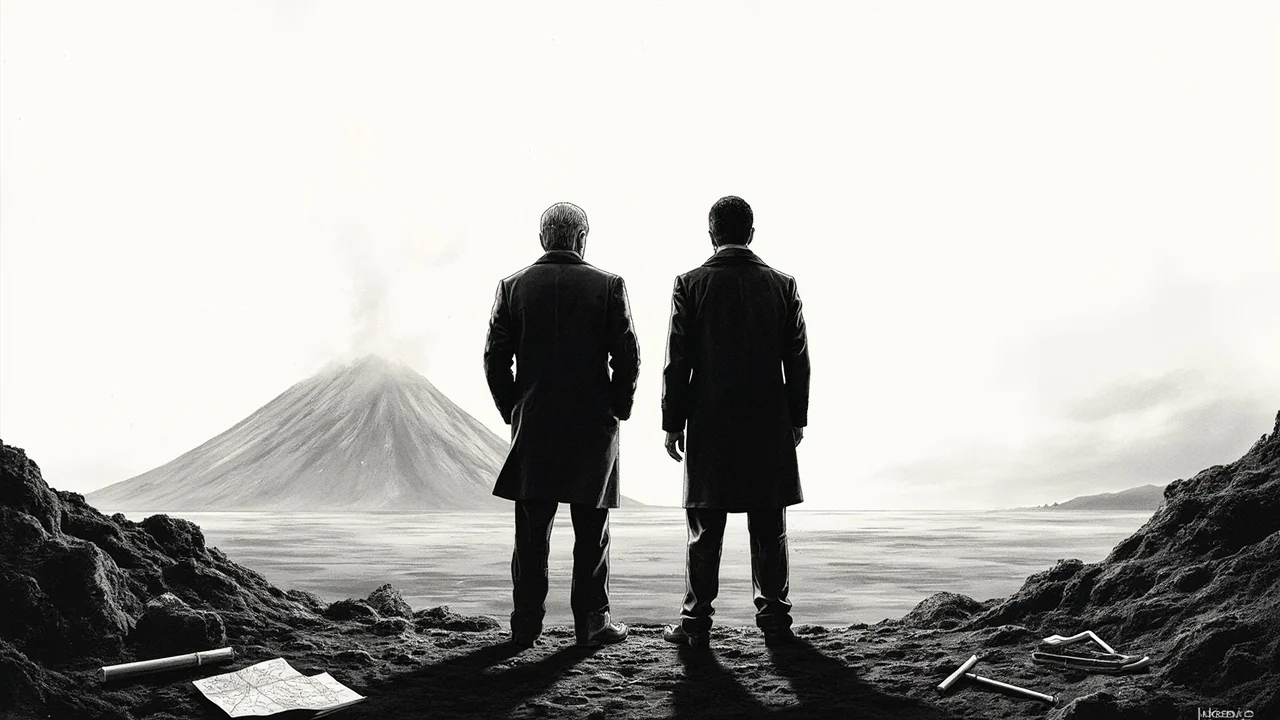
Iceland's civil protection agency has not invited two leading volcanologists to its scientific council meetings for almost two years. Þorvaldur Þórðarson, a professor in volcanology, publicly stated that he and colleague Ármann Höskuldsson have been excluded due to their media expressions. This revelation points to a deeper issue of personal conflicts influencing public safety decisions. The exclusions occurred during a critical period of volcanic activity on the Reykjanes Peninsula, raising concerns about Iceland's preparedness.
The Exclusion and Its Causes
Þorvaldur Þórðarson explained in a radio interview that both he and Ármann Höskuldsson stopped receiving invitations to the Civil Protection's scientific council meetings around two years ago. He implied that their outspoken comments in the media led to this exclusion. Þorvaldur emphasized that public institutions must utilize all available expertise, regardless of personal disagreements. "We need to be more open in our discourse," he said. "It doesn't seem good if public institutions and official batteries are not using all the knowledge in the country because of some personal conflict between individuals."
Ármann Höskuldsson confirmed that neither he nor Þorvaldur had been invited for a long time. He noted a shift in the council's format about three years ago, from discussion forums among scientists to presentation meetings for specific groups' results. For him, the core issue is the loss of scholarly debate and data interpretation on these forums. "Unfortunately, there is a bit of a culture of silence and exclusion in our system," Ármann said.
Impact on Volcanic Response
This exclusion comes amid ongoing volcanic eruptions on the Reykjanes Peninsula, a region vital for Iceland's geothermal energy and near the capital, Reykjavik. The scientific council advises on civil protection measures, making expert input crucial for public safety. Þorvaldur highlighted his extensive international experience, having worked in Hawaii, Scotland, Australia, and New Zealand. He argued that diverse perspectives are essential for effective crisis management. "We must be both bigger and better than that," he stated. "We must be more professional than that. We need to be able to put the nation's interests first."
Ármann pointed out that the exclusion limits the pool of knowledge available for decision-making. He has experience from many places abroad in dealing with volcanic hazards and eruptions, offering different insights from those who have only worked in Iceland. He believed such knowledge could occasionally benefit Iceland's response strategies. The lack of inclusive debate could hinder optimal responses to the Reykjanes eruptions, affecting evacuation plans and risk assessments for communities in areas like Grindavík and the broader Suðurnes region.
Calls for Reform and Independence
In response to the situation, Þorvaldur proposed establishing an independent group to review the response to the Reykjanes volcanic period. This group would operate separately from the existing council, ensuring unbiased evaluation. He stressed the need for professionalism and prioritizing national interests over personal conflicts. This call aligns with broader Nordic cooperation principles, where independent scientific review is common in environmental and safety matters. Iceland's Althing parliament has previously debated the efficiency of civil protection agencies, and this issue may reignite those discussions.
Þorvaldur's proposal aims to restore confidence in Iceland's volcanic hazard management. By involving an external panel, the process could become more transparent and inclusive. This approach mirrors best practices from other Nordic countries, which often use independent audits for crisis responses. The Reykjanes eruptions have already disrupted local fishing industries and geothermal plants, making robust scientific advice more critical than ever.
Broader Implications for Icelandic Science
The exclusion of these volcanologists reflects a potential systemic issue within Iceland's public institutions. Ármann's observation about the shift from discussion to presentation meetings suggests a move away from collaborative science. This could stifle innovation and critical thinking in hazard assessment. In a country prone to volcanic activity, such dynamics might compromise safety protocols. The civil protection agency's reliance on a limited group of scientists may overlook alternative viewpoints that could enhance preparedness.
Þorvaldur's international experience brings a comparative perspective, noting that other countries actively seek diverse expert input during volcanic crises. For instance, in New Zealand or Hawaii, multi-disciplinary teams often debate data openly to refine predictions. Iceland's approach, if insular, could lag behind global standards. This situation also touches on political dimensions, as the civil protection agency operates under Iceland's Ministry of Justice, and its decisions can influence policy in Reykjavik and beyond.