
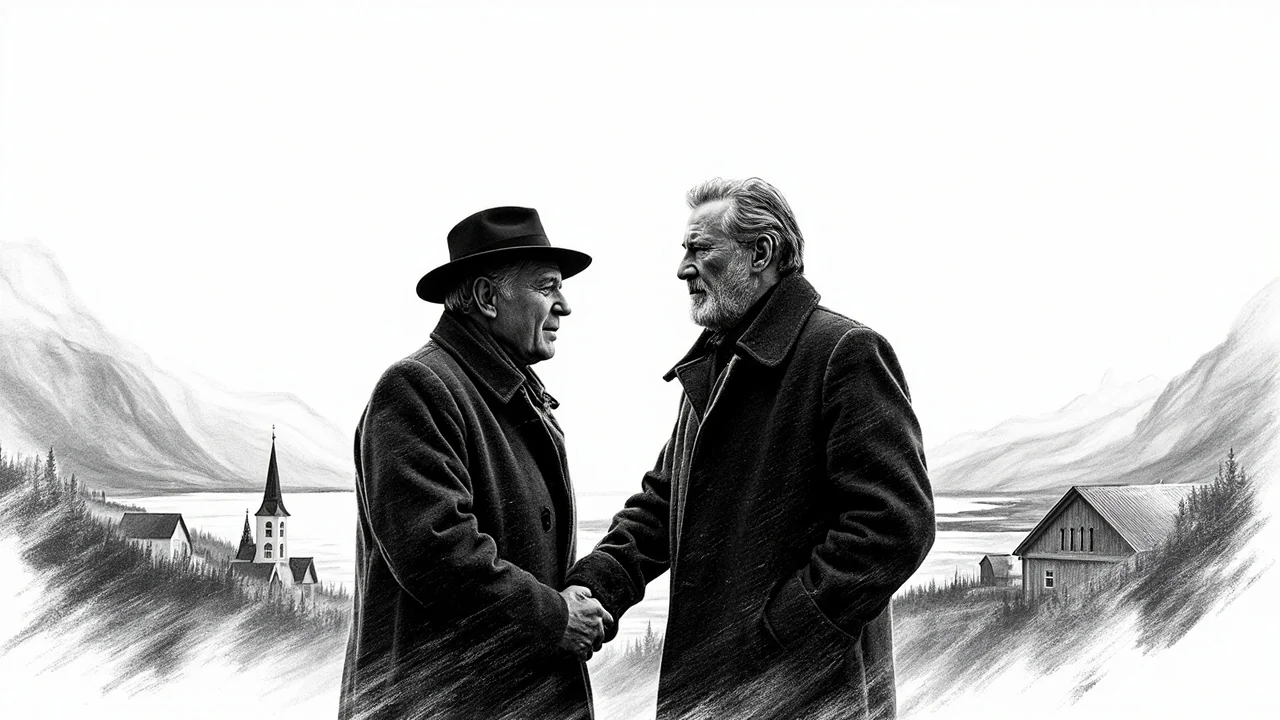
Iceland’s ruling Independence Party has averted a public feud in its key northern stronghold. Two rival politicians in Akureyri have formed an unexpected alliance, shelving personal ambition for party unity ahead of critical municipal elections.
Former MP Berglind Ósk Guðmundsdóttir and sitting party chairman Heimir Örn Árnason announced their pact on Facebook. Both had previously sought the top spot on the party's Akureyri list. Now, Berglind will support Heimir for the second list position, and Heimir will back Berglind for the coveted lead candidate role.
“This decision is not taken lightly but is based on a shared vision of what matters most to Akureyri,” their joint statement said. The move prevents a divisive primary battle within a party chapter that has historically been a bedrock of support for the national leadership in Reykjavik.
A Strategic Compromise for Stability
The alliance represents a classic Icelandic political compromise, where internal competition is managed behind closed doors to present a united front. Akureyri, Iceland's 'Capital of the North', is a critical municipality for the Independence Party. Losing ground here would signal wider vulnerability. The fishing and tourism-dependent region faces specific challenges, from harbor modernization to managing seasonal employment shifts, that require coherent political representation.
“We both believe in the value of team cohesion,” the politicians stated. “No single individual is bigger than the mission or the party itself. Conversely, it is the interaction of people with different experiences, strengths, and backgrounds that creates a strong collective force.”
The Roots of the Rivalry
The potential clash stemmed from both figures having strong, legitimate claims to leadership. Heimir Örn Árnason is the incumbent party chairman for Akureyri and the current chair of the town council, giving him deep roots in the day-to-day governance of the municipality. His experience with local budgets, infrastructure projects, and council dynamics is a significant asset.
Berglind Ósk Guðmundsdóttir brings national parliamentary experience from her time as an MP in the Althing. This provides a broader perspective on legislation and state funding that can benefit a municipality like Akureyri. Her profile connects local concerns directly to the national political arena in Reykjavik.
The agreement to combine these profiles—renewal and experience, as they put it—aims to create a ticket that appeals to both traditional party loyalists and voters seeking fresh impetus.
The Nordic Model of Party Discipline
This type of pre-emptive alliance is common in Nordic politics, where party unity often takes precedence over public internal contests. In Sweden or Denmark, similar arrangements are frequently made to avoid draining party resources and fracturing the voter base before an election. For the Independence Party, maintaining a solid bloc in Akureyri is crucial not just for local control but for morale and momentum nationwide.
The statement explicitly framed the decision within this cooperative ideology. “When trust prevails and teamwork is held as a guiding light, decisions become better and the results benefit society,” they wrote. This rhetoric aligns closely with the Nordic political principle of 'samarbete' or cooperation, even when it requires setting aside personal ambition.
A Test for National Leadership
While local, this quiet resolution is likely viewed with relief by the Independence Party's national leadership. A public, bitter fight in a major town like Akureyri would have created unwelcome headlines and diverted attention from the government's national agenda. It would have also provided ammunition for the Left-Green Movement and other opposition parties seeking to portray the ruling party as divided.
The successful brokering of this deal demonstrates the underlying discipline that has kept the Independence Party as a dominant force in Icelandic politics for decades. It shows a mechanism for managing succession and renewal without public bloodletting.
The Road to the Election
The coming weeks will test the strength of this alliance as the candidates campaign together. They must now sell their combined vision to the Akureyri electorate, convincing voters that their pragmatic compromise translates into effective governance. The real measure of success will be on election day, not just in votes won, but in whether the party emerges as a cohesive force ready to govern Iceland's second-largest urban center.
In a political landscape often focused on Reykjavik, this northern truce is a reminder that Iceland's governance is built in its communities. The decision in Akureyri may lack drama, but it underscores the pragmatic calculations that keep the wheels of Nordic politics turning.