
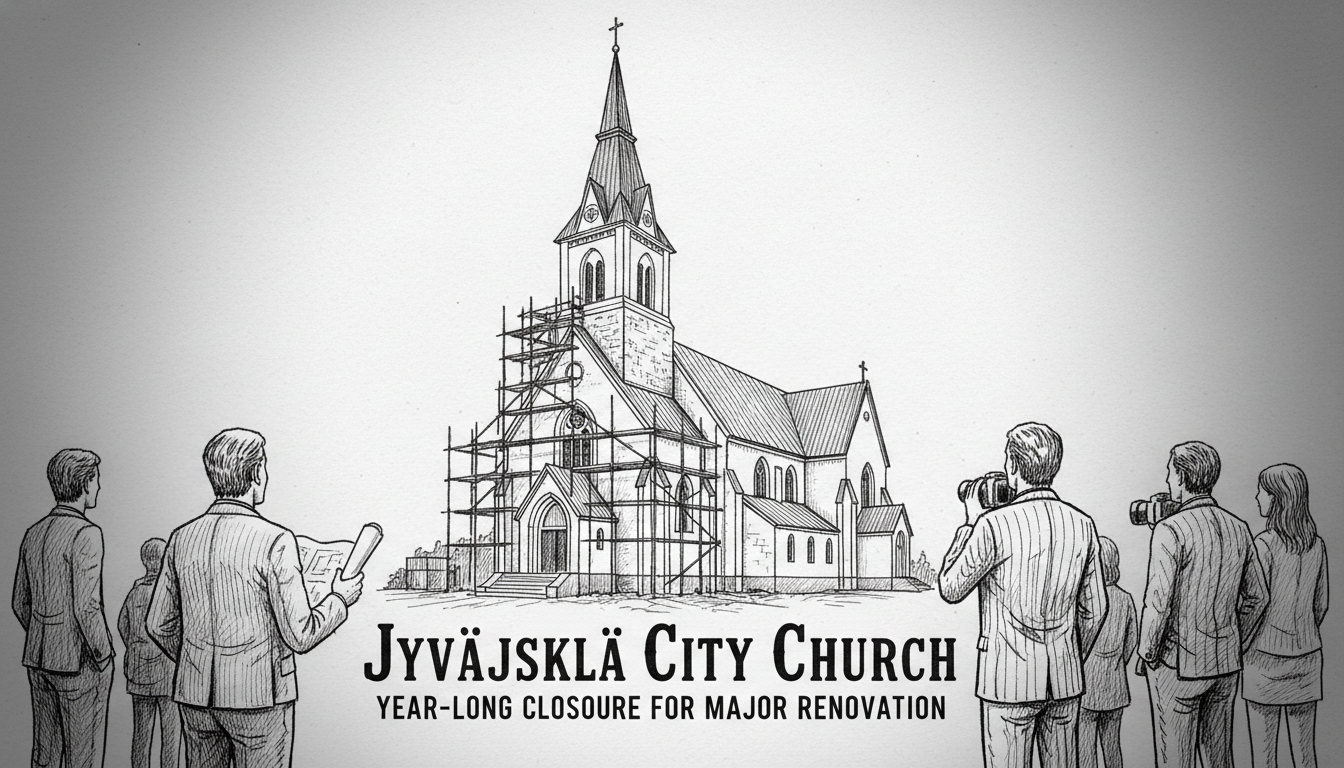
The historic Jyväskylä City Church could close its doors for approximately one year starting in early August. This potential closure depends on a crucial vote by the local parish council. The council will decide whether to approve a comprehensive renovation project for the landmark building. The church's financial director, Jussi Kaulio, offered a small consolation to couples planning their weddings. He stated that summer weddings for the next season can still be booked before the work begins. The parish council is considering a total budget allocation of 6.4 million euros for property and cemetery construction, repairs, and maintenance in the coming fiscal year. The complete renovation of the City Church alone carries an estimated price tag of five million euros. This substantial cost will be spread across several financial periods to manage the parish's budget.
The potential closure highlights a broader challenge facing Finland's cultural and religious infrastructure. Many churches across the country, especially older stone and brick structures, require extensive and costly maintenance. These projects often compete for funding with other parish responsibilities, including social services and community work. The Jyväskylä City Church is a central landmark in the city designed by renowned architect Eliel Saarinen. Its potential year-long closure would impact not only worshippers but also tourists and cultural event attendees. The church serves as a key venue for concerts, civic ceremonies, and community gatherings beyond regular religious services.
From a policy perspective, this situation intersects with discussions on state support for cultural heritage. While the Evangelical Lutheran Church of Finland is a registered religious community, it also maintains hundreds of historically significant buildings. The financial burden of preserving these structures falls primarily on parishioners through church taxes and donations. Some political parties have debated increasing public funding for the preservation of nationally important buildings, regardless of their religious affiliation. The decision in Jyväskylä will be closely watched by other municipalities facing similar dilemmas with their own aging church buildings.
The renovation plan must balance architectural preservation with modern requirements for accessibility and energy efficiency. Upgrades likely include improving heating systems, repairing the roof and masonry, and updating electrical wiring. Any changes to the interior or exterior must comply with strict heritage conservation guidelines. The project's multi-year financial plan reflects the careful fiscal management required by Finnish parish administrations. They must present balanced budgets to their elected councils, which include both clergy and lay members. The final vote will demonstrate how the parish prioritizes its physical assets against its spiritual and social mission. The outcome will set a precedent for other major renovation projects in Finnish dioceses.