
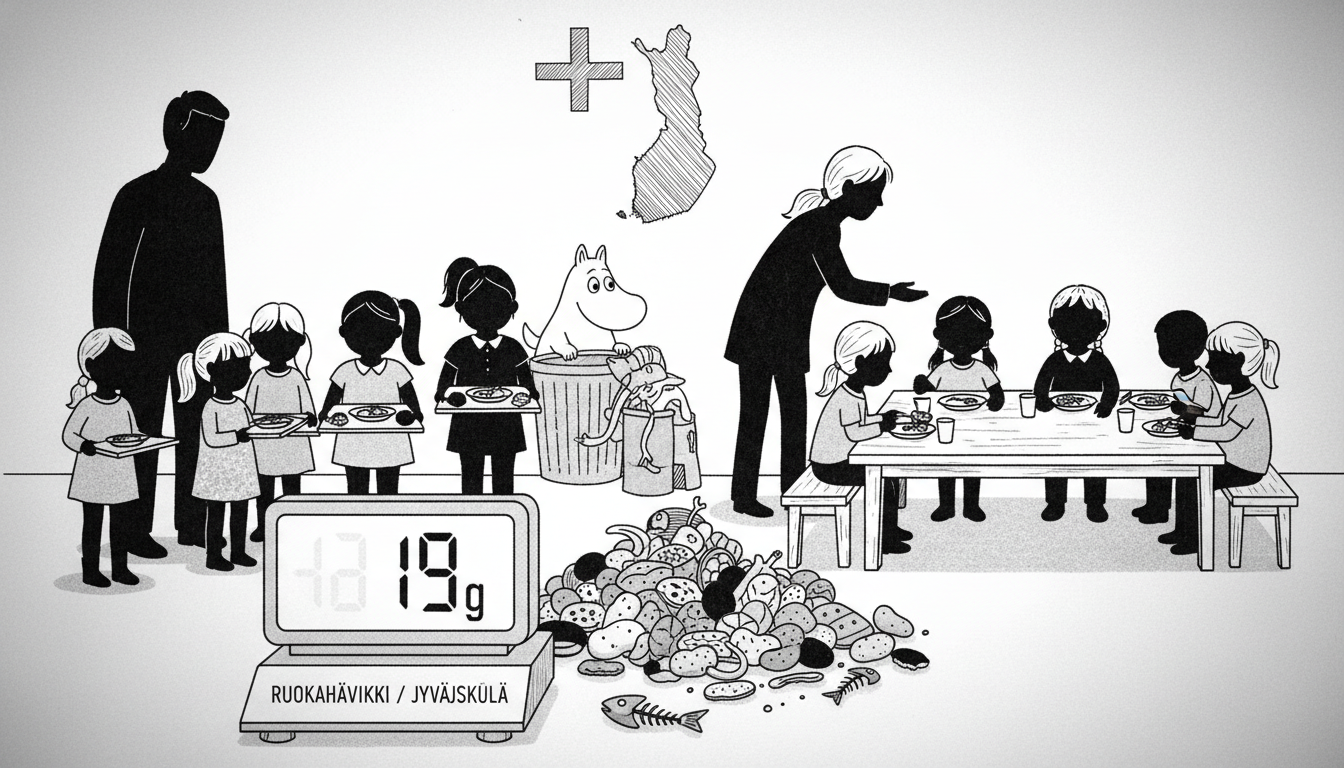
Food service provider Kylän Kattaus measured food waste in Jyväskylä schools and daycare centers during a two-week study in September and October. The research focused specifically on plate waste, meaning edible food that went uneaten. Fruit peels and napkins were separated into different containers and not counted as waste.
The monitoring period ran from September 22 to October 3 across all municipal educational facilities. Citywide plate waste averaged six percent across all schools and daycares, totaling about 19 grams per person served. Individual institutions showed wide variation, with waste amounts ranging from just 3 grams to 76 grams per person.
Daycare centers consistently produced more food waste than schools. This difference likely stems from adults portioning meals for children in daycare settings, while older students serve themselves in schools.
The study provides concrete data for Finland's ongoing efforts to reduce food waste in public institutions. Municipalities across the Nordic region have been implementing similar measurements as part of broader sustainability initiatives.
Why do daycare centers generate more waste than schools? The portion control by staff appears less effective than allowing children to choose their own serving sizes. This suggests self-service approaches might help reduce waste in younger age groups too.