
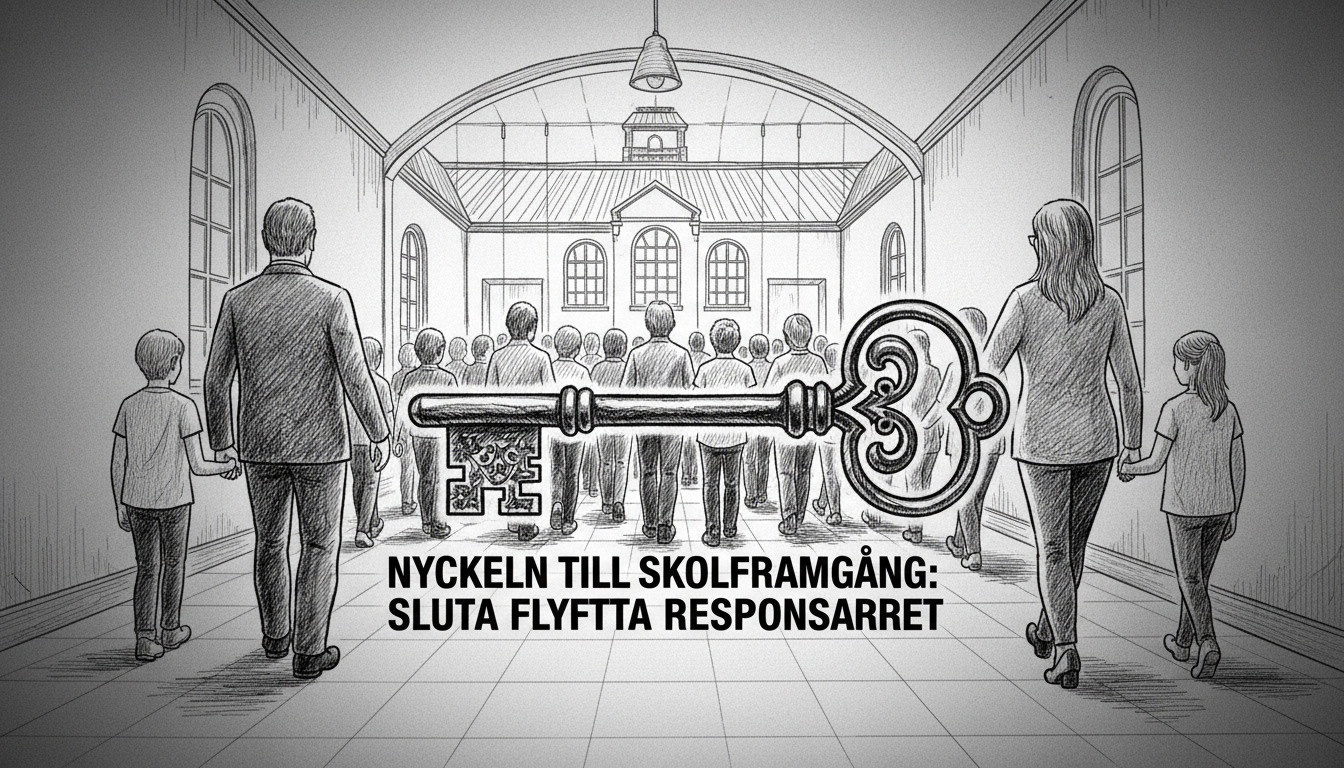
A Swedish school achieved what many thought impossible. Rosengård School transformed from the country's worst performer to a national model. The school serves Rosengård, a diverse neighborhood in Malmö known for socioeconomic challenges.
What unites successful schools across Sweden? Education officials report a dramatic demographic shift. Sweden will have 172,000 fewer elementary school children within five years. This decline will force approximately 700 schools to close nationwide.
Despite these concerning statistics, some schools show remarkable improvement. Rosengård School ranked as Sweden's worst school in 2011. Today, nearly 100% of its students qualify for upper secondary education.
What creates calm in middle school classrooms? Principal Cecilia Larsson-Ståhl shared her experience. "Freedom and personal responsibility" do not work well for early teenagers, she explained. Rosengård School implements clear structures and routines instead. Adults remain present during breaks and in cafeteria lines.
The school's approach demonstrates that consistent adult presence matters more than abstract concepts. This transformation occurred in one of Sweden's most challenging educational environments. The methods could help other struggling schools improve their results.
Education experts note that Sweden's school system faces multiple pressures. Declining student numbers combine with achievement gaps in immigrant-dense areas. Successful schools like Rosengård provide valuable lessons for the entire education sector.