
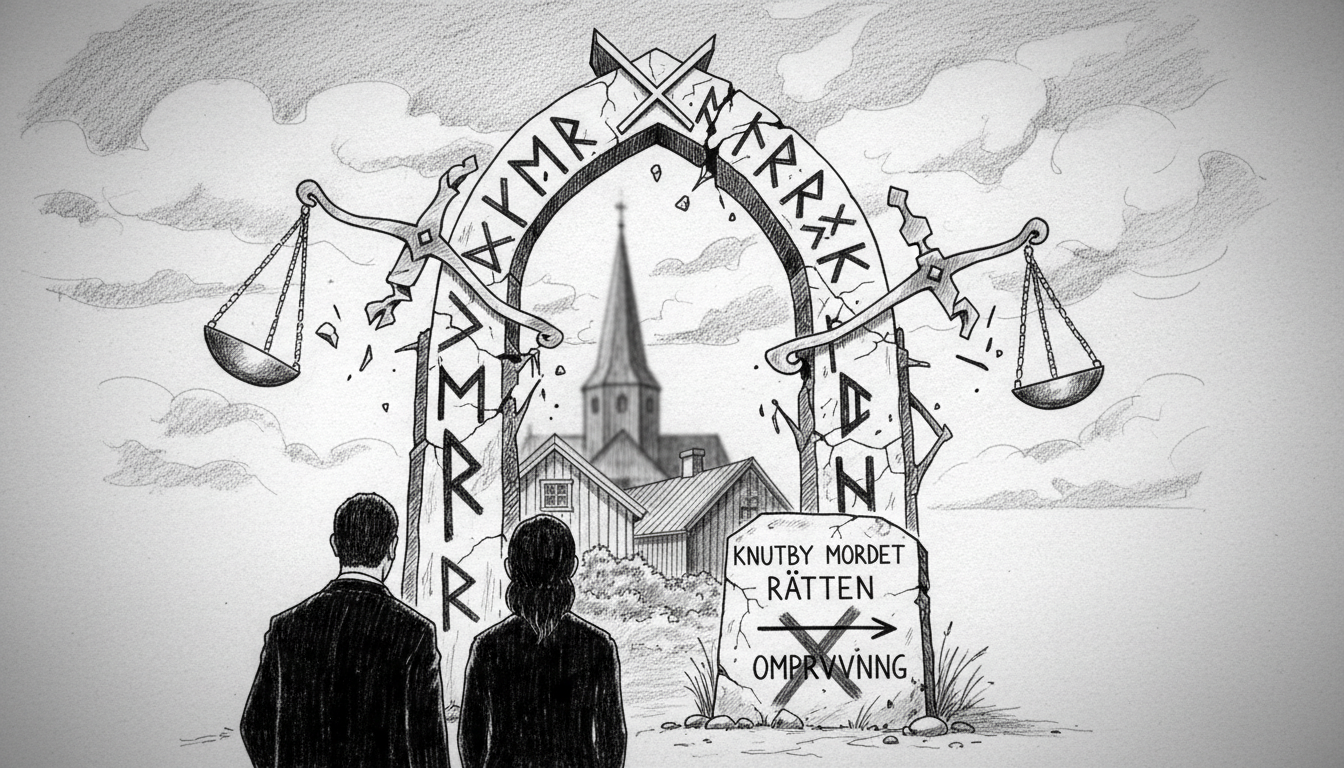
The Knutby murder case, one of Sweden's most notorious crimes, has returned to legal spotlight as lawyers seek to overturn the conviction. Attorney Johan Eriksson plans to request a retrial for the woman convicted of murdering pastor Helge Fossmo's wife in 2004. Legal experts describe the path to a retrial as exceptionally narrow under Swedish law.
Dennis Martinsson, a criminal law researcher, explains the difficulty. "It's not easy to determine if the evidence is strong enough," he states. "Getting a case reopened requires passing through an extremely narrow needle's eye in our legal system."
A retrial means the Supreme Court would overturn a legally binding verdict and order new proceedings. Sweden has granted very few retrials throughout its history. Most successful cases involved murder convictions where new evidence emerged years later.
This legal development revisits one of Sweden's most shocking crimes. The Knutby case captured national attention with its combination of religious extremism, murder, and small-town drama. The Pentecostal congregation in this Uppsala County village became the center of a national media storm.
Swedish retrial procedures reflect the legal system's emphasis on finality. Courts hesitate to reopen closed cases without compelling new evidence. This conservative approach balances justice with legal certainty.
The case's revival comes amid broader discussions about Sweden's legal system. International observers often note Sweden's balanced approach between rehabilitation and punishment. This retrial attempt tests those boundaries.
For Stockholm residents following the case, it brings back memories of media saturation during the original trial. The story dominated Swedish newspapers and television for months. It revealed tensions between modern secular society and religious communities.
Legal experts suggest the retrial attempt faces significant obstacles. Martinsson's research indicates successful applications typically require DNA evidence or witness recantations that fundamentally change the case. The burden rests entirely on the defense to demonstrate compelling new grounds.
The outcome could influence future retrial applications across Scandinavia. Nordic countries share similar legal traditions but handle post-conviction reviews differently. Sweden's approach remains among the most restrictive in the region.
As the legal process continues, the case reminds us how Sweden handles its most difficult criminal matters. The system prioritizes thorough initial investigations over easy appeals. This creates high barriers for overturning convictions, even in controversial cases.
Local residents in Knutby have mixed feelings about the case resurfacing. The small community never fully escaped the notoriety of the murders. Some hope for closure while others prefer to leave the past behind.
The retrial application process will likely take months. Swedish courts move deliberately, especially for cases with this much historical significance. The Supreme Court's eventual decision will shape Swedish legal precedent for years to come.