
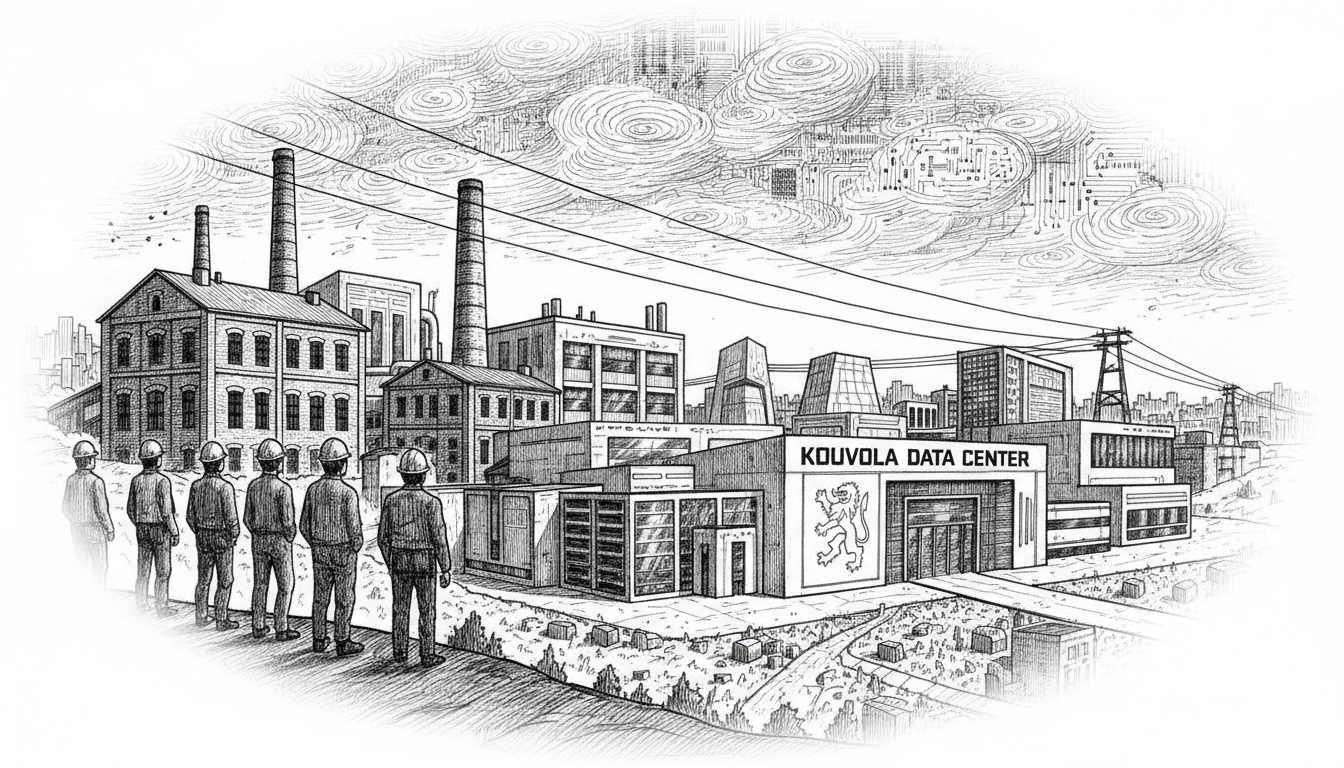
The city of Kouvola is moving forward with a major industrial development project. The city's head of construction has recommended granting a building permit for a planned data center complex at the historic Kymi Works site. The total area for the data center and its auxiliary buildings will be approximately 19,800 square meters. This decision marks a critical administrative step for the project, which aims to repurpose a significant industrial heritage location in the Kymenlaakso region.
This development is part of a broader national strategy to attract digital infrastructure investment. Finland's government has actively promoted the country as a prime location for data centers. The nation offers a cool climate for natural cooling, a stable and green energy grid, and robust digital connectivity. The Ministry of Economic Affairs and Employment has highlighted these advantages in international forums. The push aligns with European Union directives on digital sovereignty and the green transition, aiming to secure data processing capacity within the EU's borders.
Kymi Works, or Kymin Ruukki, holds deep historical significance in Finnish industry. For centuries, it was a major ironworks and a cornerstone of the local economy in southeastern Finland. Its transition from traditional heavy industry to a hub for the digital economy symbolizes a wider shift in the nation's economic base. This project represents a tangible effort to bring new, future-proof investment to a region that has faced industrial restructuring challenges.
The building permit recommendation now moves through Kouvola's municipal decision-making process. Local officials will weigh the project's economic benefits against any potential environmental or infrastructural impacts. Data centers are major consumers of electricity and water for cooling. The final permit will likely include specific conditions related to energy sourcing, water use, and landscape integration. The project promises to create construction jobs and, once operational, require a skilled technical workforce, potentially boosting the local tax base.
For international observers, this case is a clear example of Finnish regional development policy in action. The government is not just focusing growth on the Helsinki capital region. It is actively supporting projects that channel investment into other parts of the country. The use of a historic industrial site also demonstrates a pragmatic approach to land use. This project, while a local planning issue, connects directly to national goals for technological competitiveness and balanced regional development within the framework of EU digital policy.
The next steps involve a formal decision by the Kouvola building supervision authority. If approved, construction could begin in the coming quarters, transforming the landscape of the old ironworks. The success of this venture will be closely watched by other municipalities in Finland looking to attract similar high-tech investments. It is a test of whether former industrial zones can be effectively reinvented for the demands of the 21st-century economy.