
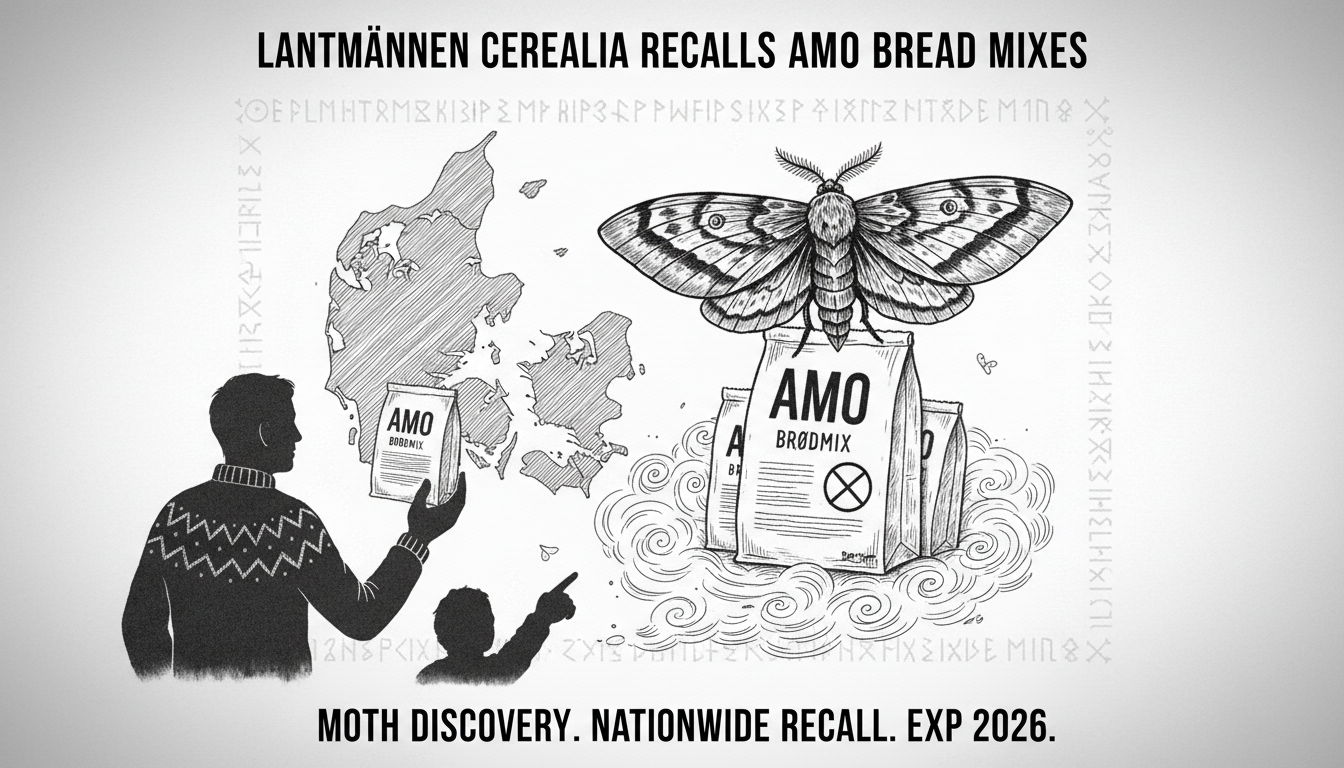
Lantmännen Cerealia has issued a nationwide recall of three Amo bread mix varieties following the discovery of moth contamination. The Swedish-owned agricultural cooperative announced the voluntary recall after quality control checks detected signs of insect infestation in production batches. This marks one of the largest food safety recalls in Denmark's baking ingredients sector this quarter.
The affected products include Amo cold-proofed lunch rolls with best-before dates in early and mid-2026, cold-proofed soft kernel rolls with similar expiration timelines, and soft kernel rye bread mixes. All recalled products carry 900-gram packaging weights and were distributed to retailers across Denmark. Consumers who purchased these items should immediately discard them or return them to their point of purchase for full refunds.
Food safety experts note that moth infestations, while not typically dangerous to human health, indicate breakdowns in production quality control. The discovery raises questions about supply chain monitoring in Denmark's food manufacturing sector, which exports approximately 85 billion DKK annually in agricultural products. Denmark maintains some of Europe's strictest food safety standards, making such recalls relatively uncommon compared to other EU markets.
Lantmännen Cerealia, part of the Nordic region's largest agricultural cooperative, generates substantial revenue from Danish operations. The company's Copenhagen-based Nordic headquarters coordinates regional quality control for all baking product lines. This recall could impact the company's Q3 financial performance and potentially affect Denmark's food export figures, particularly given the timing during peak baking season.
The Danish Veterinary and Food Administration is monitoring the situation but has not issued additional sanctions. Industry analysts suggest the recall's financial impact will depend on how quickly Lantmännen can restore consumer confidence in its Amo brand, which holds significant market share in Danish household baking products. The company faces particular pressure because Danish consumers demonstrate high brand loyalty but equally high expectations for product quality and safety.
What does this mean for international observers of Danish business trends? Food manufacturing represents a cornerstone of Denmark's export economy, with companies like Arla Foods and Danish Crown maintaining global reputations for quality. While this single recall won't substantially impact Denmark's overall trade balance, it highlights the constant vigilance required in food production. The incident serves as a reminder that even in markets with rigorous standards, quality control remains an ongoing challenge that can affect brand reputation and bottom lines.