
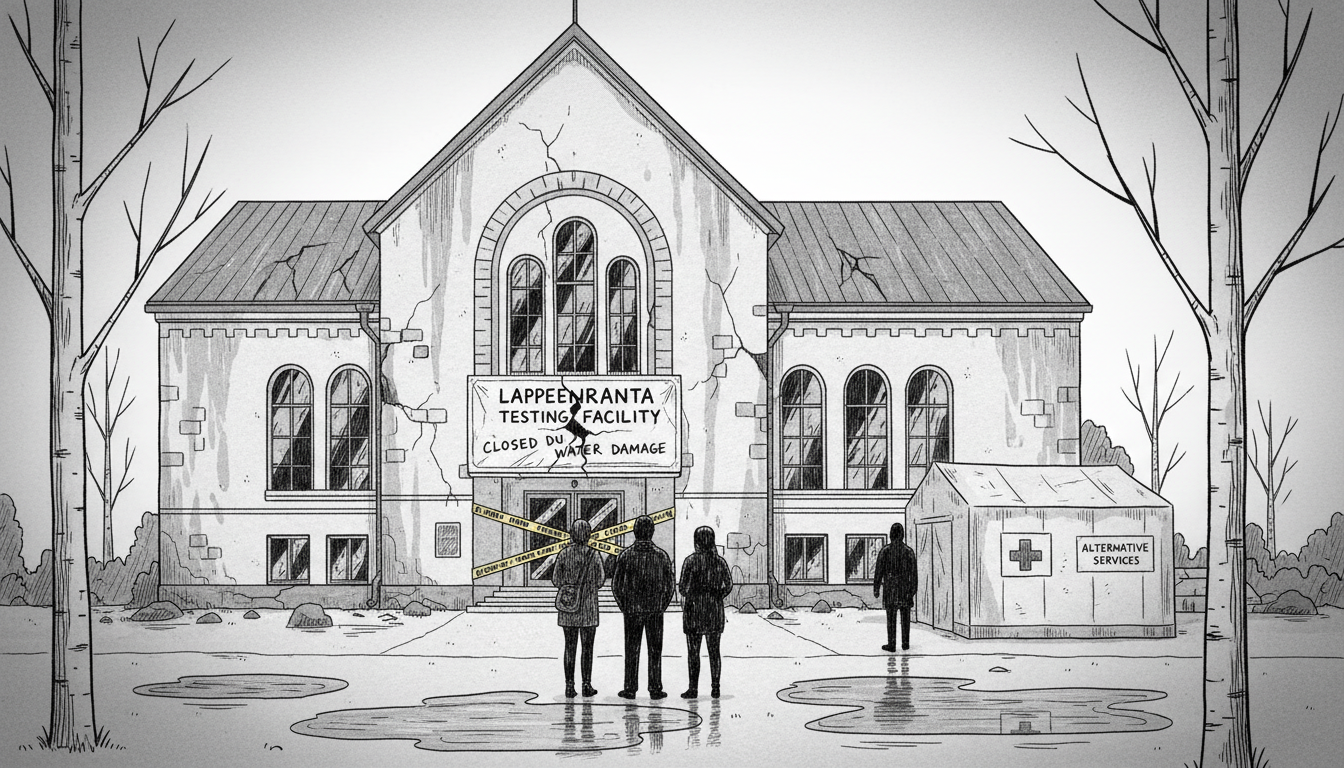
A significant water incident has forced the temporary closure of a medical testing facility in Lappeenranta, disrupting local healthcare services for at least two days. The Leiri sampling point operated by HUS Diagnostic Center experienced substantial water damage according to official statements from the South Karelia Welfare District. All scheduled appointments for Thursday and Friday have been canceled indefinitely while repair crews assess the full extent of the damage.
Responsible unit manager Anna Kahila confirmed the facility could remain closed longer if restoration work requires additional time. She emphasized that all other area testing locations continue normal operations despite this localized disruption. Alternative facilities remain available in Sammonlahti and Joutseno for Lappeenranta residents requiring immediate medical testing services. The regional central hospital will also expand its testing capacity to accommodate patients affected by the temporary closure.
Healthcare officials urge residents to verify operational testing locations through online resources or by calling 0947186800 on weekdays between 7:30 AM and 3:30 PM. This incident highlights the vulnerability of regional healthcare infrastructure to unexpected facility issues. The temporary service disruption comes as Finland's healthcare system undergoes significant structural reforms following the establishment of welfare regions that replaced previous municipal healthcare administration.
Water damage in medical facilities presents particular challenges beyond simple property restoration. Strict hygiene protocols and medical equipment safety standards require comprehensive cleaning and verification before facilities can safely resume patient services. The timing of this closure creates additional pressure on neighboring healthcare providers during typical seasonal demand increases for medical testing services.
Finnish healthcare infrastructure faces ongoing maintenance challenges as many facilities operate in aging buildings while adapting to new regional administration models. This incident demonstrates how localized facility issues can create ripple effects across regional healthcare networks. Patients experiencing uncertainty about testing appointments should contact healthcare providers directly for rescheduling options and confirmation of alternative service locations.
The South Karelia region's healthcare system has demonstrated resilience through previous service disruptions, suggesting normal operations should resume promptly following necessary repairs. Healthcare administrators maintain contingency plans for such incidents, though the specific timing remains uncertain until damage assessment concludes. Regional officials continue monitoring the situation while prioritizing minimal patient disruption during restoration efforts.