
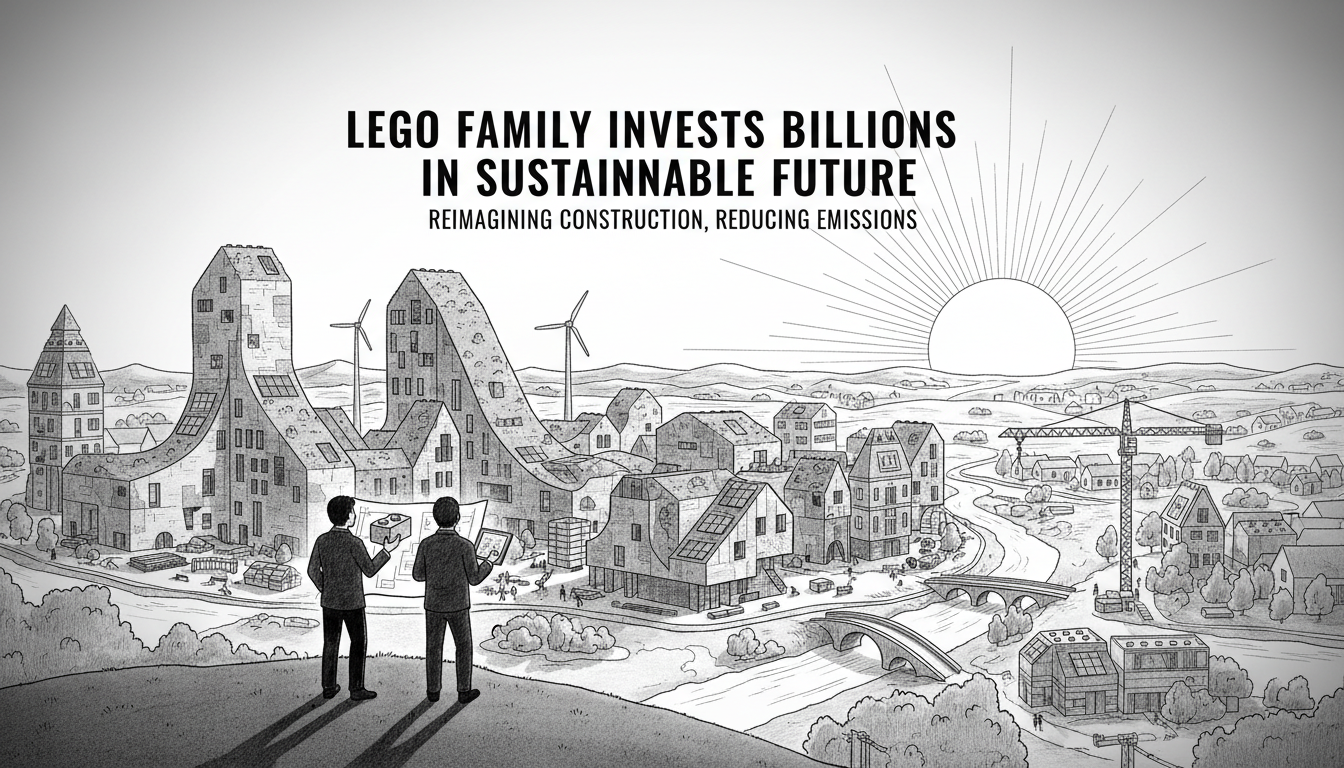
A new neighborhood in Billund, Denmark, is challenging construction industry norms with groundbreaking sustainable materials. The development, called Travbyen, uses innovative low-emission building techniques that significantly reduce carbon footprint.
Project director Christian Nørgaard explains the approach. "We achieved low carbon emissions through fundamental rethinking of materials. This isn't one trick but a complete system change in how we build."
The Lego family's investment fund Kirkbi is backing the project with substantial funding. Construction currently accounts for about 40% of global CO2 emissions, making this initiative particularly relevant.
Professor Harpa Birgisdóttir from Aalborg University notes the construction sector has lacked incentives for sustainable building. "Traditionally, buildings function well but carry unnecessarily high climate footprints," she said.
Danish companies face challenges introducing sustainable alternatives. Many builders prefer familiar materials over environmentally friendly options despite new CO2 requirements.
Travbyen features wood insulation instead of conventional mineral wool. This biogenic material can return to nature if buildings are demolished. The development achieves 4.5 kg CO2e per square meter annually, well below the legal requirement of 7.1 kg.
Testing sustainable alternatives comes with costs. "It's wood, so it requires extensive fire testing before approval," Nørgaard noted, acknowledging the expense.
Kirkbi expects to invest over 3 billion Danish kroner in Travbyen by 2030. The investment fund absorbs development costs rather than passing them to buyers.
Professor Birgisdóttir emphasizes the project's importance. "It's crucial that construction sees more projects like this," she said, noting the sector receives insufficient research funding despite its environmental impact.
Kirkbi will publish a report sharing their findings with the construction industry. "Our message is that work must continue," Nørgaard stated. "We need to keep reducing climate footprint, sharing knowledge, and making solutions economically feasible."
The technology exists but remains expensive for widespread adoption. This project demonstrates what's possible when investors prioritize long-term sustainability over immediate returns.