
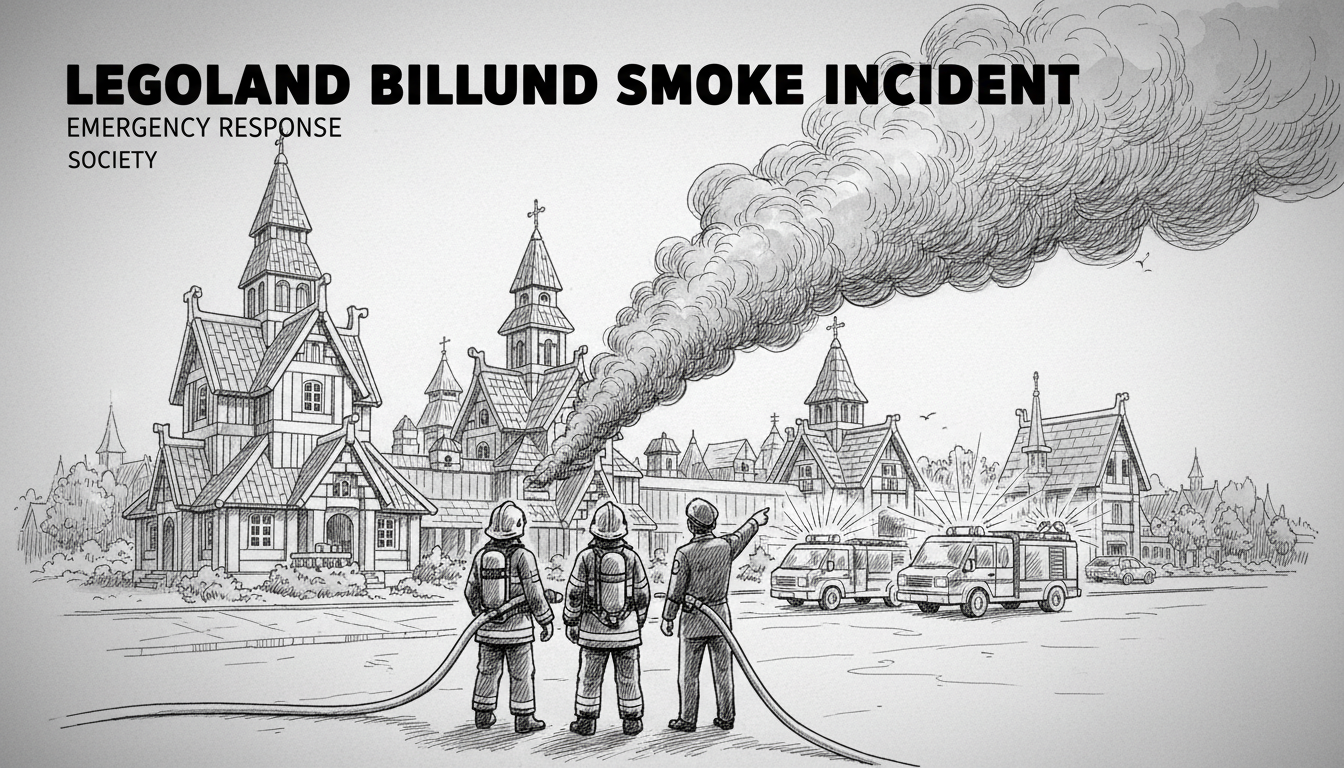
Legoland Billund's safety systems were activated Saturday when police and fire services rushed to the park following reports of smoke. The incident, reported at 12:41 PM, prompted an immediate emergency response to the iconic Danish attraction. Vagtchef Jesper Knudsen from Sydøstjyllands Police confirmed the deployment. He described the situation as a "minor smoke development" that required no visitor evacuations. Authorities are now investigating the precise cause and scope of the event that occurred within the 100,000 square meter park.
A Swift Response in a Crowded Park
The emergency call came on a typical Saturday during park hours. Legoland Billund, the original Lego theme park that opened in 1968, typically draws over two million visitors annually. The sight of emergency vehicles arriving at a major family attraction inevitably caused concern. Officials moved quickly to assess the situation and determine any potential risk to the public. Their preliminary assessment indicated a contained incident. This allowed normal park operations to continue without disruption for the thousands of families present.
Danish amusement park safety protocols are among the world's most stringent. Regular inspections and detailed emergency plans are mandatory. Any sign of potential danger, including unexplained smoke, triggers an automatic and coordinated response. This incident demonstrates that protocol in action. The presence of both police and fire services highlights the multi-agency approach to public safety in Denmark. It reflects a system designed to err on the side of caution, especially where children and large crowds are involved.
The Anatomy of a Minor Scare
While the term "minor smoke development" suggests a non-event, the full response tells a different story. In Denmark, public safety infrastructure operates on a principle of prevention. A small electrical fault, overheated machinery, or a minor kitchen fire could all generate the reported smoke. The key detail is that emergency systems functioned as intended. First responders arrived promptly, evaluated the threat level, and determined no evacuation was necessary. This sequence provides a real-world test of the park's incident management plans.
From a visitor's perspective, the incident may have been barely noticeable beyond the arrival of official vehicles. For staff and management, it was a live drill. Such events validate training and highlight any areas for procedural improvement. The investigation launched by authorities will seek to pinpoint the exact origin. It will also review the timeliness and effectiveness of the internal response before emergency crews arrived. These follow-ups are standard and crucial for maintaining safety records.
Integration of Safety into Danish Leisure Culture
This minor incident opens a window into a broader aspect of Danish society. The country's famed welfare model extends into its approach to public safety and leisure. Amusement parks, public pools, and cultural venues operate under strict governmental oversight. Trust in public institutions is high, partly because response to even small incidents is visible and swift. When emergency services rush to a landmark like Legoland, it reinforces a social contract. It shows that protective systems are active and vigilant, even on a sunny Saturday afternoon.
Families from across Denmark and the world visit Billund primarily for its Lego models and rides. They also implicitly trust the safety framework surrounding those attractions. Events like Saturday's smoke development test that framework under real conditions. The successful, low-impact outcome strengthens public confidence. It shows that alarms are heard and that professionals are prepared. In a nation deeply concerned with social security and risk management, this integration of safety into daily life is a central value.
What Happens Next?
The investigation into the smoke's cause is now the focus. Technicians from the fire service and likely internal Lego Group safety officers will examine the affected area. They will produce a report detailing the source, whether it was technical, human, or environmental. This report will inform any corrective actions needed to prevent recurrence. For a park of this scale, continuous improvement of safety systems is a constant process. Each incident, however small, provides valuable data.
Legoland Billund has maintained an impressive safety record throughout its long history. This event is unlikely to affect its reputation or visitor numbers. Instead, it serves as a reminder of the complex infrastructure operating behind the scenes of global attractions. It highlights the silent work of safety engineers, facility managers, and emergency planners who ensure fun remains safe. For Danish society, it's a demonstration of a system working precisely as designed—responding with seriousness to minor threats to ensure they never become major ones.
The final takeaway is one of reassurance. The systems in place at Denmark's premier family destination responded appropriately. No one was hurt, no panic ensued, and the day continued. In a world where news often highlights systemic failures, this story showcases a quiet success. It shows a society where safety protocols are not just paperwork but practiced reality. The real story isn't the smoke, but the effective and calm response that ensured it remained a minor footnote in a summer day.