
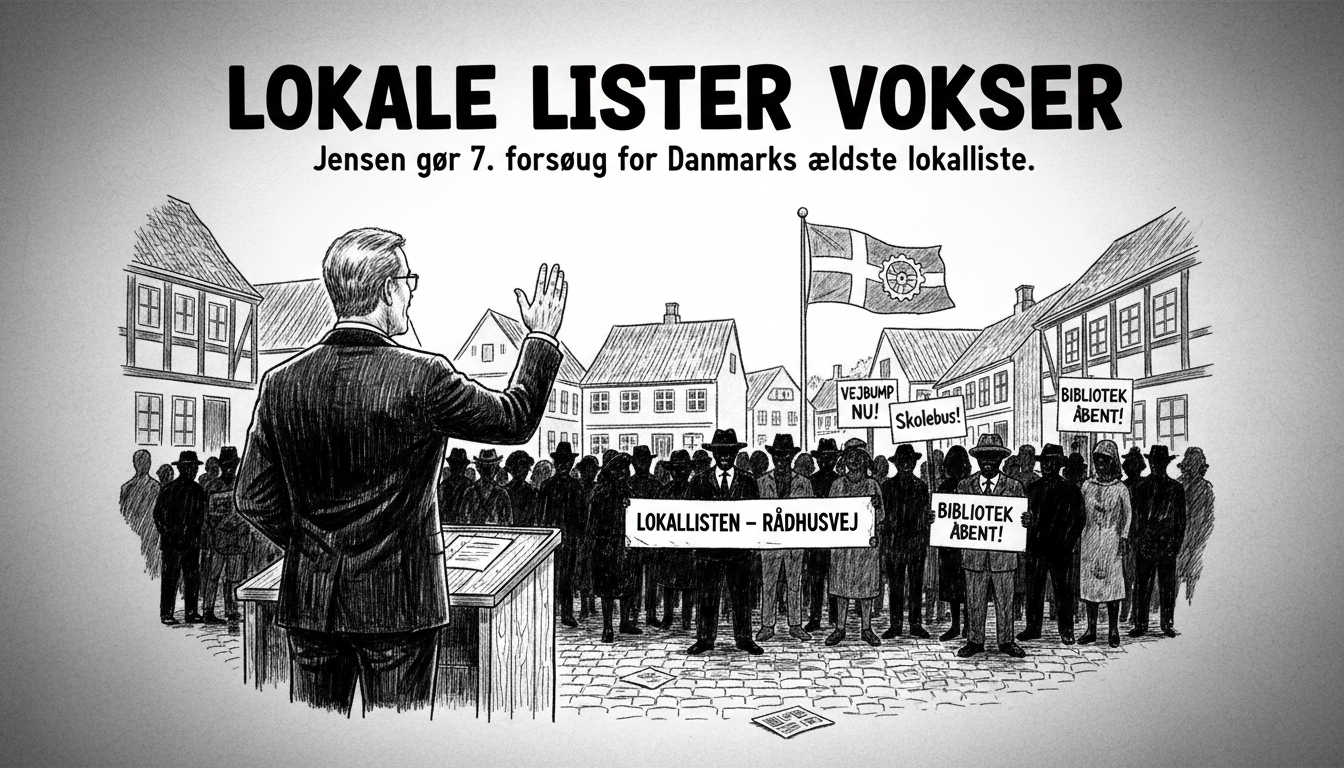
Danish voters increasingly turn to local political lists as alternatives to traditional parties in municipal elections. These grassroots movements focus on specific community issues and aim to secure influence for particular towns or districts. The trend shows significant growth across Denmark's political landscape.
Local lists secured 91 council seats nationwide during the most recent municipal elections. This represented nearly 50 percent growth compared to the previous election cycle when local lists captured 63 mandates. Notable performers included Tønder Listen with nine seats, Guldborgsundlisten with seven seats, and several lists gaining four seats each across different municipalities.
One candidate hoping for local list success is Finn Jensen from Havdrup. The 64-year-old attempts his seventh council bid with HavdrupListen, Denmark's oldest local list founded in 1954. Despite previous unsuccessful campaigns dating back to 2001, Jensen remains committed to his community.
Local political lists typically fall into three categories according to municipal researchers. Some focus on general municipal problem-solving, others function as individual passion projects with minimal support, while many concentrate on single issues like school closures or traffic concerns. These groups often defy traditional left-right political classification.
HavdrupListen currently holds two seats in Solrød Municipality's council. Jensen emphasizes their limited power but notes their ability to accelerate local initiatives and launch projects that might otherwise remain dormant. His primary mission involves advocating specifically for Havdrup's interests rather than national politics.
Despite his persistence, Jensen expresses skepticism about his personal electoral chances. He acknowledges his bottom position on the candidate list but hopes the list itself might secure two or three council seats. His commitment stems from believing that community progress requires local political engagement.
The rise of local lists reflects broader European trends toward political localization and community-specific representation. In Denmark's consensus-oriented political culture, these groups often wield influence beyond their numerical representation by focusing attention on hyperlocal concerns that larger parties might overlook.
Municipal elections in Denmark occur every four years, with local lists becoming increasingly established political players. Their growth suggests voters appreciate representatives who prioritize immediate community needs over national political debates. This development mirrors similar movements in other Nordic countries where local representation gains importance.