
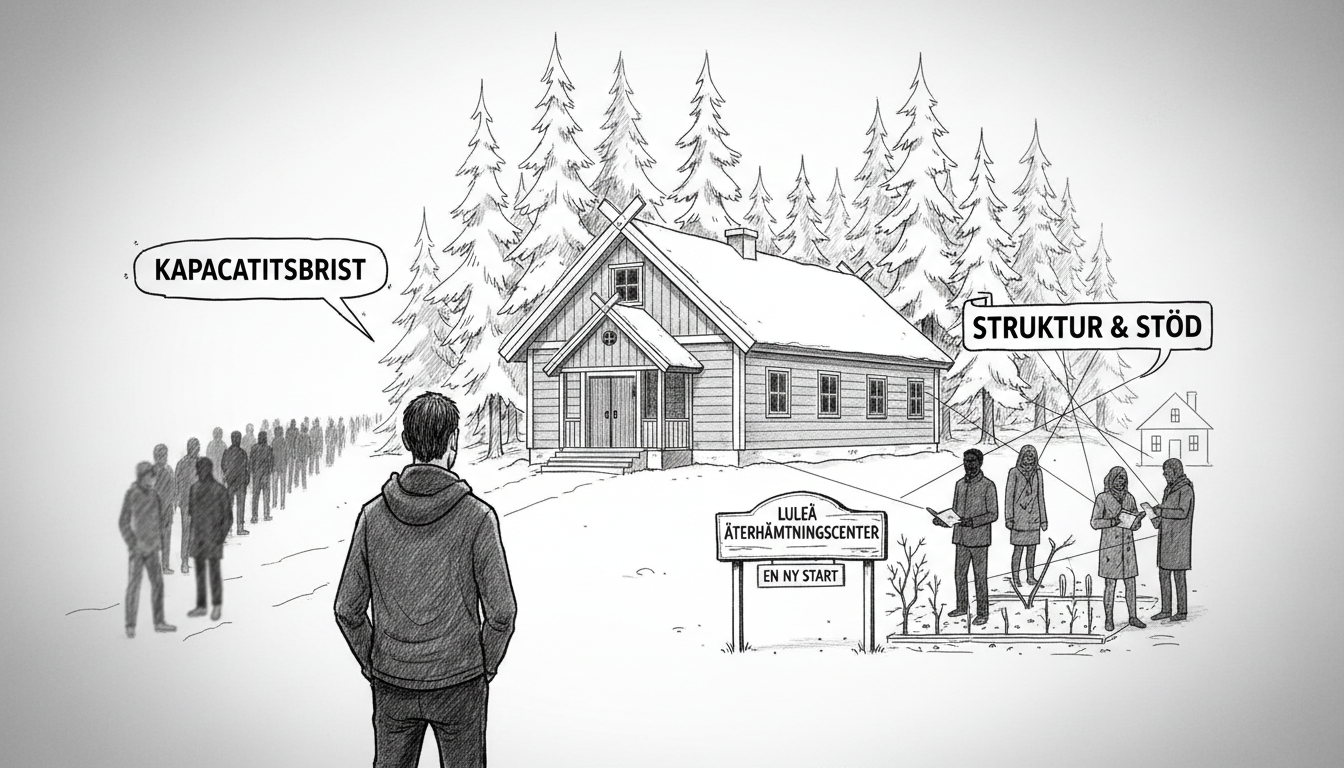
A municipal training residence in northern Sweden guides addicts toward jobs and housing. The facility called Fyren currently offers 27 spots, all occupied.
Johan from Luleå said the program saved his life after his world fell into chaos. He experienced manic episodes and multiple relapses before turning his life around.
Social services caseworkers determine who gets approved for the program. Residents can initially stay up to six months, with extensions possible when needed.
The facility maintains strict rules for good reason. Residents must blow into alcohol meters and provide blood samples. Positive tests mean waiting one week before returning.
Today Johan lives in his own apartment with friends. He receives medication-assisted rehabilitation and reports feeling much better.
Johan noted the program's limitations in his statement. He said many more people need support than the current capacity allows. The same shortage exists at emergency shelters, where people sometimes wait at the door just for one night's sleep.
The stark reality remains that Sweden's addiction treatment system faces capacity constraints despite proven success stories. Limited spaces mean some vulnerable individuals cannot access life-changing support when they need it most.
What is medication-assisted rehabilitation? This treatment approach uses FDA-approved medications combined with counseling to address substance use disorders.
How do people access these services? Individuals typically get referred through municipal social services after assessment by caseworkers.