
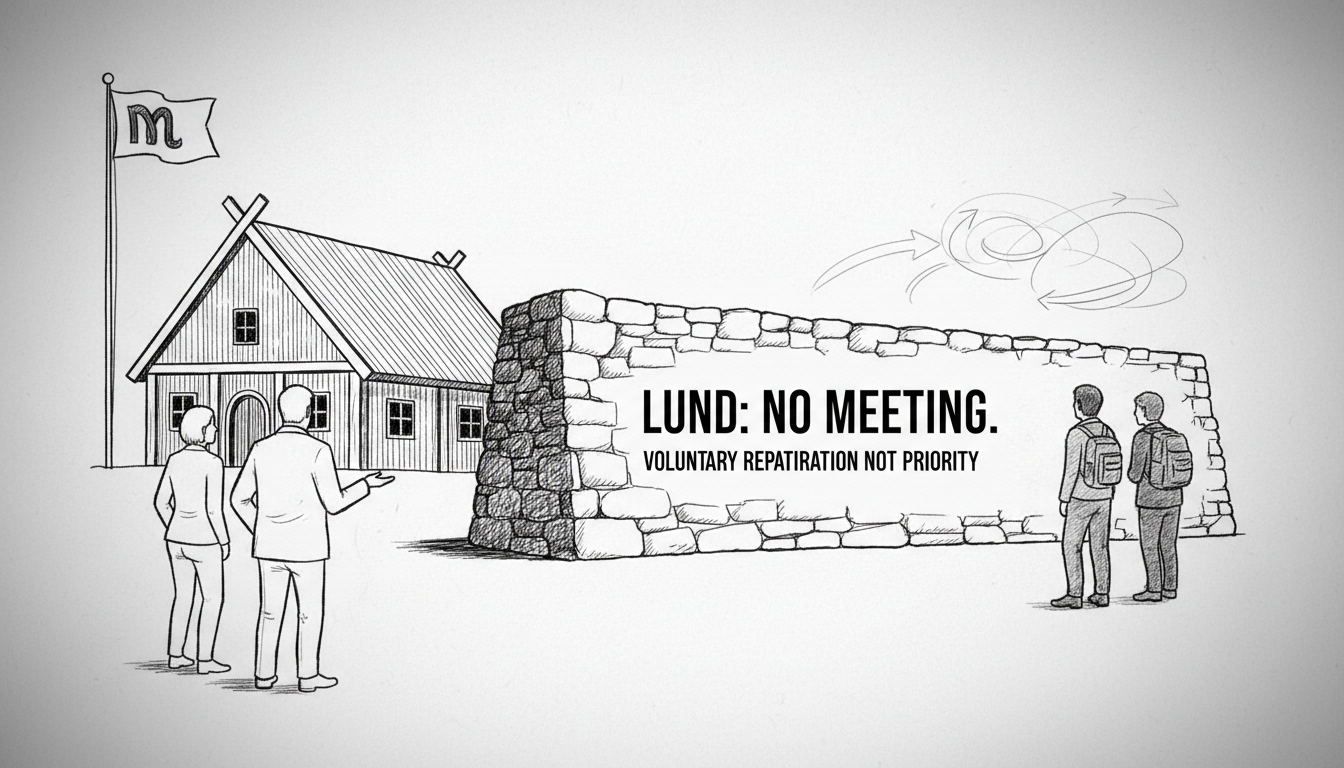
The Moderate Party in Lund has refused to meet with the government's coordinator for voluntary repatriation. This decision comes despite the Moderates governing the municipality together with the Social Democrats.
Rasmus Törnblom, the Moderate municipal commissioner in Lund, explained their position. He said this was not primarily an activist refusal from their side. The invitation went out to all Swedish municipalities for dialogue on strengthening voluntary repatriation work.
Many municipalities with left-wing governments have declined similar meetings. Lund now joins this group, creating an unusual political situation.
Törnblom stated, "We have many other important things to focus on. This is not an important issue for Lund."
When asked about the national political context, Törnblom declined to comment. He said, "I focus on Lund and local politics. For answers about national politics, I refer you to the national party."
Voluntary repatriation is one of the policies highlighted in the Tidö Agreement. The Swedish government and Sweden Democrats have invested heavily in this approach nationally.
The refusal from a Moderate-led municipality suggests divisions may exist between local and national party priorities. Local governments appear selective about which national policies they actively implement.
What is voluntary repatriation? It refers to government programs that help immigrants return to their home countries voluntarily. These initiatives often include financial assistance and reintegration support.
Why does this matter? Lund's decision shows that even parties in government coalitions may resist implementing certain national policies locally. This reflects the complex relationship between national and municipal politics in Sweden.