
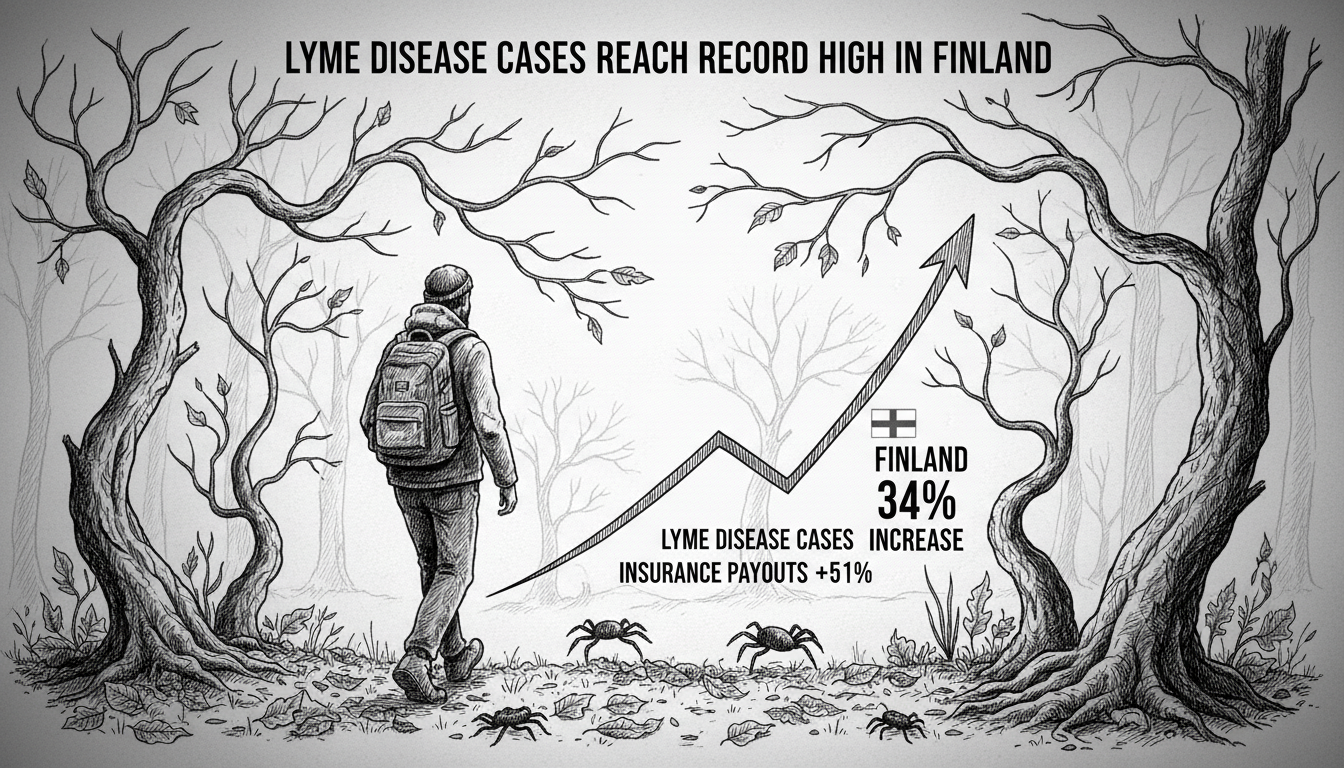
Insurance company Pohjola reports Lyme disease cases surged by one-third this year compared to last year. The number of cases increased 34 percent from January through August. Insurance payouts for Lyme disease treatments rose even more dramatically at 51 percent.
Tick populations have expanded across Finland in recent years. These insects now appear throughout the country except northernmost Lapland. Coastal areas and archipelago regions show the highest concentrations.
Why are tick numbers growing so rapidly? Climate change has extended the active season for ticks. Mild winters in Southern Finland now allow ticks to survive year-round. The tick season may continue into November during warm autumns.
Health officials note Lyme disease cases have increased steadily over the past decade. The Finnish Institute for Health and Welfare reported a nine percent rise in cases last year. Most infections occur between August and November.
Insurance specialist Atte Erkamo explained the situation. "People should still protect themselves against ticks," he said in a statement. "Even brief frosts don't eliminate ticks completely."
Beyond Lyme disease, ticks also spread tick-borne encephalitis. Cases of this serious illness have also increased in recent years. The same coastal regions face the highest risks for both diseases.
This dramatic increase suggests public health warnings about tick protection haven't reached enough people. The combination of climate change and insufficient prevention creates perfect conditions for disease spread.