
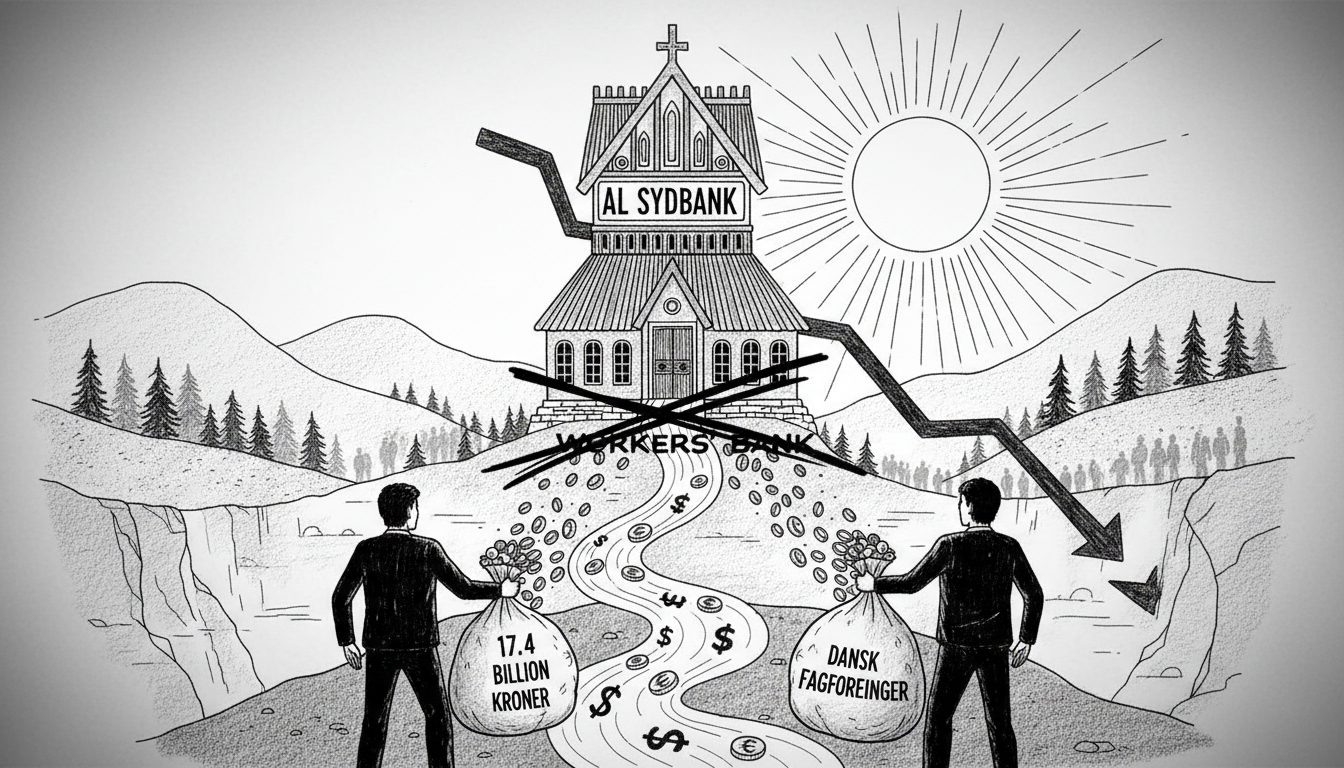
Danish labor unions are set to receive a massive financial windfall following a major bank merger. The century-old Workers' Bank is merging with Sydbank and Vestjysk Bank to form AL Sydbank.
For over 100 years, Danish trade unions owned and controlled Workers' Bank. The bank was founded in 1919 to protect workers' savings from private banks. Its official purpose remained serving employees and their organizations.
That era ends with the merger announced earlier this week. Unions will remain major shareholders but lose full control.
While unions lose influence, they gain enormous financial benefits. Shareholders in the old Workers' Bank could see gains reaching 17.4 billion Danish kroner overnight.
The unlisted shares in Workers' Bank currently have a nominal value of 2.1 billion kroner. The unions' stake in the new publicly traded AL Sydbank could be worth around 19.5 billion kroner according to financial analysts.
One banking expert noted, "I imagine many champagne bottles were popped across the labor movement. They're getting a premium on their shares that's quite substantial."
Union leaders confirmed they plan to remain long-term investors in the new bank. The chairman of Danish Metal stated unions will be "stable and long-term investors."
Labor market researchers see clear advantages to the cash infusion. "It's raw power," said one academic. "If conflicts with employers occur and strike funds need paying out, they'll have substantial liquid assets available."
The financial gain comes from strict trading rules that previously limited share values. Shares in the old Workers' Bank could only trade at 1 krone per share maximum. These rules prevented speculation and maintained ideological ownership.
When AL Sydbank shares list publicly, market forces will determine their value freely. This transition creates immediate financial gains compared to the old restricted trading price.
The windfall particularly benefits major union shareholders: 3F, Danish Metal, Food Workers Union NNF, HK Denmark and the main labor organization FH. Together they own about 80% of shares.
Several of these unions have faced membership declines and financial struggles in recent years. Despite public commitments to long-term investment, no formal shareholder agreements require maintaining stakes.
Labor experts suggest pressure to sell shares could emerge. "If some unions continue losing members, these liquid funds could keep such organizations afloat for years," one researcher noted.
The Food Workers Union NNF, facing a potential 2 billion kroner gain, hasn't decided its strategy. Their chairman wrote, "We await the final merger before making financial plans. We currently have no plans to sell shares - or the opposite."
Other major shareholders declined further comment on the calculations. The remaining 20% of shares are distributed among smaller unions and local branches who will also benefit substantially.
This represents a fundamental shift for Denmark's labor movement - trading direct control for unprecedented financial resources that could reshape union priorities for decades.