
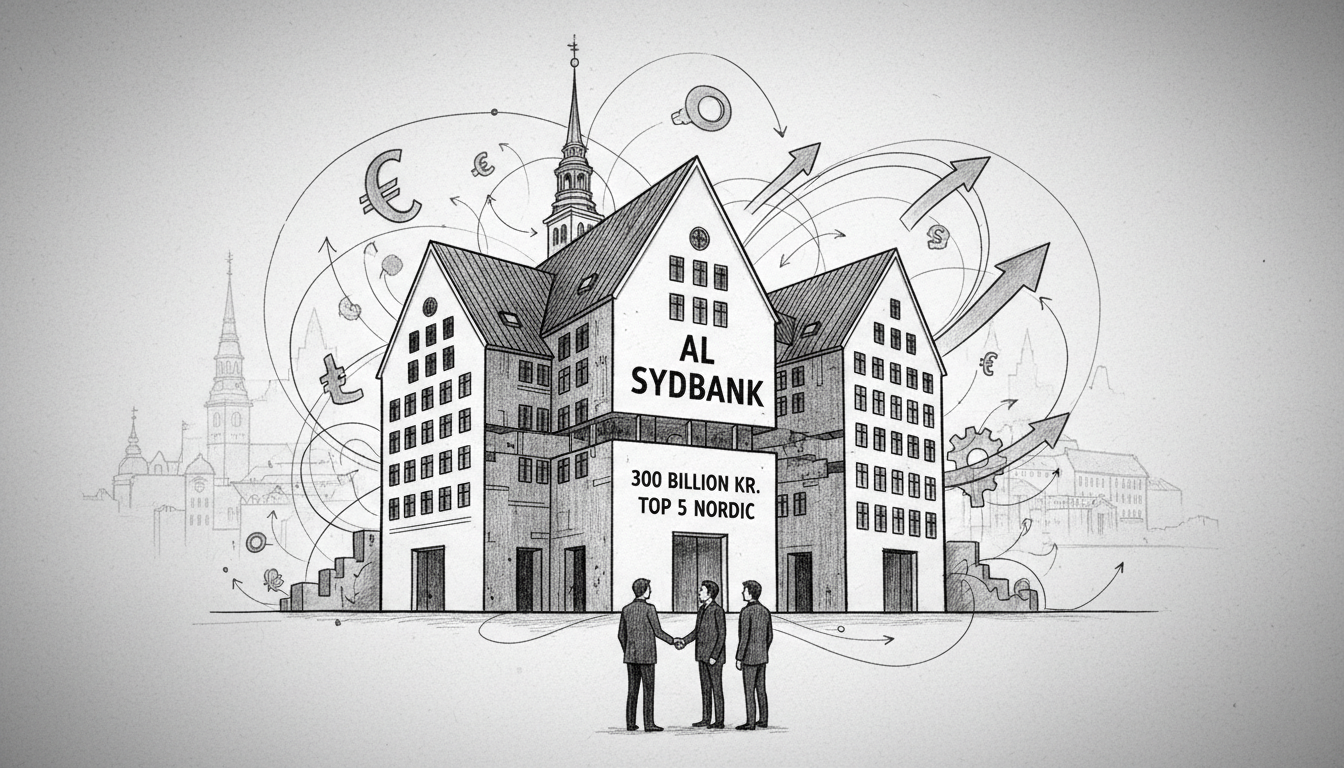
Shareholders of Vestjysk Bank have approved a landmark merger with Sydbank and Arbejdernes Landsbank. The vote clears a major hurdle in creating Denmark's fifth-largest financial institution. The combined entity, to be named AL Sydbank, will have loans of 137 billion kroner and deposits of 207 billion kroner. The new bank's headquarters will be in Aabenraa, near the German border in the Jutland region.
The merger still requires final approval from the Danish Financial Supervisory Authority. Shareholders of the other two banks are voting this week. The consolidation reflects ongoing pressure in Denmark's banking sector. Many regional banks seek greater scale to compete with larger Nordic rivals.
Sydbank will be the continuing bank in the merger. Its CEO, Mark Luscombe, is expected to lead the combined organization. He stated the merger will create a bank with 'substantially better coverage across all of Denmark.' Luscombe emphasized the goal of maintaining local advisory services while improving efficiency. He acknowledged the merger will result in job cuts and branch closures. The three banks currently operate about 140 branches combined, with overlaps in several regions.
This consolidation is part of a broader trend in Danish finance. The sector has seen multiple mergers in recent years. Banks face challenges from digital competition and low interest margins. Creating a larger entity provides more capital for lending, particularly to businesses in the Øresund region and beyond. It also strengthens the bank's ability to invest in digital infrastructure.
The merger's impact on Copenhagen's financial district will be notable. While the head office moves to Jutland, the bank will maintain a strong presence in the capital. The deal highlights the shifting geography of Danish business power. Regional centers like Aabenraa are gaining prominence in financial services.
Analysts note the merger could affect competition for small and medium-sized enterprises. A larger bank may offer more competitive loan terms. It could also reduce choice for some local customers. The Danish Competition and Consumer Authority has already approved the deal, suggesting regulators see limited anti-competitive risk.
The final structure and job reduction numbers will be confirmed after all regulatory approvals. The process demonstrates how Danish businesses are adapting to a changing economic landscape. For international investors, it signals continued consolidation in a stable Nordic banking market.