
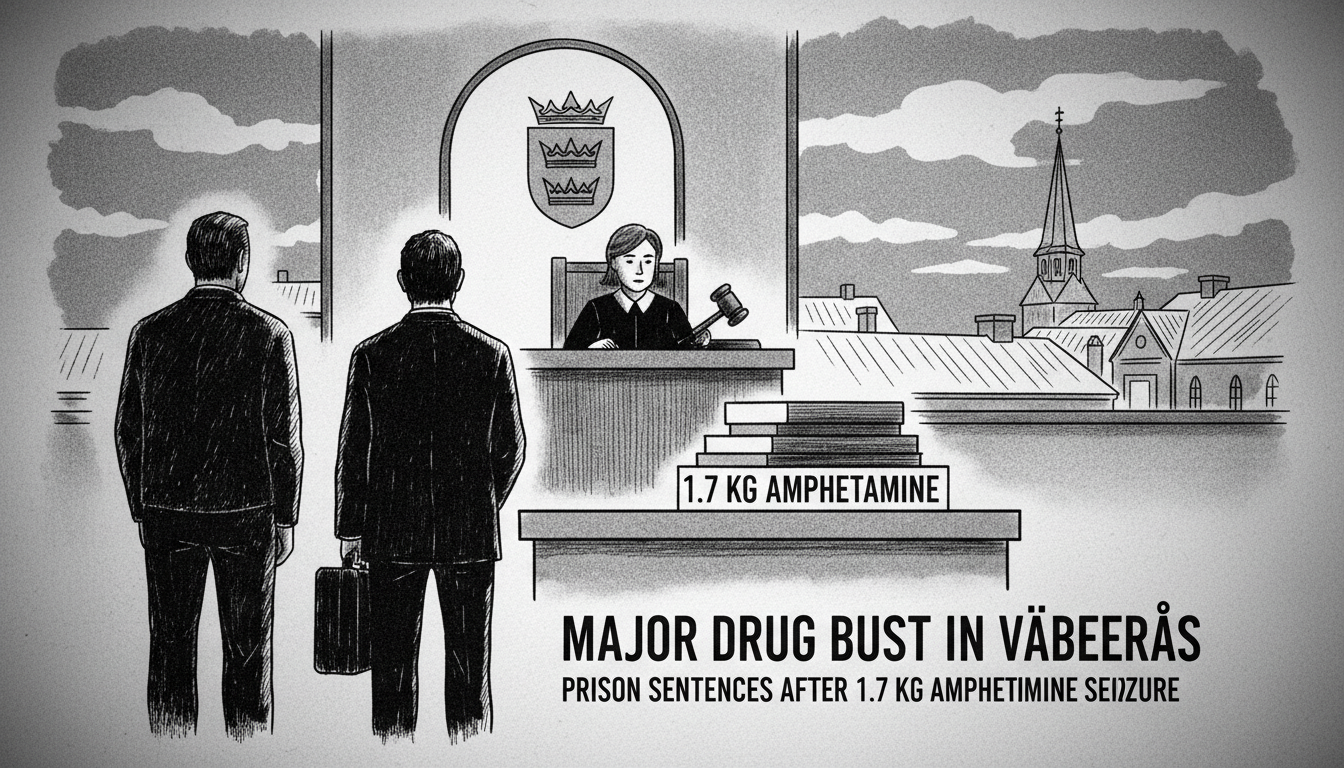
Police discovered 1.7 kilograms of amphetamine during a recent apartment search in Västerås. Officers also found 89 grams of cannabis products during the operation. The drug seizure represents one of the larger busts in central Sweden this quarter.
Two individuals now face prison time for their involvement. Both received sentences of two years and four months for serious drug offenses. The court found them guilty despite their differing accounts of responsibility.
The male suspect admitted to the crimes but denied joint possession with his female co-accused. She confessed to most charges but disputed ownership of the large amphetamine quantity. She claimed the drugs were for personal use only.
This case highlights Sweden's strict approach to narcotics enforcement. The country maintains some of Europe's toughest drug laws. Swedish courts typically impose harsh sentences for drug trafficking offenses.
Västerås residents have expressed mixed reactions to the bust. Some welcome the police action against drug dealing. Others question whether imprisonment addresses underlying addiction issues effectively.
Sweden's drug policies have evolved significantly over decades. The nation shifted from medical treatment focus to zero-tolerance enforcement. This approach has drawn both praise and criticism from international observers.
The conviction comes amid ongoing debates about drug policy reform in Scandinavia. Neighboring countries have experimented with more liberal approaches. Sweden remains committed to its restrictive stance despite these regional trends.
International readers might find Sweden's drug sentencing surprising. The penalties often exceed those in other European nations. This reflects the country's distinctive legal and cultural perspective on substance abuse.
What does this mean for foreign residents in Sweden? The case serves as a stark reminder of local drug laws. Visitors and expatriates should understand that Swedish authorities treat drug offenses very seriously.
The convicted pair will likely serve their sentences in Swedish prisons. The country's correctional system emphasizes rehabilitation. Still, foreign nationals might face additional complications like deportation after serving time.
This Västerås case follows similar patterns seen across Swedish cities. Police regularly conduct apartment searches based on tip-offs. The results often lead to substantial drug seizures and prison terms.
Sweden's approach to drug enforcement shows no signs of softening. The recent government has actually called for even stricter measures. This suggests similar cases will continue making headlines in coming months.