
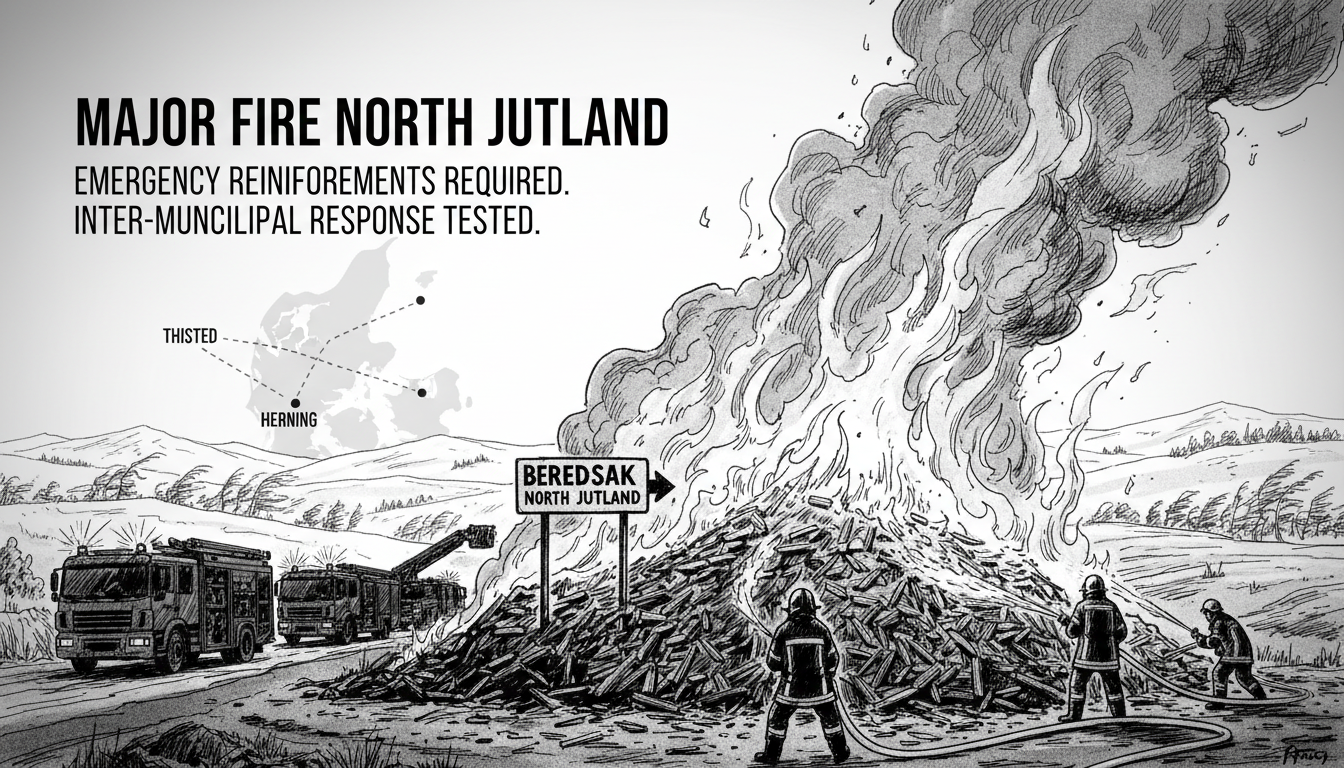
A stubborn fire erupted Monday morning in Væggedalen near Nr. Onsild in North Jutland, testing Denmark's emergency response capabilities. The blaze proved difficult to control, prompting authorities to dispatch additional firefighting resources to the scene. Emergency services confirmed they had sent reinforcement teams from multiple municipal centers.
Three vehicles traveled from the Thisted emergency center while another unit deployed from Herning. These reinforcements joined eleven personnel and four vehicles already battling the flames at the site. The fire originated in a wood chip pile that had previously experienced similar incidents, raising questions about prevention measures for industrial storage facilities.
This emergency response demonstrates Denmark's coordinated municipal emergency system in action. North Jutland's emergency management operates through regional centers that can rapidly deploy resources across municipalities. The immediate dispatch of reinforcements from both Thisted and Herning shows the system's capacity for inter-municipal cooperation during crises.
Such industrial fires carry significant environmental implications beyond immediate safety concerns. Wood chip and biomass storage facilities present particular fire risks due to spontaneous combustion potential. Denmark's strict environmental regulations mean authorities must contain both flames and potential runoff from firefighting efforts to protect surrounding ecosystems.
The incident highlights ongoing challenges in Denmark's regional emergency preparedness. While the welfare state maintains comprehensive emergency services, distributing resources across rural regions like North Jutland requires careful planning. This fire represents the type of incident that tests the balance between centralized coordination and local response capabilities.
Local residents and businesses likely experienced disruptions as emergency teams concentrated on containing the blaze. Such events remind communities of their dependence on well-functioning emergency services, particularly in regions with significant distances between population centers. The coordinated response across municipal boundaries shows the system working as designed during genuine emergencies.
Danish emergency protocols prioritize rapid escalation when initial responses prove insufficient. The decision to call reinforcements demonstrates this adaptive approach to crisis management. Authorities clearly recognized the fire required more resources than initially deployed, making the pragmatic choice to strengthen their response rather than risk the situation worsening.