
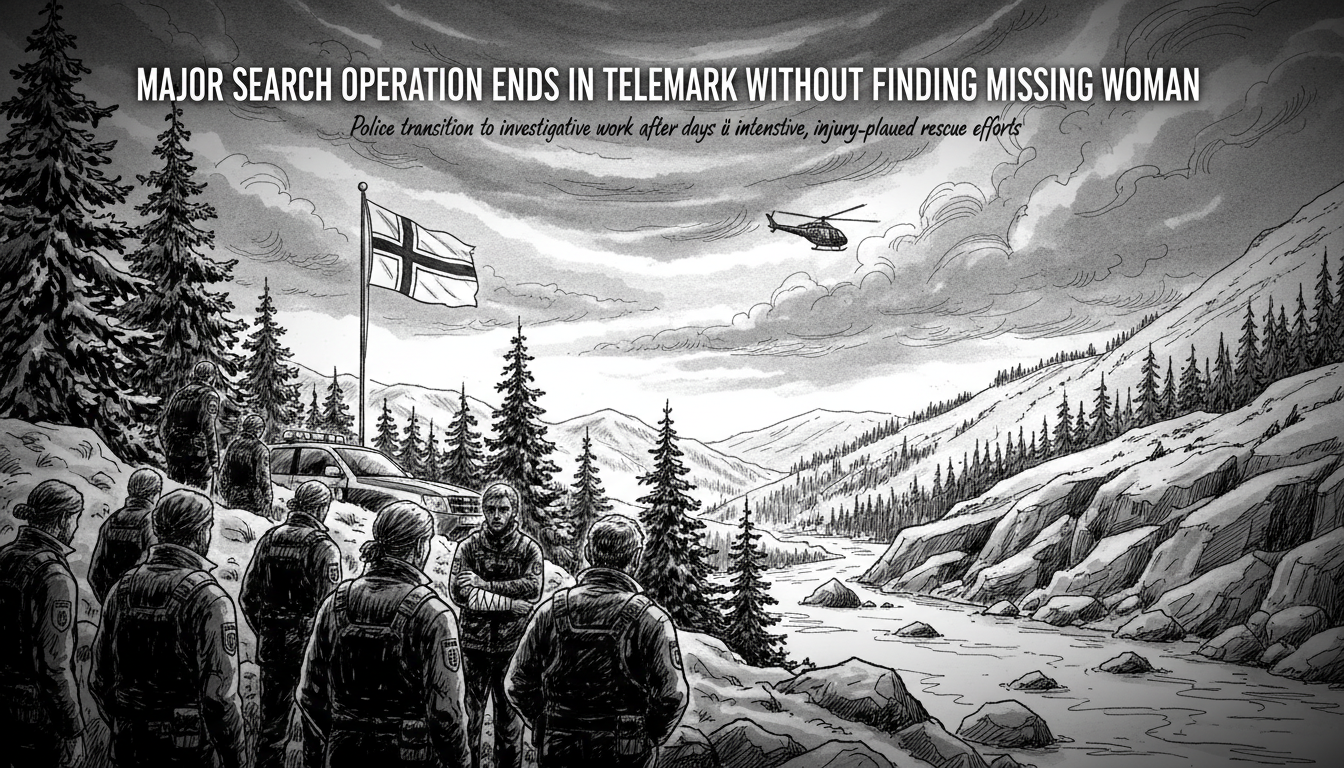
Norwegian police have suspended the active search for a missing woman in Telemark's challenging terrain. Authorities made the difficult decision after days of intensive efforts involving over 100 personnel. The operation has left rescue volunteers emotionally affected by the outcome.
Police Inspector Sigrid Dahl announced the suspension on Wednesday afternoon. She leads the Midt- and Vest-Telemark police station district. Dahl expressed understanding for the family and friends of the missing woman. She noted the decision significantly reduces hope of finding the woman alive.
The woman in her forties left her Skien home Saturday morning. She intended to exercise in the Tokke area. When she missed a Sunday appointment, relatives reported her missing. Her car was found near Ravnejuv, an area known for steep mountain sides.
Emergency services and volunteers combed difficult terrain for several days. They faced challenging weather conditions throughout the search. Specialized crews from the Red Cross and Norwegian Alpine Rescue Group participated. Civil Defense personnel, rescue dogs, and unorganized volunteers also joined the effort.
Operational leader Roger Aaser explained Norway's rescue service philosophy. He said professional actors continue searching while hope exists. Once that hope diminishes, methodology changes. The transition to investigative work follows standard Norwegian procedure.
Stian Storstrøm Michelsen leads Telemark Red Cross Aid Corps operations. He participated directly in the search. Michelsen acknowledged the emotional toll on volunteers. He said such outcomes affect everyone involved, regardless of their role. Michelsen expressed confidence in police and rescue center decisions.
Several search participants sustained injuries during the operation. Dahl warned all travelers in the area to exercise caution. The terrain remains demanding and potentially dangerous. Police continue requesting information from the public.
Norwegian search operations typically involve close coordination between professional and volunteer organizations. This incident highlights the physical and emotional risks rescue personnel accept. The country's dispersed population and extensive wilderness require robust emergency response systems.
Telemark's topography presents particular challenges. The region features deep valleys and steep mountainsides. Ravnejuv's terrain exemplifies these difficulties. Such landscapes demand specialized training and equipment for safe navigation.
Police will now review all collected information. They will pursue investigative leads rather than terrain searches. Dahl stated police would reconsider terrain searches if new concrete information emerges. The missing woman was reportedly in good physical condition.
This incident underscores the inherent risks of outdoor activities in Norway's wilderness. It also demonstrates the extensive resources mobilized for missing person cases. The emotional impact on volunteers reveals the human cost behind emergency response statistics.
Norwegian society maintains strong volunteer traditions in rescue services. Organizations like the Red Cross provide critical support to professional agencies. This cooperation represents a fundamental aspect of Norway's emergency preparedness system.
The search suspension follows standard protocols when survival probabilities diminish. Police must balance resource allocation with realistic expectations. Such decisions inevitably prove difficult for all involved parties.
Family and friends now face uncertain waiting. Police continue their investigation through alternative channels. The woman's disappearance remains unexplained as authorities pursue new leads.