
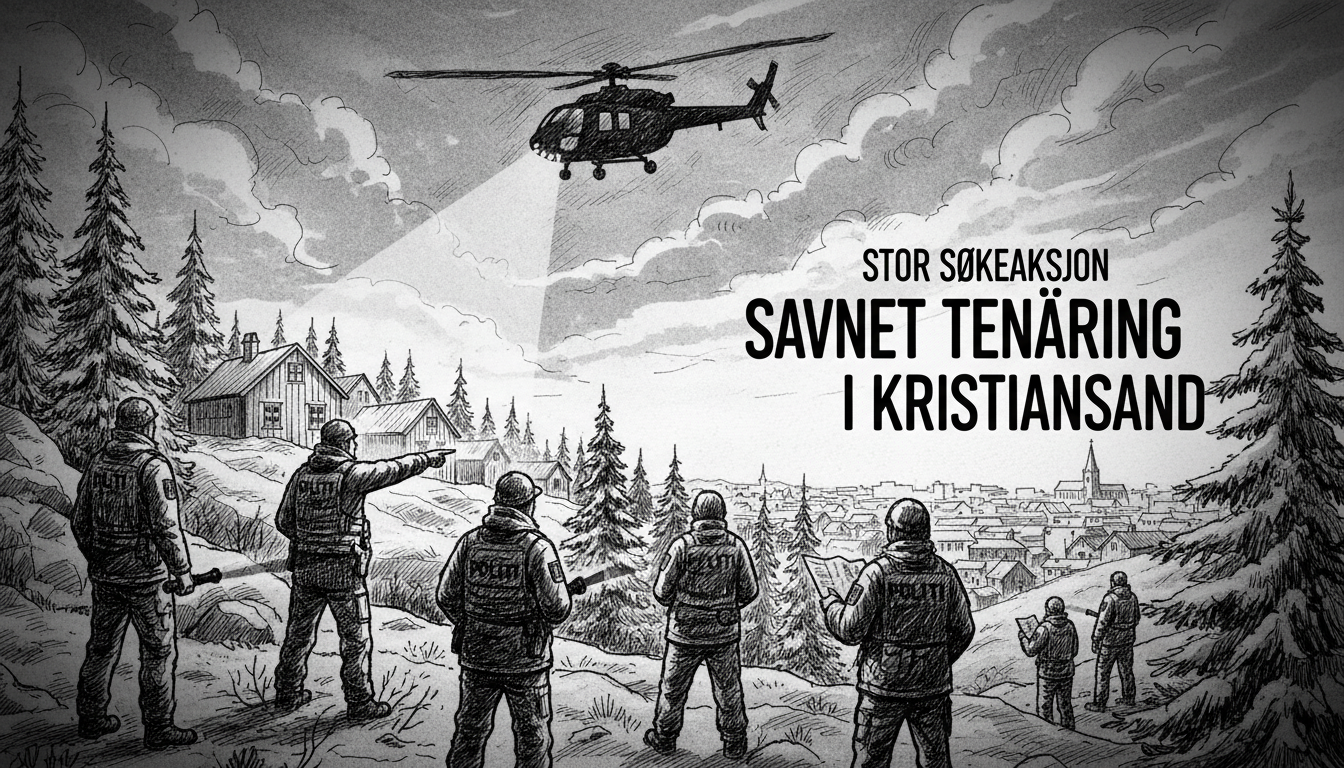
Norwegian authorities have launched a comprehensive search operation for a missing teenage girl near the Eg district of Kristiansand. Police confirmed the coordinated effort involves multiple resources and personnel. Search teams include police officers, civilian volunteers, helicopter units, and drone operators. The operation focuses on residential areas around Eg, with authorities requesting local residents to inspect their properties thoroughly.
Residents are asked to check garasjes and storage buildings for any signs of the missing individual. Operation commander Arve Johan Myklebust from Agder Police District emphasized the importance of community assistance in these situations. He stated that homeowners should review their security camera footage for potential sightings of the missing teenager. This approach demonstrates how Norwegian police integrate community resources during critical incidents.
Kristiansand's coastal location presents unique challenges for search operations. The city's proximity to fjords and coastal areas requires specialized maritime search protocols. Southern Norway's varied terrain demands coordinated efforts between ground teams and aerial support. Such operations reflect Norway's well-developed emergency response systems and community safety networks.
Missing persons cases in Norway typically activate multi-agency responses involving police, rescue services, and volunteer organizations. The country's sparse population distribution makes community involvement particularly crucial during search operations. Norway's emergency management system prioritizes rapid response coordination between municipal, regional, and national resources.
This incident highlights the effectiveness of Norway's integrated emergency response framework. The combination of professional resources and community participation represents standard procedure for Norwegian missing persons cases. Police operations in Southern Norway frequently leverage local knowledge and technological resources to maximize search effectiveness.
The current operation demonstrates Norway's systematic approach to public safety incidents. Search protocols follow established procedures while adapting to local geographical conditions. Norwegian authorities maintain high readiness levels for such operations year-round, regardless of seasonal weather conditions.
International observers often note Norway's comprehensive approach to public safety. The country invests significantly in emergency response infrastructure and training. This incident showcases how Norwegian authorities mobilize resources across different jurisdictions and operational specialties.
Search operations in Norway typically continue until all reasonable avenues are exhausted. The police maintain communication with the missing person's family throughout the process. Norwegian law requires thorough investigation of all missing persons reports, particularly involving minors.
The Agder Police District has extensive experience with coastal search operations. The region's geography requires specialized knowledge of fjord systems and coastal access points. Police commanders coordinate with maritime authorities when searches involve waterfront areas.
This developing situation underscores the importance of community-police cooperation in Norway. The public's role in providing information and access to private property remains crucial to successful outcomes. Norwegian search protocols emphasize transparency and regular public updates during ongoing operations.