
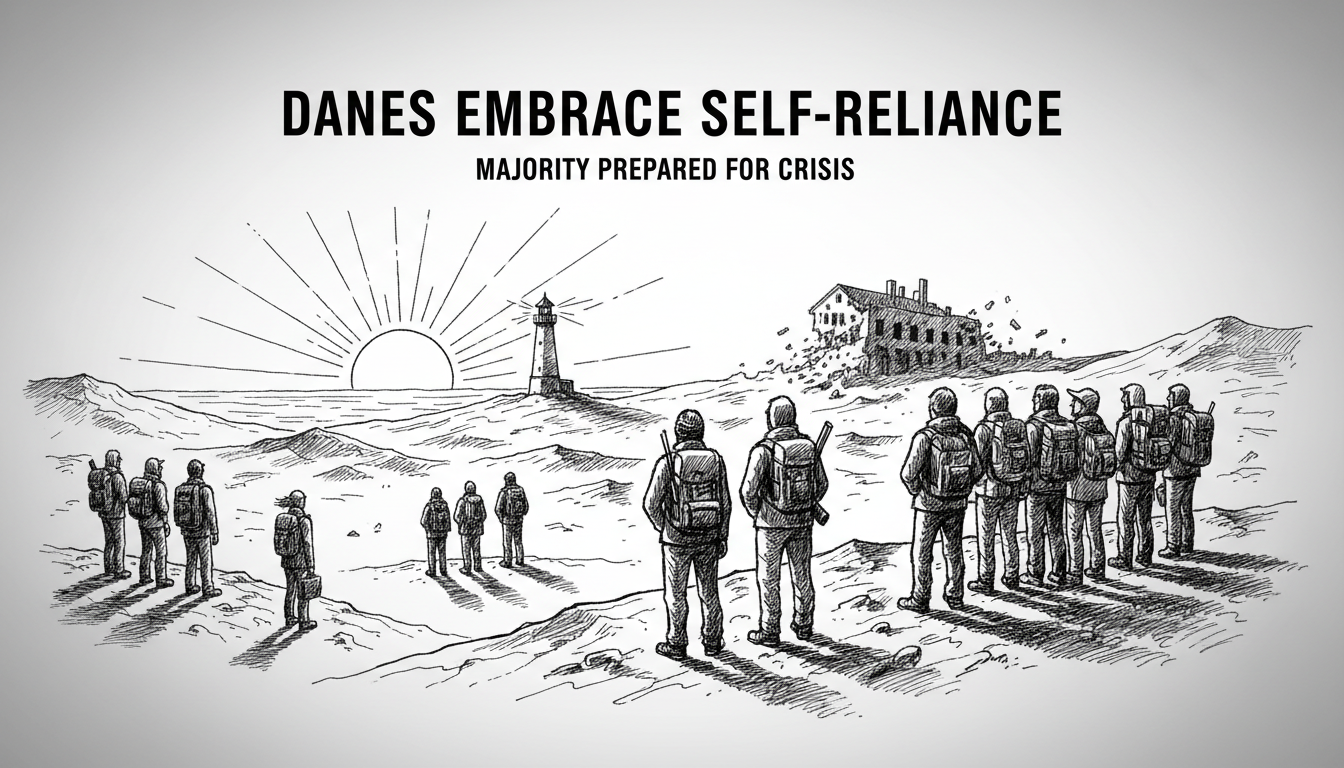
A new survey reveals a fundamental shift in Danish preparedness. For the first time, a majority of citizens report they are ready to manage on their own during a crisis. Six out of ten Danes state they can sustain themselves for three days, which aligns with the government's official recommendation. This marks a notable change in the national mindset within the Danish welfare system.
Experts point to concrete events and a deeper change in attitude as key drivers. Recent incidents like drone sightings over critical infrastructure and local power outages have made the threat of disruption feel more real. These experiences have motivated people across Copenhagen and other municipalities to take personal responsibility for their home preparedness, or 'hjemmeberedskab'.
This trend reflects a subtle but important evolution in Denmark social policy. The state has long encouraged self-reliance, but actual public behavior is now catching up with that ideal. Community centers and local social organizations have reported increased interest in basic survival courses and information sessions. The shift suggests Danes are internalizing the message that the robust public safety net has its limits during a major, sudden event.
From my perspective covering integration and social policy, this data is fascinating. It shows a population historically comfortable with state provision now actively building personal resilience. This could influence future policy, potentially reducing the immediate burden on municipal services during the initial phase of a crisis. It also raises questions about equity. Are all demographic groups, including newer residents still navigating Copenhagen integration, equally prepared? The survey likely masks variations in resources and knowledge.
Officials have welcomed the development. A civil preparedness advisor said the results show public information campaigns are working. They emphasized that individual preparedness is the first, crucial layer of national security. The goal is for households to bridge the gap until organized help can arrive.
The practical implications are clear. More Danes are now stocking essential supplies like water, non-perishable food, and basic medical kits. They are also discussing emergency plans with their families. This collective move toward self-sufficiency strengthens the overall resilience of Danish society. It represents a mature understanding that in a connected world, disruptions can happen quickly and to anyone. The next step for authorities is to ensure this preparedness mindset continues to grow and reaches every segment of the diverse population.