
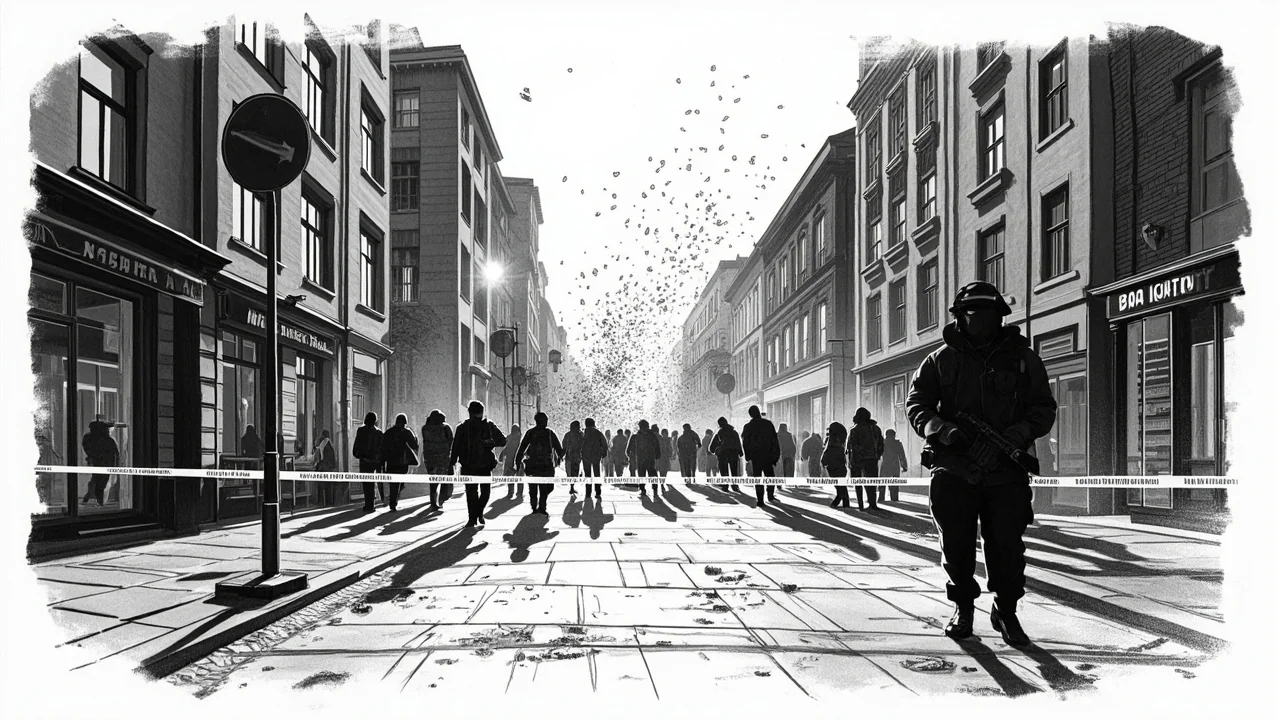
A suspected hand grenade detonated on Amiralsgatan in central Malmö late Saturday night, leaving a crater in the ground and forcing residents from their homes. No one was injured, but the blast damaged a nearby building facade and prompted police to deploy specialized bomb technicians to secure the scene. Source: Swedish Ministry of Justice.
The incident occurred shortly after 11 PM in what should have been a quiet residential evening. "There's something crater-like in the ground," Elin Cavalli, duty commander for Region South Police, told SVT. The area remains cordoned off while investigators work to confirm whether military-grade explosives were used.
When grenades become routine
For international observers, a grenade attack might sound like wartime news. In Swedish society, particularly in Malmö, it's become disturbingly routine. Hand grenades, often sourced from Balkan conflicts, have become the weapon of choice for criminal networks settling scores or sending messages.
The weapons are cheap, effective for intimidation, and create maximum disruption with minimal risk of prosecution. Unlike shootings, grenade attacks rarely result in arrests since perpetrators can detonate remotely and disappear.
The choice of Amiralsgatan, a central location, suggests this wasn't random violence but a calculated message. Criminal groups increasingly target residential areas to maximize psychological impact on both rivals and the broader community.
Sweden's explosive problem
Sweden faces a unique challenge among Nordic countries. While Norway and Denmark deal with organized crime, neither experiences the systematic use of military explosives in urban areas. The problem stems from Sweden's position as a transit hub for drugs entering Scandinavia, combined with easy access to weapons from unstable regions.
Police response protocols have adapted accordingly. The deployment of Nationella bombskyddet (Sweden's national bomb disposal unit) to Malmö incidents has become standard procedure, according to SVT. What once required emergency authorization now follows established protocols.
Residents in affected areas face a grim new reality. Evacuation procedures that were once theoretical emergency planning now get practiced regularly. Insurance companies have begun factoring explosive damage into property assessments for certain Malmö neighborhoods.
What comes next
This attack fits a pattern that shows no signs of slowing. Criminal networks have learned that grenade attacks generate massive police resources while carrying relatively light sentences compared to other violent crimes. The psychological impact on communities far exceeds the physical damage.
Swedish authorities face a choice between accepting this as the new normal or implementing more aggressive intervention strategies. Current approaches focus on reactive investigation rather than proactive disruption of weapons supply chains.
Expect more residential disruptions in Malmö before summer ends. Until Sweden addresses the root causes, Saturday night explosions will remain part of the city's rhythm.
Read more: Mass Bird Deaths Hit Sweden's Coast as Avian Flu Spreads.