
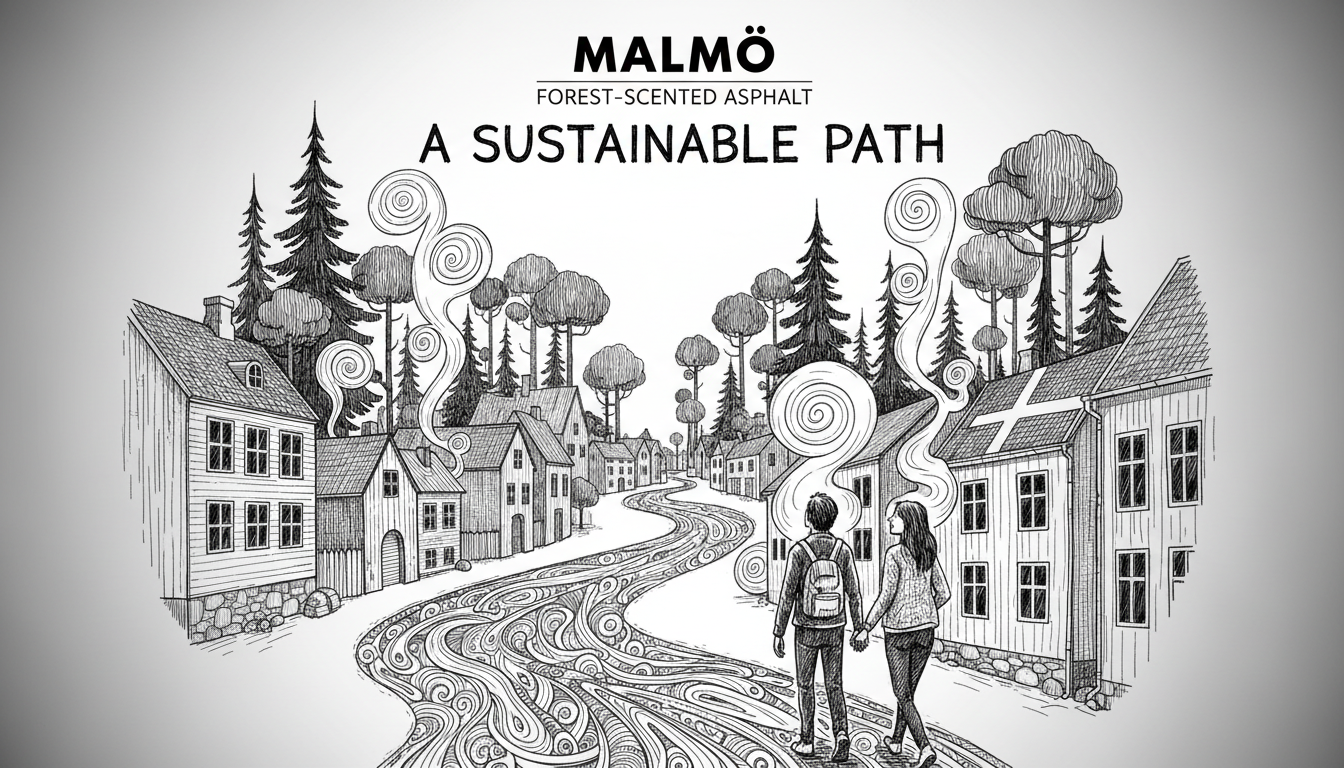
The city of Malmö is testing a new type of asphalt that smells like pine forest, wood workshop, and sauna. This experimental pavement aims to replace traditional asphalt containing bitumen, which produces unpleasant odors during production. Bitumen forms when crude oil undergoes refining processes.
The new asphalt composition offers multiple environmental benefits. It primarily consists of recycled old asphalt materials. Production occurs at an asphalt plant powered entirely by fossil-free fuels. City officials hope this innovation will help achieve their climate goals for the coming decades.
Pajtim Sulejmani, operations manager for Malmö's paving program, explained the city's ambitions. He said in a statement that Malmö wants to eliminate all fossil fuel emissions from its operations by specific future target dates. The city aims to transform its infrastructure work into a completely fossil-free operation.
This asphalt innovation represents part of Sweden's broader sustainable urban development strategy. Swedish cities frequently test environmentally friendly solutions before implementing them widely. Malmö has established itself as a leader in green urban planning over recent years.
The scented asphalt could change how residents experience city streets. Traditional asphalt odors often remind people of road construction and petroleum products. The forest-scented version might create more pleasant urban environments during paving projects.
Environmental benefits extend beyond just pleasant smells. The production process reduces climate impact compared to conventional asphalt manufacturing. Using recycled materials decreases waste while fossil-free operations cut carbon emissions.
Other Swedish cities will likely monitor Malmö's experiment closely. Successful implementation could lead to wider adoption across Scandinavia. Nordic countries consistently rank high in environmental innovation and sustainable urban planning.
The timing aligns with increased European focus on sustainable construction materials. Cities face growing pressure to reduce their environmental footprints while maintaining infrastructure quality. This asphalt solution addresses both requirements simultaneously.
Local residents might notice the difference during future road work. The familiar pungent smell of hot asphalt could be replaced by forest aromas. This change could improve quality of life during construction periods.
Urban planners worldwide watch Scandinavian cities for innovative solutions. Malmö's experiment could influence pavement technology development globally. The city's commitment to fossil-free operations demonstrates practical climate action.
What happens if the test proves successful? City officials would likely expand the scented asphalt program. Other municipalities might adopt similar approaches to road construction and maintenance.
The project shows how cities can address multiple challenges with single solutions. Malmö tackles odor pollution, climate impact, and material recycling simultaneously. This comprehensive approach characterizes Scandinavian urban development strategies.