
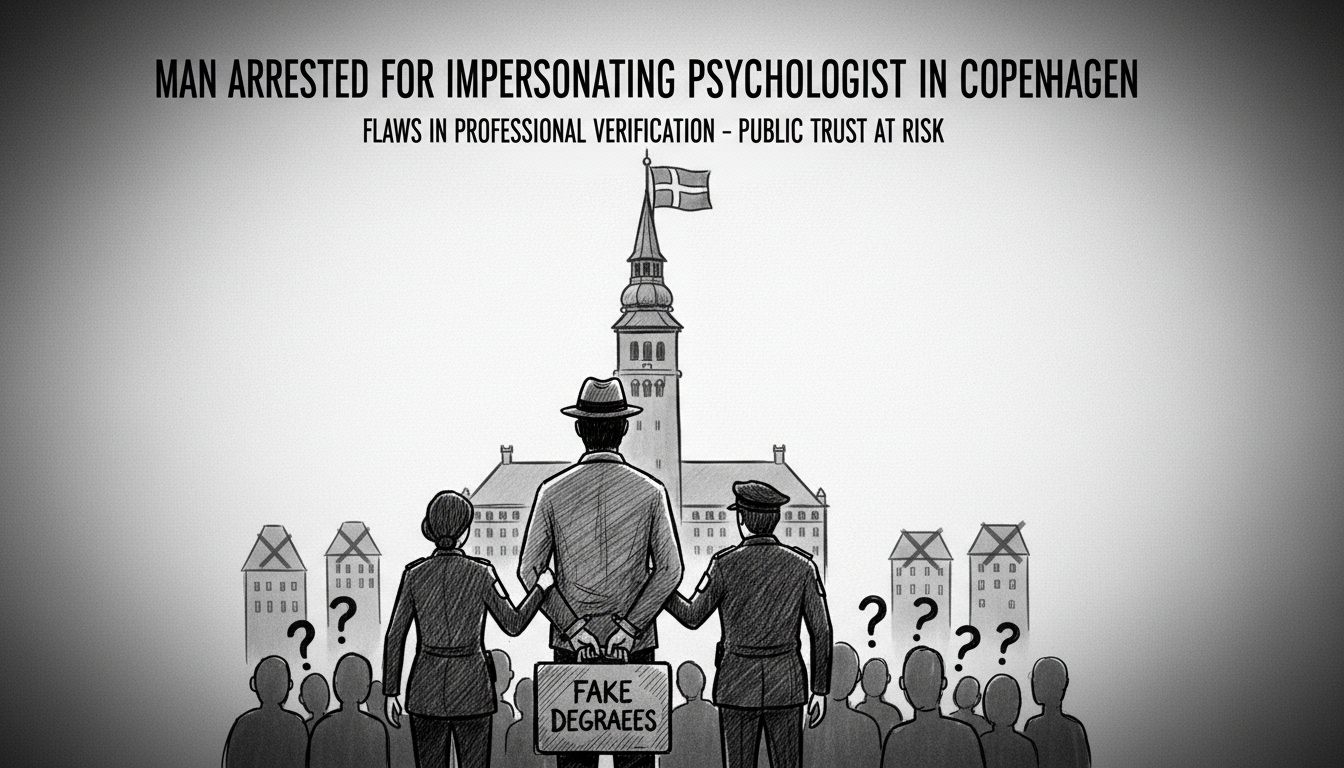
A 42-year-old Danish citizen has been arrested after securing employment as a psychologist at five different workplaces using forged academic credentials. Copenhagen Police confirmed the man has confessed to the charges, which include document forgery, fraud, and violations of Denmark's strict psychologist laws. The case exposes critical vulnerabilities in professional hiring systems and raises urgent questions about oversight in Denmark's welfare sector.
This incident is not an isolated one in the context of Danish society news. It strikes at the heart of public trust in the Danish welfare system, which relies heavily on certified professionals to deliver crucial services. When someone falsely assumes such a sensitive role, the potential harm to vulnerable individuals is immense. How did five separate employers fail to verify his qualifications properly? This is the central question now facing authorities and professional bodies.
Denmark maintains rigorous standards for healthcare professionals, governed by specific laws like the Psychologist Act. The system is designed to protect citizens, but this case suggests a breakdown in basic verification processes. Each workplace, likely including municipal social centers or private clinics, accepted falsified bachelor's and master's degree certificates at face value. This failure occurred despite Denmark's advanced digital public administration, where such checks should be straightforward.
The implications for Copenhagen integration and broader Danish social policy are significant. Trust is the cornerstone of any effective welfare state. When that trust is breached, it can erode confidence in public institutions. For new residents and immigrants navigating Danish society, clear and reliable access to qualified professionals is essential for successful integration. A breach like this can disproportionately affect those who rely most on these support systems.
Officials have stated the man also unlawfully acted with public authority in one instance, compounding the severity of the charges. Police reports indicate a comprehensive investigation is ongoing. The suspect now faces legal consequences that could include substantial fines and imprisonment. The affected workplaces are conducting internal reviews to prevent future lapses.
This story goes beyond simple fraud. It touches on the integrity of Denmark's social contract. The Danish welfare model is admired globally for its comprehensiveness and high standards. This incident serves as a stark reminder that systems are only as strong as their enforcement. It calls for a renewed focus on verification protocols across all municipalities and healthcare providers. The goal must be to restore and safeguard the trust that allows the system to function for everyone.
From a personal perspective, covering Danish integration and social policy, I see this as a systemic warning. It highlights a gap between policy design and practical implementation. Denmark has excellent laws and frameworks, but they require diligent execution. The community deserves answers on how this was allowed to happen repeatedly and what concrete steps will be taken to ensure it cannot happen again. The priority must be protecting those who seek help, ensuring they receive it from genuinely qualified professionals.