
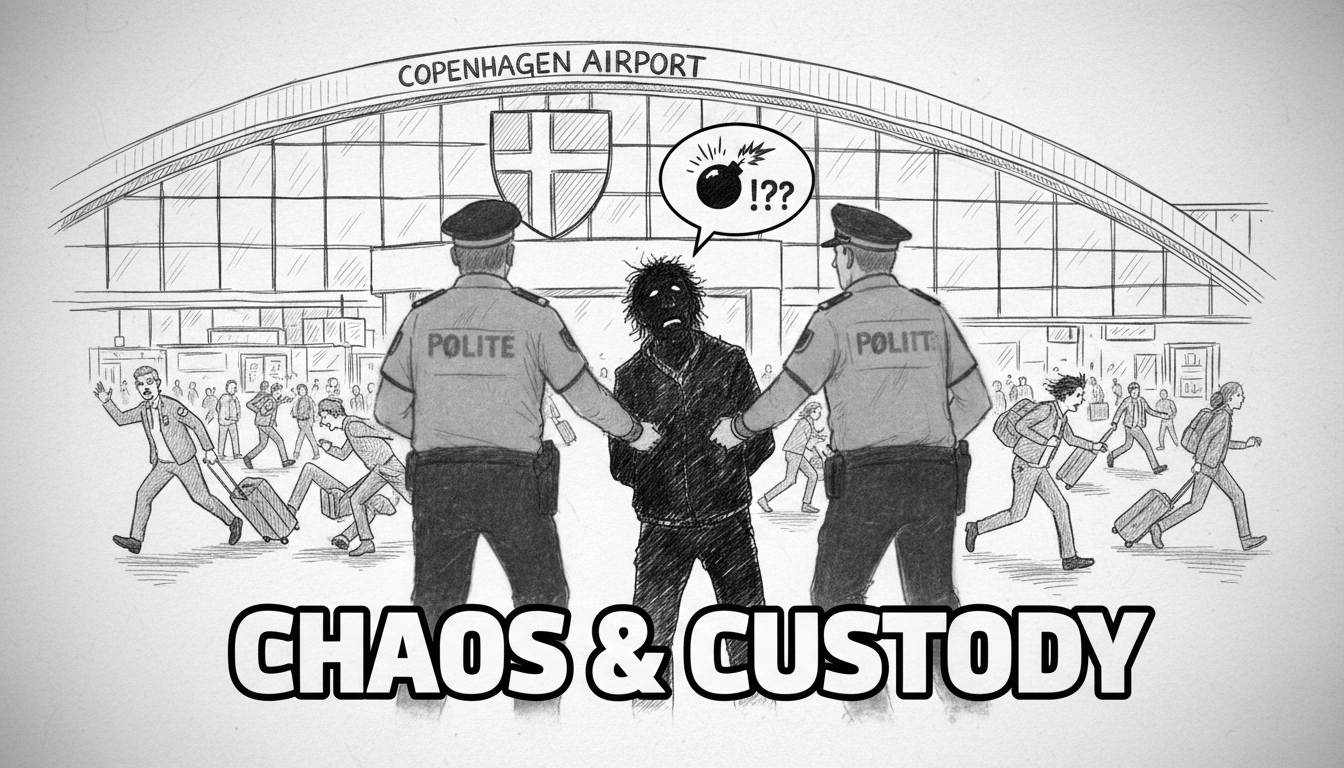
A man from Latvia created major disruption at Copenhagen Airport this week. He shouted that he had explosives in his bag. This single statement triggered a significant security response. The man, aged 36, now faces serious charges. Authorities have charged him with threats against others' lives and health. He also faces charges for violence against a police officer and for vandalism committed while in police custody. A court has ordered him held in pre-trial detention for twenty days.
This incident forces a difficult conversation about security and integration in Denmark. Airport disruptions carry heavy economic and psychological costs. They strain public resources and shake travelers' sense of safety. For a nation that prides itself on order and a robust welfare system, such events test public trust. They also spotlight the challenges within Denmark immigration policy frameworks. How does the system handle individuals who pose a threat to public safety?
The Danish legal response is typically swift and firm. Pre-trial detention, known as 'varetægtsfængsling', is a serious measure. It shows the court perceives a flight risk or a danger of repeated crime. The charges suggest the situation escalated from a threat to physical confrontation with officers. This pattern is concerning for community safety officials. It reflects a failure at multiple potential intervention points before reaching a critical public space like an airport.
Integration statistics often focus on employment and language. Yet, incidents like this point to a more complex social picture. Successful integration into Danish society requires more than a job. It requires a sense of belonging and respect for communal norms. When individuals fall through the cracks, the results can be dramatic and dangerous. Social centers in Copenhagen and other municipalities work to prevent this. Their role in early detection and support is more crucial than ever.
Community leaders often stress that one person's actions should not define an entire group. This is a fundamental principle of a fair society. At the same time, the practical reality of Danish social policy must address specific risks. The system is designed to be protective but not exclusionary. Finding that balance is the ongoing challenge for Copenhagen integration efforts. This case will likely be cited in future policy debates about resource allocation for social services versus security.
What happens next? The man will remain in custody while the investigation continues. The prosecution will build its case based on witness statements, airport security footage, and police reports. The outcome will depend heavily on the evidence of intent and the actual risk assessed. Beyond the courtroom, this event serves as a stark reminder. The smooth functioning of the Danish welfare system relies on a shared commitment to public safety and the rule of law. When that commitment breaks down, the consequences are immediate and severe.