
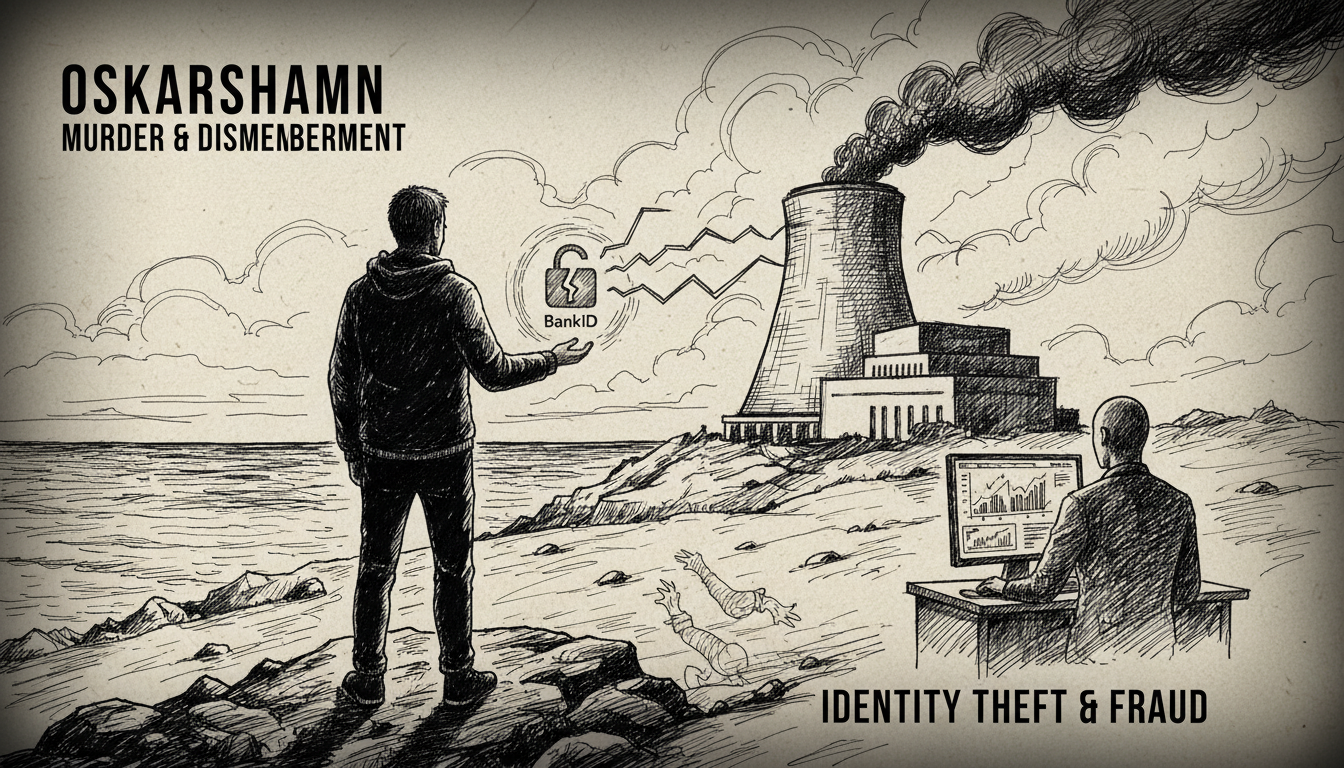
A quiet coastal town in Sweden is reeling from a horrific crime. A man now faces charges for the murder and dismemberment of his 25-year-old colleague in Oskarshamn. The grim discovery was made in February during a police search of the suspect's apartment. Officers found plastic bags containing the victim's remains in a freezer. The young man had been missing for over a month at that point.
The prosecutor's office states the suspect allegedly killed the victim with a knife. The subsequent desecration of the body has complicated efforts to determine the exact cause of death. This detail is central to the formal charges. The case paints a disturbing picture of calculated actions following the alleged crime.
According to the indictment, the suspect then applied for a loan of 100,000 Swedish kronor in the victim's name. He reportedly created a new electronic signature within the victim's BankID to do this. The suspect is also accused of transferring nearly half a million kronor from the victim's account to his own. An additional 50,000 kronor was allegedly sent to various gambling sites.
The man now stands formally charged with murder, gross violation of a grave, four counts of aggravated fraud, and one count of aggravated fraud through document forgery. He was arrested at Stockholm Arlanda Airport in April upon returning from a trip abroad. He has been in custody since then and denies all charges. A preliminary psychiatric evaluation found he was not suffering from a mental disorder at the time of the alleged crimes.
This case touches on deep societal nerves in Sweden. It involves the trusted BankID system, a cornerstone of Swedish digital life used for everything from banking to official signatures. A breach of this system for such criminal purposes is profoundly unsettling. The small community of Oskarshamn, known for its nuclear power plant and ferry terminal, is now grappling with this violence. Such brutal crimes are statistically rare but leave lasting scars on local communities. The legal process will now move forward in the Kalmar District Court. It will seek to answer the many painful questions this tragedy has raised.
The broader context here is Sweden's ongoing relationship with violent crime. While overall rates are low by international standards, high-profile cases like this spark national conversations about safety, mental health, and legal consequences. The combination of alleged violence with sophisticated financial fraud points to a premeditated act. It goes beyond a crime of passion. For international observers, this case is a stark reminder that no society is immune to such darkness. The Swedish justice system, known for its thoroughness, will now be under scrutiny to deliver a clear and fair verdict.