
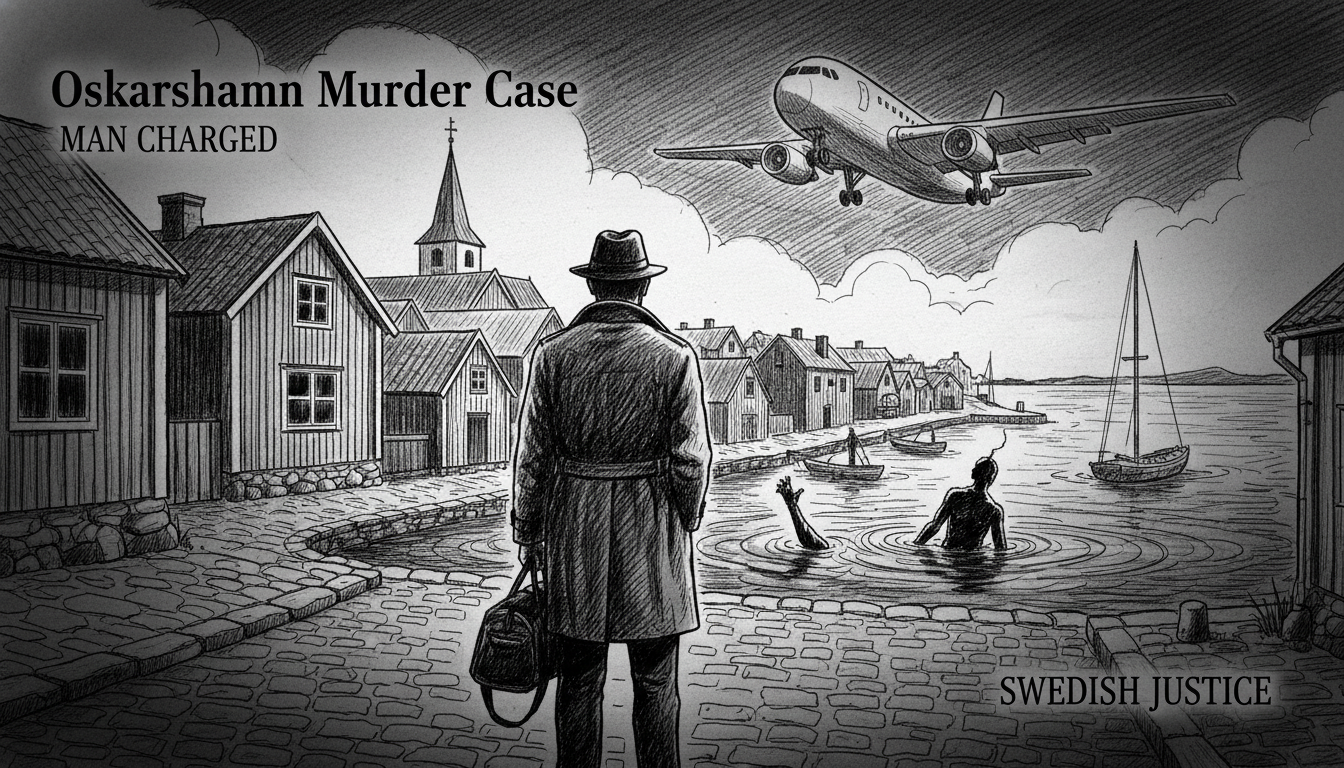
A 26-year-old man now faces serious charges in a case that has shaken the small coastal city of Oskarshamn. Prosecutors have charged him with murder, gross violation of a grave, and several serious frauds. The charges stem from a gruesome discovery in February, when a man's dismembered body was found in a freezer.
After the alleged crime, the suspect fled Sweden. Authorities arrested him in April upon his return to Stockholm Arlanda Airport. This arrest ended a cross-border search that spanned several weeks.
This case touches on deep-seated issues within Swedish society. Violent crime, while still relatively low compared to many nations, generates intense public debate. Each high-profile incident renews discussions about integration, gang violence, and judicial efficiency. Oskarshamn, a quiet port town known for its nuclear power plant and ferry terminal, is an unlikely setting for such brutality. The contrast between its peaceful maritime identity and this violent act is stark.
For international readers, understanding Sweden's legal process is key. The Swedish Prosecution Authority decides to press charges after a police investigation. A trial will follow, where the court examines all evidence. The suspect is presumed innocent until proven guilty. The charges of gross violation of a grave and fraud suggest a complex criminal motive beyond the act of murder itself.
What does this mean for Sweden's broader social landscape? Cases like this often fuel political arguments about law and order. Some voices call for stricter sentencing, while others point to underlying social causes. The reality is that Sweden remains a very safe country, but isolated extreme crimes capture national attention and test public trust.
The next steps are clear. The judicial machinery will grind forward. The court will set a trial date, evidence will be presented, and a verdict will be reached. For the community of Oskarshamn, the path to normalcy is longer. Small towns have long memories, and this event will leave a mark on the local psyche for years to come. The case serves as a somber reminder that profound tragedy can emerge anywhere, challenging the peaceful image of Swedish provincial life.