
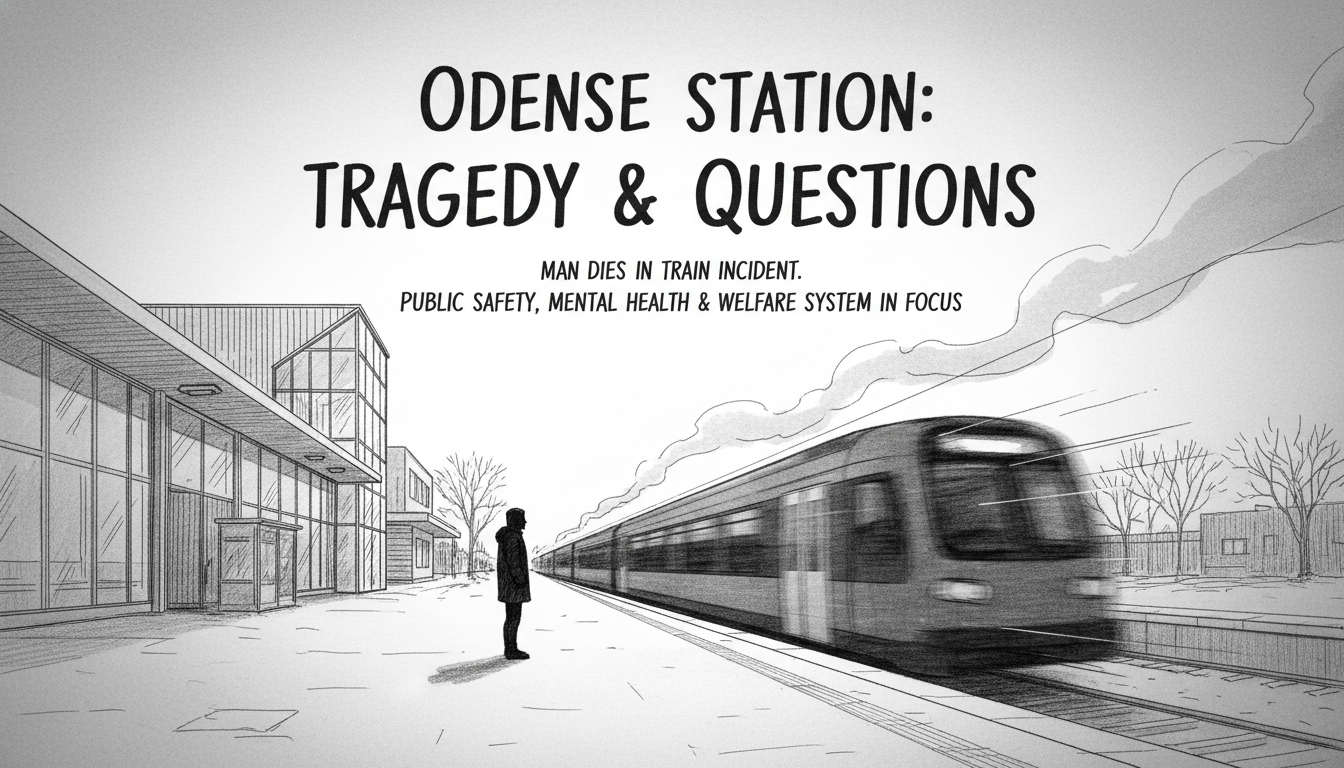
A man died after being struck by a train at Odense Banegårdscenter on Tuesday evening. Police confirmed the death and said they have notified the next of kin. Officials do not suspect any criminal activity in connection with the incident. The event caused significant disruption to rail services in the area for several hours.
Odense, Denmark's third-largest city, is a major transport hub on the island of Funen. Its central station serves thousands of commuters and travelers daily. Tragic incidents like this, while rare, prompt difficult conversations about public safety and mental health support in Danish municipalities. They also test the response protocols of the Danish welfare system, which is designed to provide a safety net for all residents.
From a social policy perspective, every sudden death in a public space raises questions about community well-being. Danish society news often reports on the efficiency of emergency services, but the human stories behind these reports can get lost. What support systems were available to this individual? How does Copenhagen integration and broader Danish social policy aim to prevent such tragedies through early intervention and community support at social centers?
Statistics on integration and mental health are relevant here. Studies show that social isolation is a risk factor, and some immigrant communities report higher levels of stress during acculturation. While the identity of the deceased is not public, it is a moment to reflect on whether Denmark's immigration policy and its associated social services are reaching everyone in need. Community leaders in Odense have previously called for more visible outreach programs, especially near major transit hubs where vulnerable individuals may pass through.
The police investigation will follow standard procedures. In Denmark, such cases are typically handled with a focus on determining the cause and providing closure for the family, rather than attributing blame when no crime is suspected. The rail network operator will also review the incident from a safety standpoint. For international readers, it's important to understand that the Danish approach is often methodical and fact-based, prioritizing the needs of the bereaved family above sensational details.
This is a sobering reminder of the fragility of life and the complex work happening within Danish social policy. The goal is always to build a society where such incidents are prevented through robust community care, accessible mental health resources, and a welfare system that catches people before they fall. The conversation now turns quietly to the family in mourning and the unseen struggles that may have led to this moment on the tracks in Odense.