
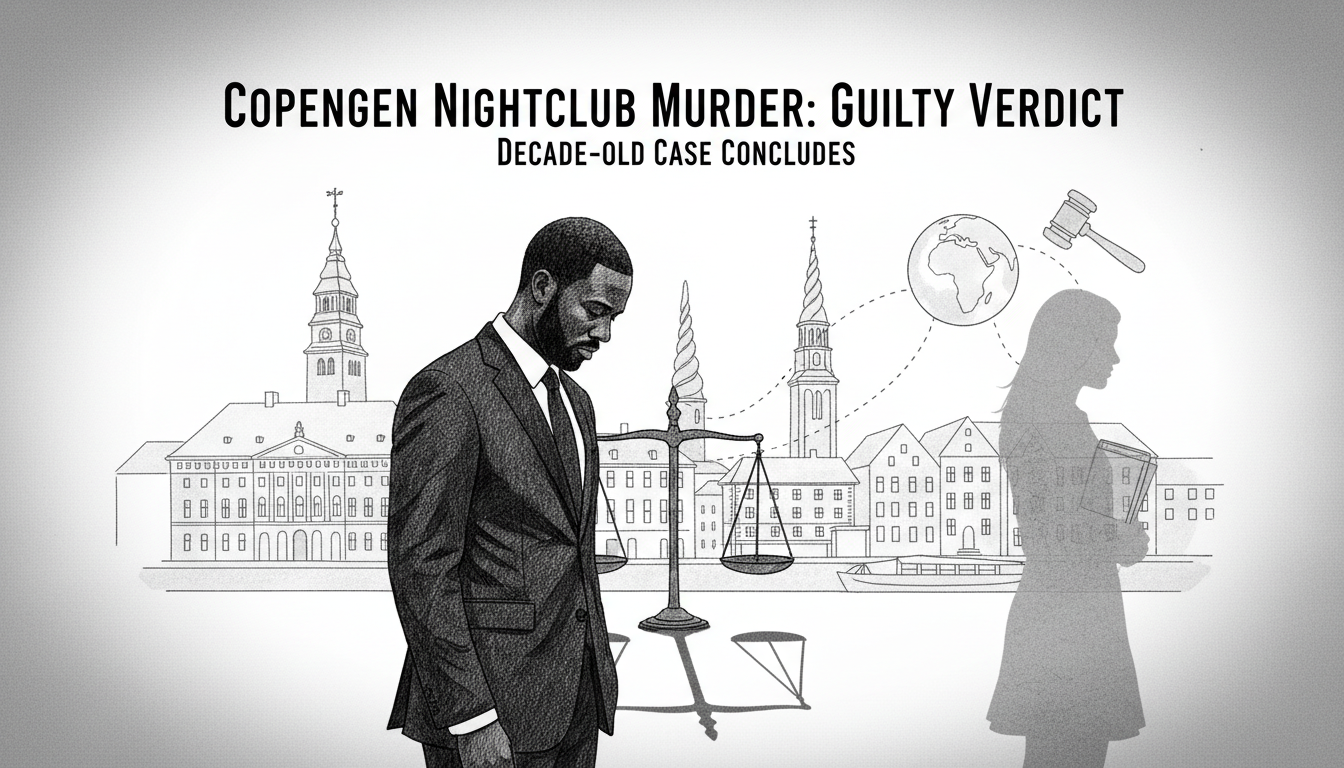
A Copenhagen court has found a man guilty of murdering a law student in a nightclub over a decade ago. The verdict closes a long and complex legal chapter marked by international flight and questions about justice. The victim, Jonas Thomsen Sekyere, was 21 years old when he was fatally stabbed at the Bakken nightclub in the city's Kødbyen meatpacking district. He would have turned 35 this month. The convicted man, Omer Sheik Hassan Muse, fled to Africa after the killing and only returned last year following a lengthy extradition process. He admitted to violence resulting in death but denied the murder charge. A unanimous jury found he acted with intent.
The case highlights the human cost of violence in Copenhagen's nightlife districts. It also reveals the intricate challenges within Denmark's legal system when crimes cross international borders. Muse was tried and sentenced in Somaliland, where he served six years of a ten-year term. Danish authorities did not recognize that conviction due to concerns over judicial standards. Special prosecutor Søren Harbo stated Muse was convicted there without evidence. This forced a full trial in Denmark to establish guilt under Danish law. The court must now decide what weight to give his time served abroad when determining his final sentence later this week.
This tragedy touches on deeper themes in Danish society news, particularly concerning integration and community safety. The murder occurred in Vesterbro, a district with a complex history of transformation and social dynamics. Such incidents force municipal social centers and community leaders to confront issues of violence prevention and youth safety. They occur against the backdrop of ongoing national debates about Denmark immigration policy and the efficacy of its social integration models. Statistics on integration often focus on education and employment, but social cohesion in urban nightlife settings presents a different, more visceral metric.
The Danish welfare system is built on principles of safety and legal certainty. This case tested those principles through its international dimensions. The prolonged pursuit of justice, spanning two continents and over ten years, shows the system's persistence. It also shows its limitations when dealing with foreign judicial processes. The court's finding that Sekyere was stabbed 'without reason' underscores the random brutality that can shatter lives. For the victim's family and friends, the verdict offers a form of closure, yet it cannot restore what was lost. The final sentencing will be a critical moment, balancing punishment with the legal complexities of a case that straddled two very different worlds.
What does this mean for Copenhagen integration efforts? Violent crimes, while statistically rare, resonate deeply and can strain community trust. They prompt difficult conversations about responsibility, belonging, and the shared values underpinning Danish social policy. The case serves as a somber reminder that legal outcomes, while necessary, are only one part of a much larger social picture. The work of building safe, inclusive communities continues daily in neighborhoods across the city, far from the courtroom.