
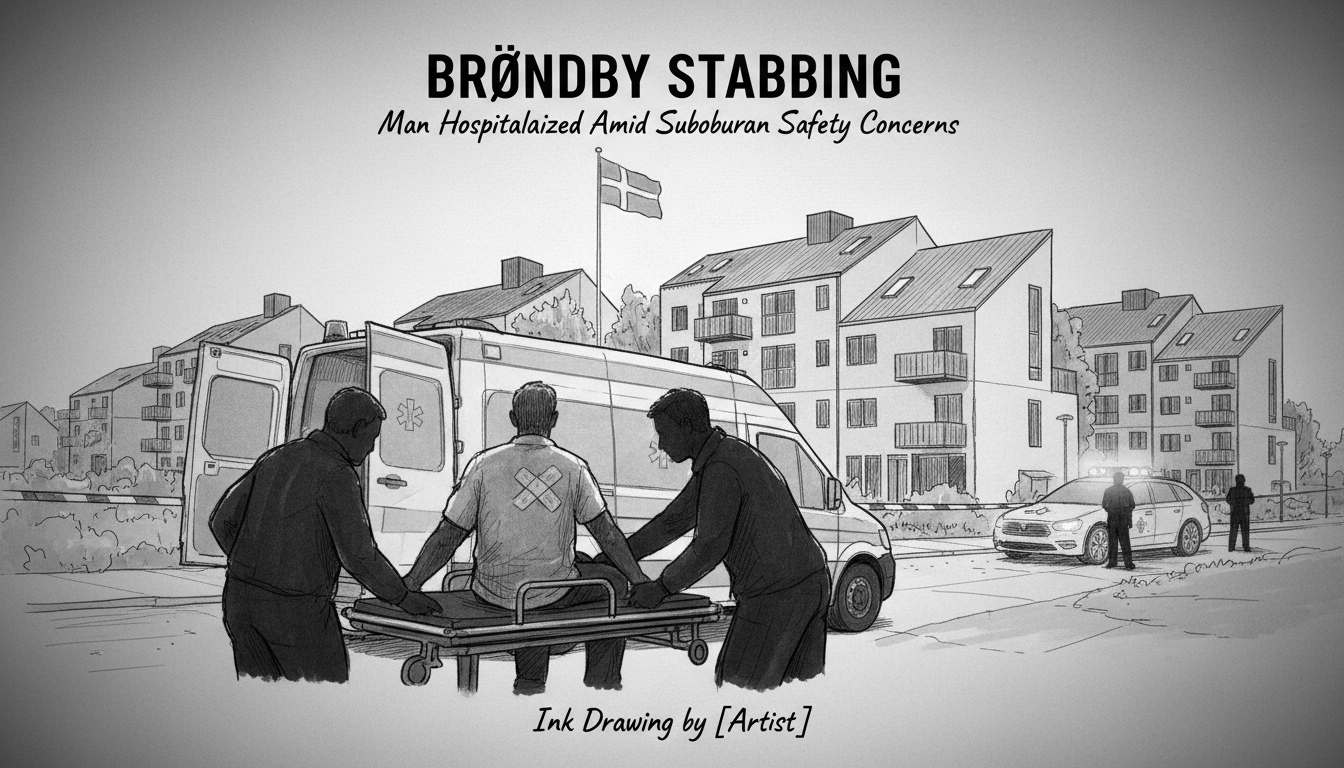
A man was rushed to the hospital Thursday evening after being stabbed in Brøndby, a municipality west of Copenhagen. Police cordoned off the Turpinsvinget area where the violent incident occurred. Authorities have not released information about the victim's condition, age, or whether any suspects have been detained. The Copenhagen Western Suburbs Police confirmed their presence at the scene but declined to provide additional details about the ongoing investigation.
This stabbing comes amid ongoing discussions about safety and integration in Danish suburban communities. Brøndby, like many municipalities surrounding Copenhagen, has experienced both successful integration stories and occasional tensions. Local social centers in these areas often work to prevent violence through community programs and youth engagement initiatives.
Denmark's approach to integration combines strict immigration policies with substantial welfare support. The country invests approximately 3.5 billion Danish kroner annually in integration programs, focusing heavily on language education and employment preparation. Recent statistics show that about 65% of immigrants from non-Western countries participate in labor market integration programs within their first three years in Denmark.
Community leaders in Copenhagen's western suburbs have emphasized the importance of early intervention. They point to education as the cornerstone of successful integration. Municipal integration councils typically coordinate with local schools to identify at-risk youth before they become involved in criminal activities. These efforts reflect Denmark's broader social policy framework that balances individual responsibility with state support.
The Danish welfare system provides comprehensive social services while maintaining high expectations for civic participation. This incident raises questions about whether current integration strategies adequately address the complex challenges facing suburban communities. Police presence has increased in several Copenhagen suburbs over recent quarters, though authorities emphasize that most areas remain safe for residents.
What does this mean for Denmark's social fabric? The country continues to navigate the delicate balance between maintaining social cohesion and addressing isolated incidents of violence. Municipal social workers in Brøndby and similar communities face the daily challenge of implementing national policies at the local level while responding to immediate community needs.
International observers often look to Denmark's integration model for lessons. The country's combination of language requirements, employment incentives, and social support represents a distinct approach within the Nordic region. Yet incidents like this stabbing remind us that no system is perfect, and continuous adaptation remains necessary.