
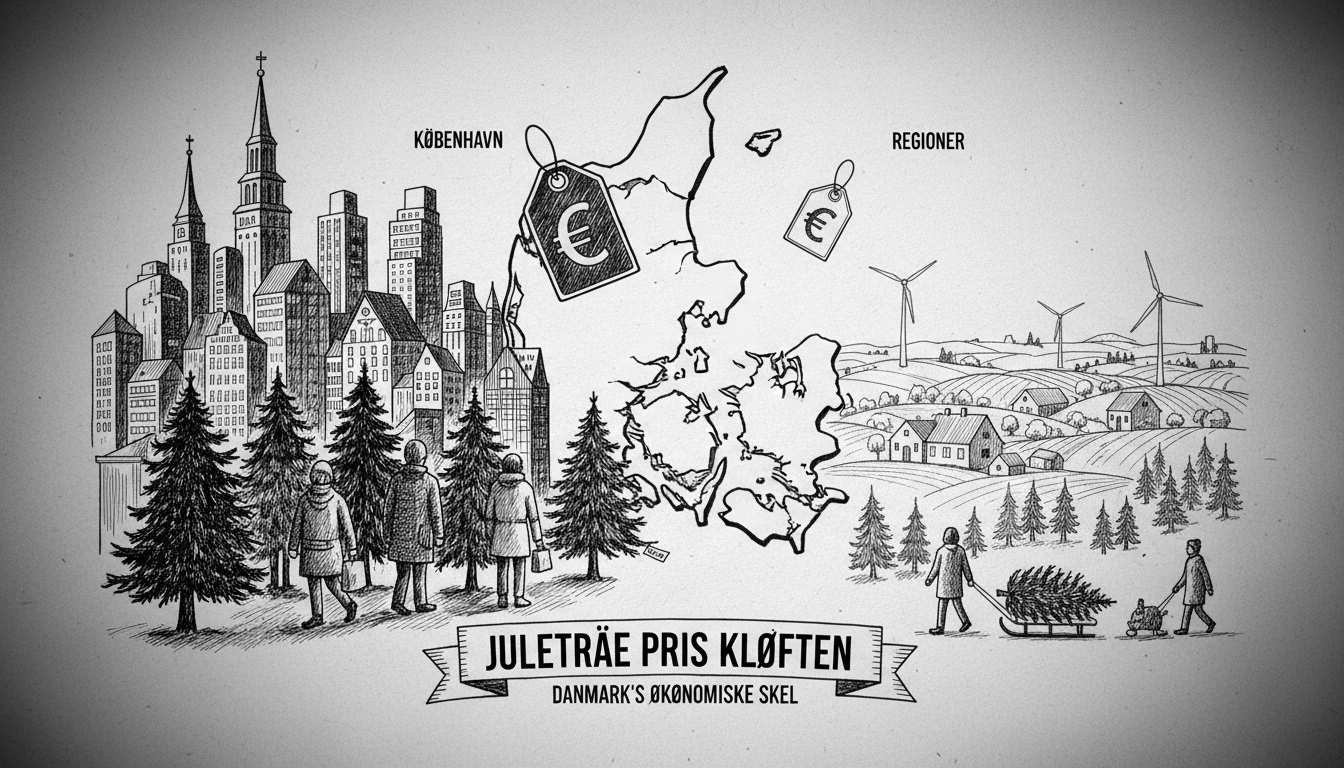
A Christmas tree seller outside the Danish capital had a blunt assessment of the market. You should have sold trees in Copenhagen, he said. This statement came after a price survey revealed dramatic differences in what Danes pay for their holiday centerpiece. The survey contacted nineteen sellers across the country to ask about the cost of a two-meter Nordmann fir, the nation's preferred tree. In cities like Aarhus and Copenhagen, buyers quickly part with nearly a thousand kroner. In many other places, the price drops to half that amount. One location on the island of Funen, Vestfyens Trædrejeri, offered a tree for a flat fifty kroner. The catch was that customers had to cut it down themselves, and availability was running low. The price map shows a clear urban-rural split, but it is based on spot checks, not average prices for each area.
This annual price ritual reflects deeper economic patterns within Danish society. The cost of living, particularly in major urban centers, consistently outpaces other regions. For international observers, this simple price check offers a window into Denmark's economic geography. Copenhagen and Aarhus function as powerful economic engines, with higher wages and costs that ripple into every consumer good, even seasonal ones. The Danish welfare system aims to mitigate regional disparities, but market forces still create a tangible price landscape. This affects not just Christmas trees but housing, services, and daily groceries, shaping where people choose to live and work.
Integration and social policy experts often note how such economic divides intersect with community life. Newcomers to Denmark frequently settle in larger cities where job networks and cultural communities are strongest. This can mean their first Danish Christmas comes with a premium price tag for tradition. Community centers and municipal integration programs sometimes organize events like collective tree purchases to foster connection and ease financial pressure. The price of a tree, therefore, is not just a personal expense but a small data point in the broader story of Danish social cohesion and regional balance. It asks a quiet question about equality in everyday experiences across the kingdom.
Local municipalities have little direct control over such market prices, but they influence the environment around them. The availability of public spaces for tree sellers, local business taxes, and transportation costs all feed into the final price a customer sees. Some social analysts suggest these seasonal price gaps mirror year-round challenges in Denmark's integration efforts, where access to affordable traditions can affect a sense of belonging. The conversation around a fifty-kroner tree versus a thousand-kroner tree is, in a microcosm, a conversation about value, community, and what it costs to participate fully in Danish cultural life, regardless of your postcode.