
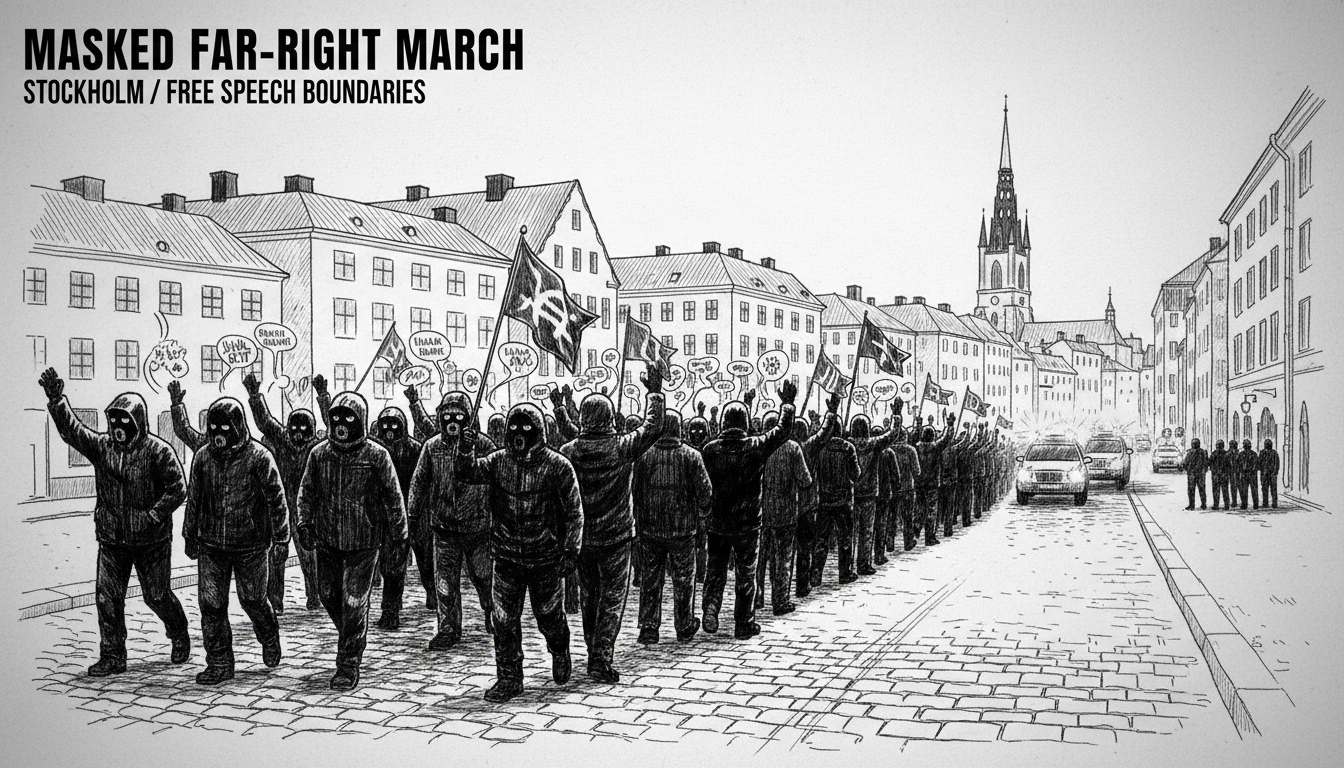
Stockholm witnessed a disturbing scene this weekend as approximately seventy masked individuals marched through the city's central neighborhoods. The group carried banners bearing Nazi symbols and shouted extremist slogans during their procession from Strandvägen to Riddarholmen. Police closely monitored the event and eventually escorted participants to the Gamla Stan subway station.
The marchers wore dark clothing and face coverings while displaying banners referencing known extremist organizations. Witnesses reported hearing chants promoting exclusionary nationalist messages as the group moved through Kungsträdgården park. This public demonstration by far-right activists in Sweden's capital raises important questions about freedom of speech boundaries and public safety concerns.
Sweden has experienced similar demonstrations in recent years, though this weekend's event stood out for its coordination and visibility in prominent tourist areas. The march occurred along Strandvägen, one of Stockholm's most elegant boulevards, before proceeding through the popular Kungsträdgården park. These locations typically attract both locals and international visitors enjoying the city's cultural attractions.
Swedish society continues grappling with how to balance democratic principles with preventing the normalization of extremist ideologies. The country's approach to free speech remains broadly protective, but recent years have seen increased debate about where to draw lines. This incident comes amid ongoing discussions about integration challenges and social cohesion in Swedish communities.
International observers often look to Sweden as a model for social democracy and inclusive policies. Events like this weekend's march highlight the complex realities facing modern European societies. They also demonstrate how global far-right movements can manifest locally, even in nations known for progressive values.
For Stockholm residents and visitors, such demonstrations create difficult questions about public space usage and civic responsibility. The city's cultural institutions and public areas typically showcase Sweden's renowned commitment to openness and diversity. This contrast between everyday Swedish lifestyle and occasional extremist displays represents one of the country's ongoing social challenges.
What does this mean for Sweden's international reputation and domestic social climate? The immediate police response shows authorities take such demonstrations seriously. The broader societal response will likely continue evolving as Sweden navigates its identity in an increasingly polarized global context. These events remind us that even established democracies must continually work to protect their core values.
Stockholm's cultural landscape includes countless positive events celebrating diversity and inclusion. This weekend's march represents a small but visible counter-current in Swedish society trends. Understanding both the mainstream culture and these occasional challenges provides a more complete picture of contemporary Sweden.