
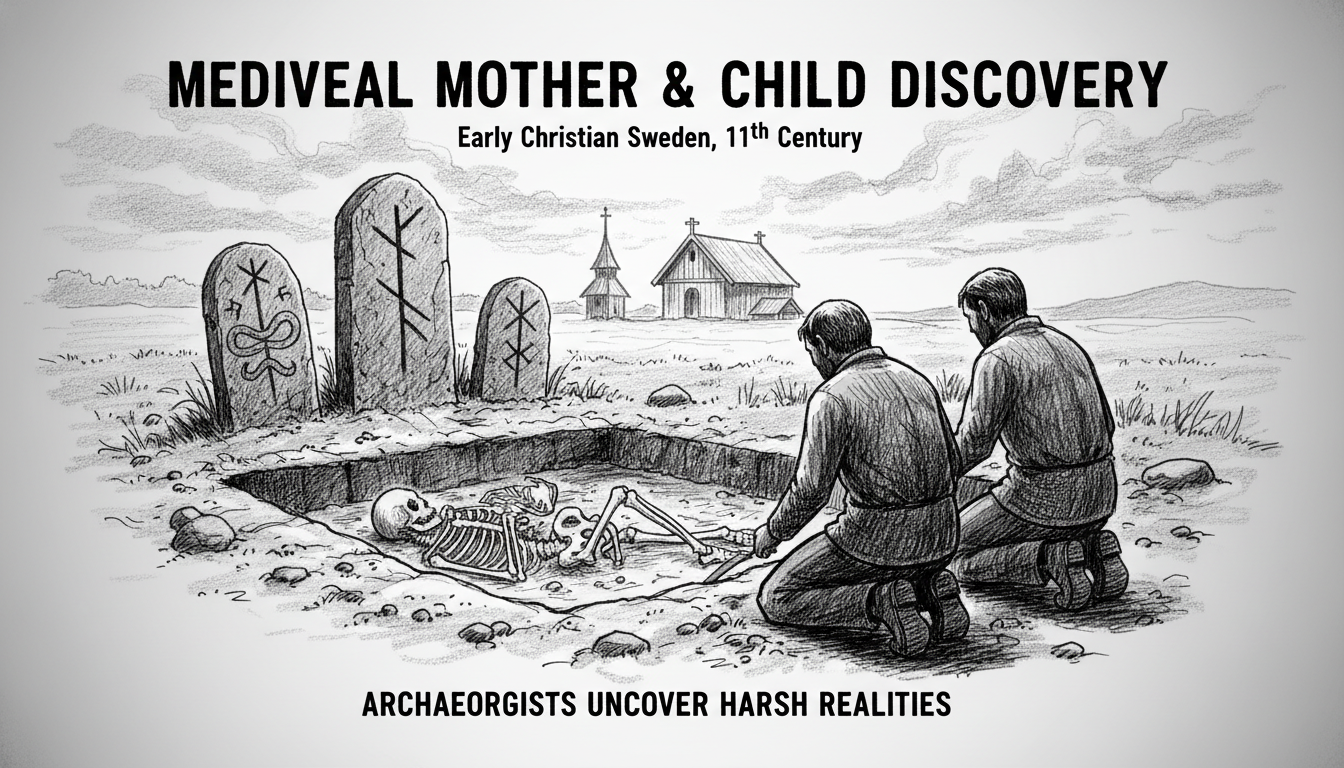
Archaeologists in Sweden uncovered a unique medieval cemetery containing poignant human remains. The burial site in Äs village reveals a mother buried with her unborn child, creating an emotional connection across centuries.
Excavations at the Badelundaåsen ridge north of Västerås exposed an early Christian cemetery from the region's first Christian phase. Researchers also found evidence of an early wooden church that provides crucial information about Christian death rituals in rural areas.
After two years of digging, archaeologists analyzed remains from over 750 individuals. Oscar Spjuth, project leader and archaeologist at the Cultural Heritage Foundation, said in a statement that dating shows the cemetery served multiple generations from the mid-11th century.
The findings reveal high child mortality rates. Approximately one in five children died before reaching six years old. This data offers unique insight into life and health during the early medieval period.
Many adult skeletons show signs of difficult lives and extensive arthritis. "This was a time when people lacked the hygiene knowledge we have today," Spjuth noted.
Archaeologists await additional results from DNA analysis and modern techniques. These tests may provide answers about family relationships, diseases, and diet patterns. Such information could significantly impact research about early Christianity in rural Mälardalen.
The discovery highlights how archaeological work connects us directly with human experiences from a millennium ago. The mother and child burial particularly demonstrates how personal stories emerge from historical research.
What can modern science reveal about these medieval Swedes? Advanced analysis might soon show how these early Christians lived, worked, and worshipped in the Swedish countryside.