
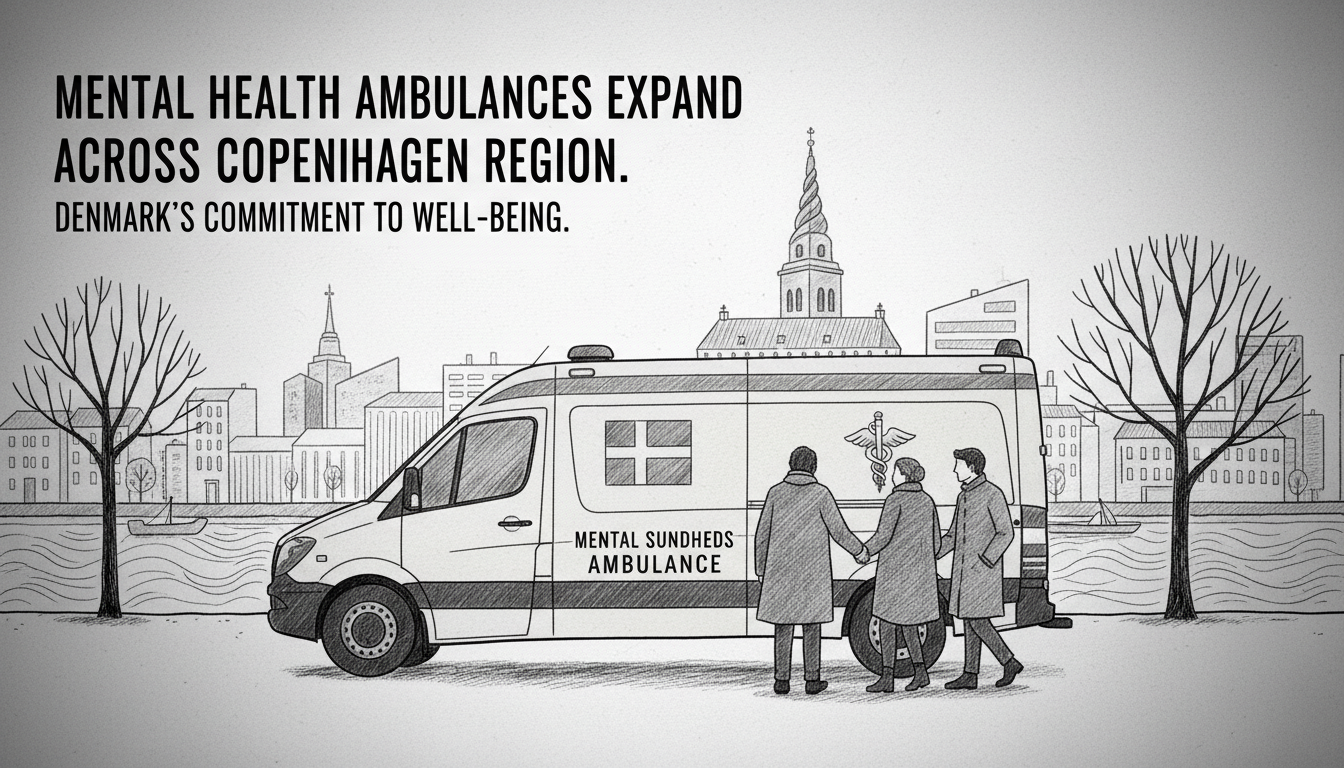
Mental health emergencies demand immediate specialized response. Copenhagen's new regional administration plans to expand psychiatric ambulance services. These bright yellow vehicles represent a critical evolution in Denmark's approach to mental healthcare.
The ambulances resemble traditional emergency vehicles but serve different needs. They transport people experiencing acute psychological distress to psychiatric facilities. While standard ambulances carry stretchers for physical emergencies, these modified vehicles feature seating arrangements designed for conscious patients.
Anders Legarth Schmidt described the service expansion as essential. He noted these specialized units already operate throughout the city. Many residents have seen them speeding through streets without understanding their specific purpose.
Denmark's welfare system increasingly recognizes mental health parity. The country maintains one of Europe's most comprehensive public healthcare systems. Recent statistics show approximately 25% of Danes experience mental health challenges during their lifetimes. Copenhagen integration policies emphasize accessible treatment for all residents.
Municipal social centers coordinate with healthcare providers to identify needs. This ambulance expansion reflects Denmark's social policy priorities. The country allocates substantial resources to community-based mental health support.
Mental health professionals welcome the service enhancement. They note timely intervention can prevent crises from escalating. Copenhagen's approach demonstrates how urban centers can adapt infrastructure to serve vulnerable populations.
Denmark immigration policy ensures newcomers access mental health services. The welfare system provides translated materials and cultural mediators. This commitment to inclusive care strengthens community resilience.
Regional authorities face practical implementation challenges. They must recruit specialized staff and maintain appropriate response times. The expansion requires coordination between healthcare providers and municipal governments.
This development represents meaningful progress in destigmatizing mental healthcare. It signals that psychological emergencies deserve the same urgent response as physical health crises. The visible presence of these vehicles normalizes seeking help during mental health episodes.
Copenhagen's initiative could influence other Nordic capitals. Stockholm and Oslo monitor Danish social innovations for potential adaptation. The region continues leading in developing humane, practical welfare solutions.