
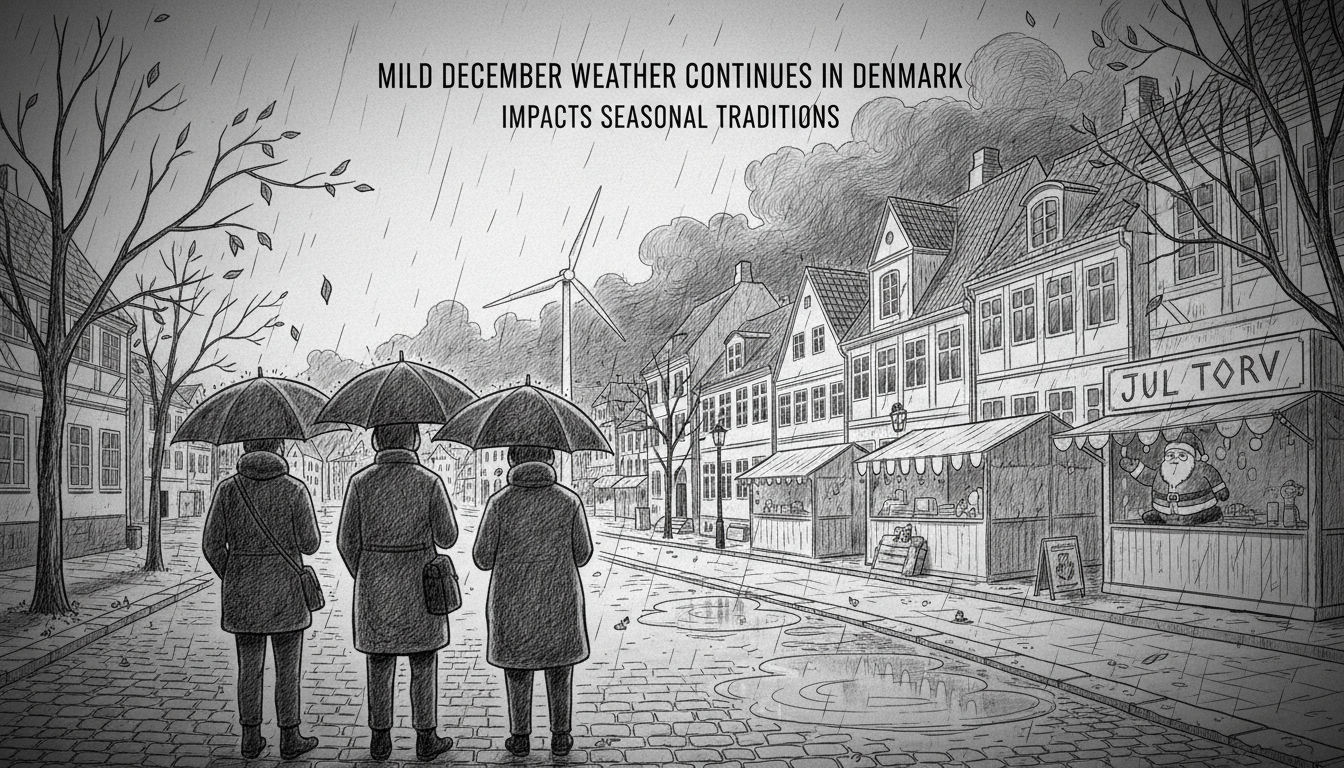
A persistent blanket of grey clouds and intermittent rain is settling over Denmark this weekend. Temperatures will remain unusually mild for December, with Sunday potentially seeing highs near double digits. This forecast comes from meteorologists at the national weather institute. The weather pattern raises questions about the broader social and cultural impacts of shifting seasonal norms in Danish society. For a nation where winter traditions are deeply woven into the social fabric, unseasonable warmth can disrupt more than just weekend plans. It touches on community gatherings, energy consumption, and the very rhythm of public life that the Danish welfare system is designed to support.
Friday begins dry, but rain will develop in the eastern regions during the afternoon. This precipitation will then move northwestward through the evening and night. A meteorologist advised that anyone heading to a Christmas lunch or similar gathering in the eastern and northern parts of the country should consider packing a small umbrella. Meanwhile, the southwestern region may avoid the rain on Friday, though the pervasive grey skies will be a nationwide feature. This consistent cloud cover is a hallmark of the current weather system.
Saturday follows a similar pattern. Temperatures will range between three and six degrees Celsius, starting dry before rain arrives, this time affecting the southern parts of the country. Saturday is also expected to be the windiest day of the weekend, with winds coming from the south and southeast. These conditions, while mild, present a damp and blustery picture for outdoor activities and travel.
The weekend concludes with a mild second Sunday of Advent. Daytime temperatures could reach eight or nine degrees in many areas. However, the trade-off will be rain in numerous locations across the country. A weather official summarized the outlook by stating we can expect a weekend with plenty of clouds and periods of light rain. Looking ahead, forecasts indicate even warmer December weather is on the way, with temperatures potentially climbing to around twelve degrees early next week.
This extended period of mild, wet weather has implications beyond the forecast. In Copenhagen and other municipalities, social centers and community events often plan around seasonal expectations. Unpredictable weather can affect attendance at outdoor markets, charity runs, and communal Advent celebrations that are vital for social cohesion. From an integration perspective, these shared seasonal rituals are often points of cultural introduction for newcomers. When the traditional cold, crisp December fails to materialize, it can subtly alter those shared experiences.
The Danish welfare system and its social policies are built on predictable rhythms, including energy support for heating during cold winters. Exceptionally warm periods in winter can temporarily reduce household energy burdens, a small relief amidst high costs. Yet, they also feed into larger, more concerning conversations about climate change that Denmark is actively grappling with through its environmental policies. The direct human impact is felt by families planning traditional outings, by vendors at Christmas markets, and by anyone whose job depends on typical winter conditions. This weather is a gentle but persistent reminder of how environmental factors interact with the structured daily life Danish society is known for.