
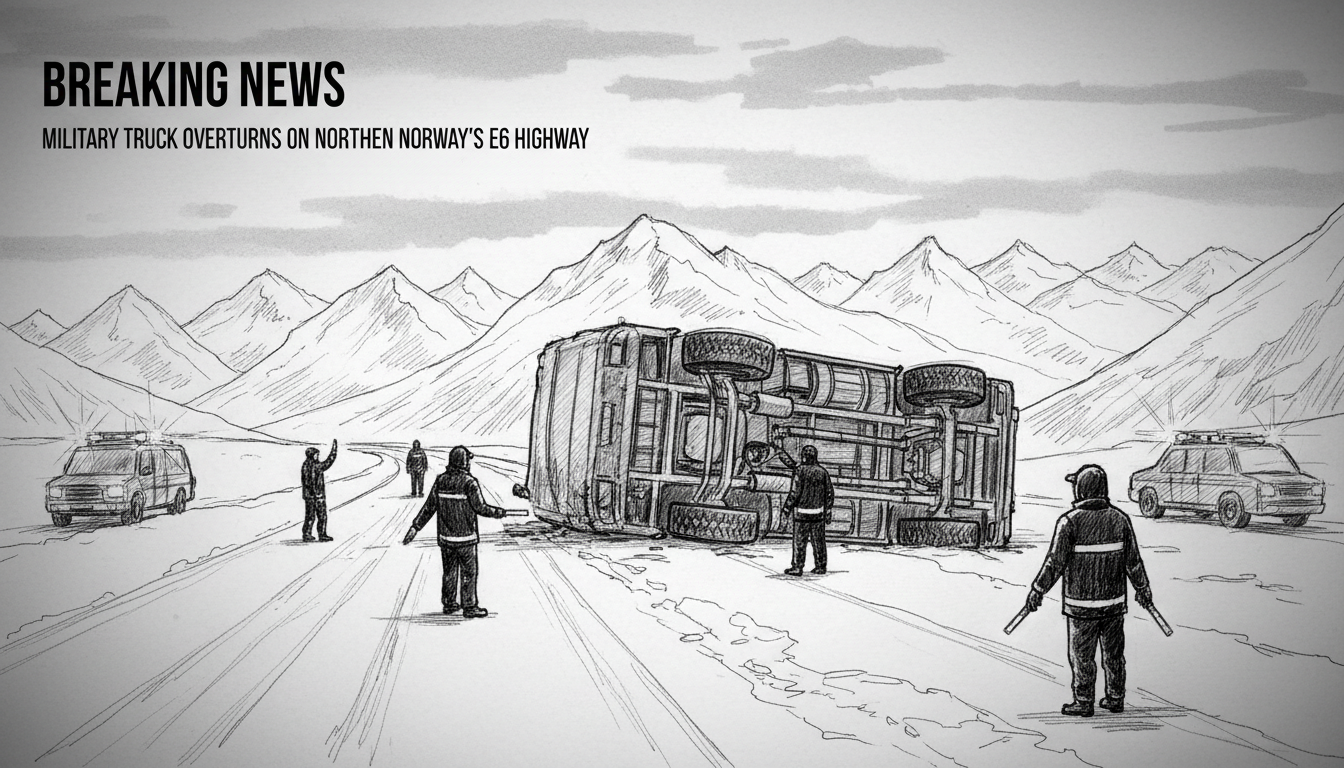
A heavy military vehicle overturned along Norway's vital E6 highway north of Setermoen in Bardu municipality. The incident occurred during the late afternoon in Troms county. Police confirmed the truck was a civilian vehicle operating under military contract. No injuries were reported and authorities confirmed no hazardous materials leaked from the vehicle.
Emergency responders quickly secured the scene near Setermoen military base. The accident occurred in a region known for challenging Arctic driving conditions. Recovery operations began immediately with tow trucks dispatched to clear the roadway. Operations manager Knut Laurits Slartmann warned travelers about potential traffic delays in the area.
This incident highlights transportation challenges along Norway's crucial northern corridor. The E6 highway serves as the primary land connection between northern and southern Norway. Military vehicles regularly traverse this route between key defense installations. The Arctic terrain presents unique driving hazards, particularly during seasonal transitions.
Norwegian authorities maintain strict safety protocols for military transport operations. All defense-contracted vehicles undergo regular maintenance checks. The Norwegian Parliament has previously allocated funds for northern highway improvements. These investments aim to enhance safety along critical supply routes.
Transportation officials monitor such incidents for patterns that might indicate systemic issues. The Northern Norway region experiences particular infrastructure stresses due to extreme weather conditions. Previous Storting debates have addressed funding for Arctic road maintenance. Lawmakers recognize the strategic importance of reliable northern transportation networks.
This accident occurred in Troms county, home to several key military installations. The region's infrastructure supports both civilian and defense needs. Recent government reports emphasized maintaining northern mobility despite climate challenges. The current administration continues prioritizing Arctic connectivity in national budgets.
Cleanup operations proceeded efficiently according to established emergency response plans. Norwegian emergency services maintain high readiness levels for highway incidents. The coordinated response demonstrates effective inter-agency cooperation in remote regions. Such protocols ensure minimal disruption to vital transportation arteries.
Northern Norway's transportation network requires constant attention from Oslo policymakers. The E6 highway remains essential for regional economic activity and national security. Future infrastructure investments will likely focus on enhancing resilience against Arctic weather conditions. These developments warrant continued monitoring by transportation analysts and policy experts.