
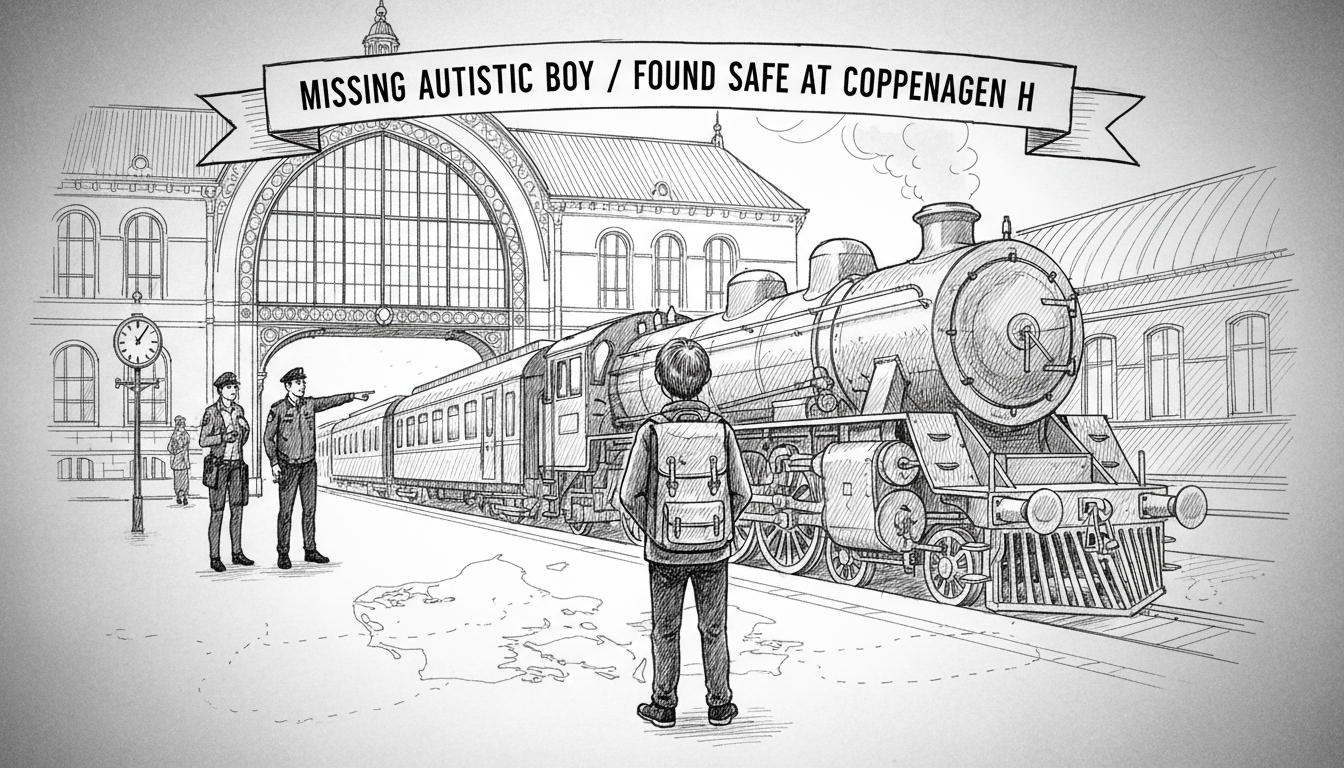
A 12-year-old autistic boy from Kvaglund near Esbjerg has been located safe at Copenhagen Central Station after a day-long search. Police confirmed the successful conclusion to their missing person operation late Friday evening. The child had last been seen leaving his home for school at eight o'clock Friday morning.
The boy's strong interest in trains provided crucial clues for investigators. A fellow passenger traveling from Esbjerg toward Copenhagen reported speaking with the child during the journey. That citizen disembarked in Middelfart, leaving authorities to continue their search across Funen and Zealand regions.
This incident highlights both the vulnerabilities and strengths within Denmark's social support systems. For families with neurodivergent members, such situations create understandable anxiety. Yet the coordinated response between police and community members demonstrates how Danish society mobilizes around child safety concerns.
Copenhagen integration efforts often focus on broader demographic patterns, but this case reminds us that integration encompasses many dimensions. The welfare system's capacity to support families with special needs children remains a critical measure of its effectiveness. Municipal social centers typically provide resources for such families, though individual circumstances vary considerably.
Denmark immigration policy discussions sometimes overshadow domestic integration challenges. This episode illustrates how social cohesion functions at the most fundamental level—community members watching out for vulnerable individuals regardless of background. The passenger who alerted authorities performed exactly the kind of civic engagement that strengthens social fabric.
Recent statistics show approximately 1.5% of Danish schoolchildren receive autism spectrum diagnoses. Educational integration for these students has improved substantially over the past decade. Most municipalities now employ special education consultants who work with mainstream schools to create supportive learning environments.
The successful resolution of this case reflects well on Denmark's child protection protocols. Police coordination across regional jurisdictions, combined with public cooperation, created an effective safety net. For international observers, it demonstrates how Scandinavian welfare states prioritize individual wellbeing through institutional cooperation.
What lessons might other societies draw from this incident? The value of training transportation staff to recognize vulnerable passengers becomes clear. The importance of community awareness about neurodiversity also stands out. Most fundamentally, it shows that social policy succeeds when systems and citizens work together toward common goals.
As the boy reunites with his family, we're reminded that integration isn't merely about demographics or statistics. True integration occurs when every community member feels responsible for every other's safety and wellbeing. That's the foundation upon which Denmark's social model ultimately rests.