
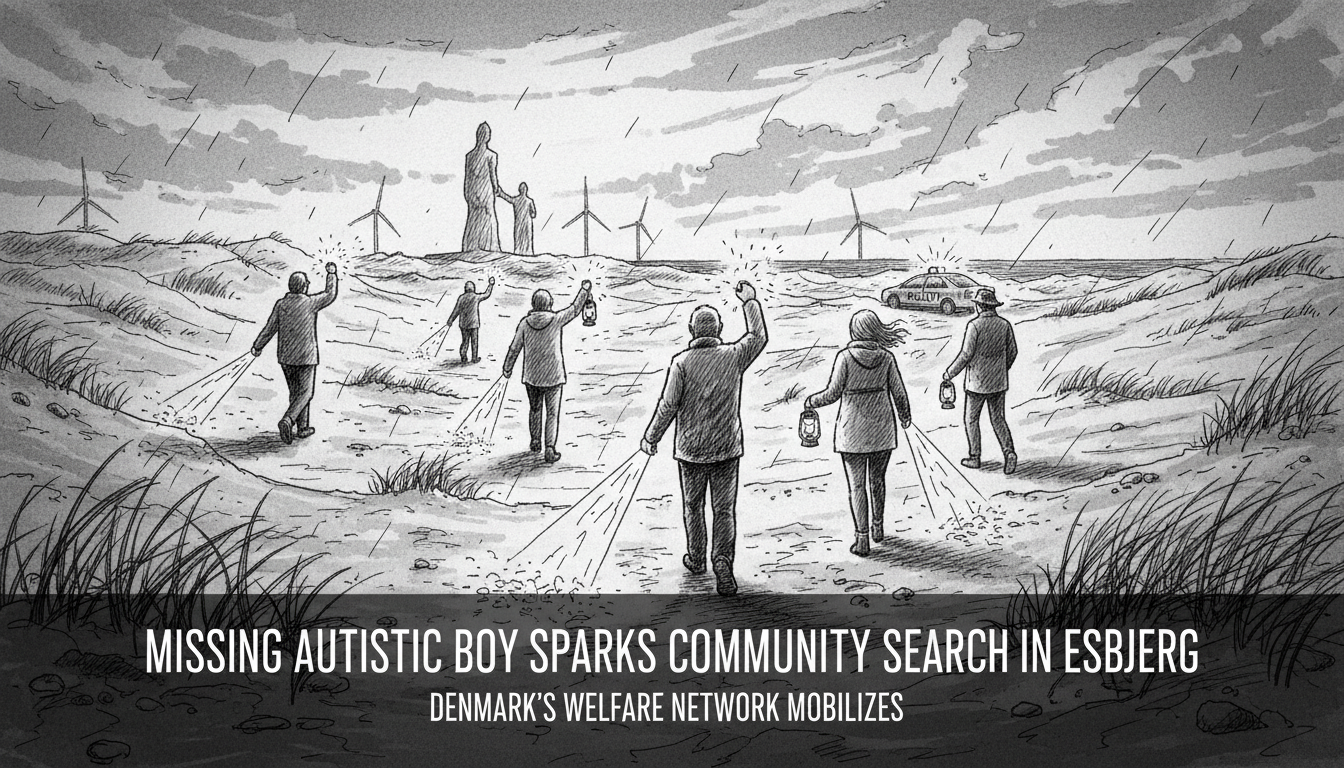
A 12-year-old autistic boy has disappeared in Esbjerg, triggering an extensive police search and community mobilization. Marco Boysen was last seen leaving his Kvaglund home for school on Friday morning at 8:00. He was wearing distinctive clothing including a blue hat, orange neck warmer, and dark blue pants. The boy carried his school backpack along with a bag containing a pillow and stuffed animal, plus a separate black bag with red stripes.
Police emphasize the urgency of this case given the child's autism and noted he typically avoids social interaction. Authorities have launched a public witness appeal through social media channels. They ask anyone with information to contact police immediately at the emergency number.
This incident highlights broader questions about support systems for neurodivergent children in Danish communities. Esbjerg, like many Danish municipalities, has developed specialized programs for autistic residents through local social centers. Yet cases like this reveal potential gaps in community safety nets.
Danish integration policies have increasingly focused on supporting vulnerable populations within the welfare system. The country's social policy framework provides substantial resources for disability services. However, practical implementation often depends on local municipality capacity and community awareness.
Education statistics show Denmark has made progress in inclusive schooling approaches. Approximately 87% of autistic children attend mainstream schools with support. Still, incidents of vulnerable children going missing raise concerns about whether current systems provide adequate protection.
Community leaders in Esbjerg have historically emphasized strong neighborhood networks as crucial for integration success. Local social centers coordinate volunteer programs that check on vulnerable residents. These community-based approaches represent key elements of Denmark's social policy model.
The current search operation demonstrates how Danish authorities mobilize multiple resources for missing children cases. Police coordinate with municipal services, schools, and community organizations. This integrated response reflects Denmark's comprehensive approach to child welfare.
What additional safeguards might prevent similar incidents? Some experts suggest enhanced tracking systems for vulnerable children while others emphasize community education. The Danish welfare system continues evolving to address these complex challenges.
As search efforts continue, the case underscores ongoing discussions about integration and support within Danish society. It raises important questions about how communities protect their most vulnerable members while respecting individual autonomy.