
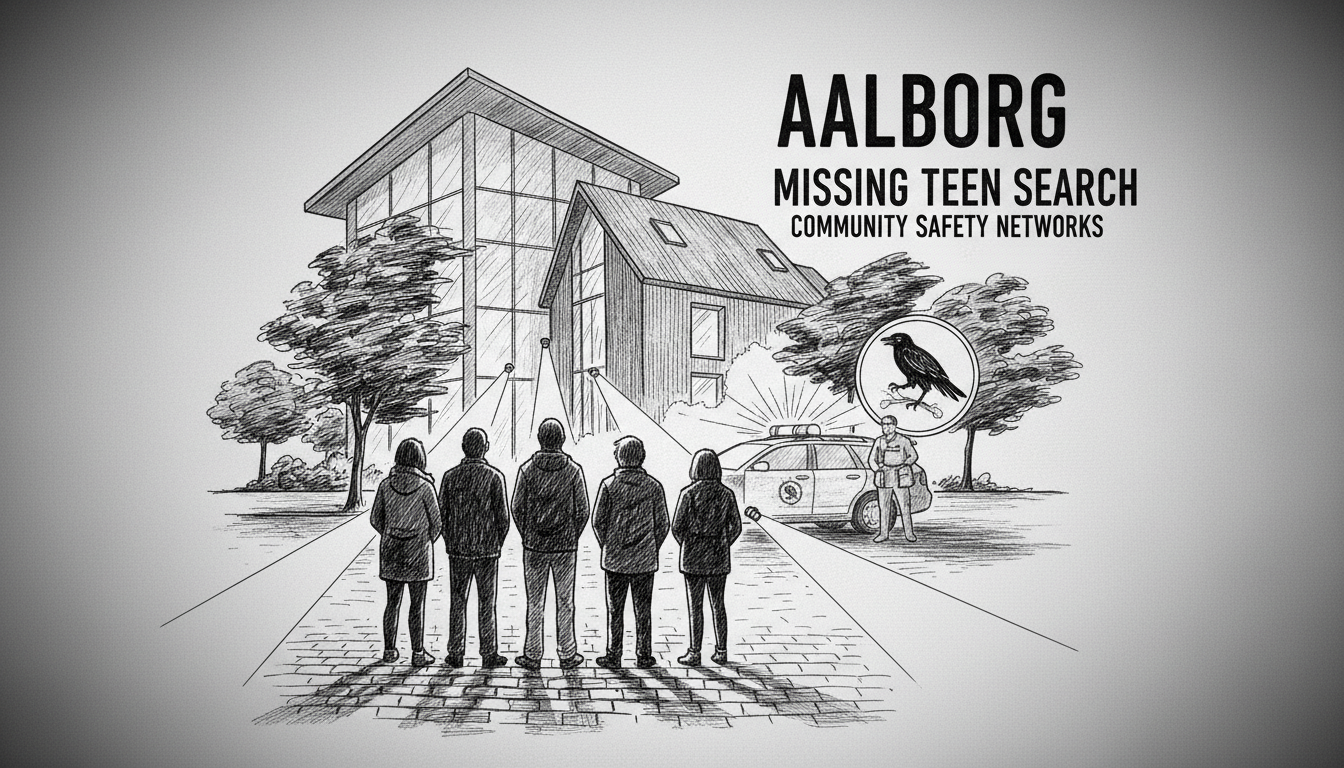
A community in northern Denmark mobilized on Thursday evening after a fourteen-year-old boy went missing. Police in North Jutland issued a public appeal for help locating Casper, who was last seen leaving Musikkens Hus, a prominent cultural venue in Aalborg, around 8:15 PM. The teenager has dark hair and an average build, and he was wearing a light blue hooded sweatshirt at the time of his disappearance. Authorities urged anyone with information to call the national police non-emergency line immediately.
This incident, while a specific police matter, opens a window into the broader Danish social safety net. Denmark's welfare system is often praised for its comprehensive support structures. These structures extend from national policy down to local municipal actions and community centers. In cases involving young people, especially outside major metropolitan areas like Copenhagen, the response involves a coordinated network. Police work closely with social services and local community organizations that monitor youth engagement and wellbeing.
Integration and social policy experts note that such events test the connective tissue of Danish society. For international observers, the swift public alert system demonstrates a societal priority on child safety. The system relies on public vigilance and trust in authorities, a cornerstone of the Danish social contract. Statistics from recent years show high levels of public cooperation with police in similar cases, a factor often linked to broad societal trust.
The location of the disappearance is notable. Musikkens Hus is a central cultural hub in Aalborg. It is a place designed to bring people together through music and events. Its use by young people is actively encouraged as part of social and cultural integration efforts. When a teenager goes missing from such a venue, it resonates deeply within the local community. It prompts questions about outreach, evening activities for youth, and the role of public spaces in fostering safe environments.
Community leaders in integration work often stress the importance of these shared, neutral spaces. They argue that well-used public venues are vital for social cohesion. They provide common ground for young people from diverse backgrounds. The immediate police response and public appeal in this case reflect a standard operational procedure. Yet, the underlying context is a society constantly negotiating between individual freedom and collective security. The Danish model depends on functional municipal services and an active, caring citizenry to support its famed quality of life.
What happens next will follow a standard protocol. Police will continue their search, leveraging local networks. Social services may become involved to provide support to the family. The incident will likely be reviewed by local officials to see if any preventative lessons can be learned regarding youth activity after dark. For now, the focus remains on a safe reunion. The public appeal underscores a simple, powerful principle in Danish social policy: protecting the young is a shared responsibility that transcends bureaucratic categories.