
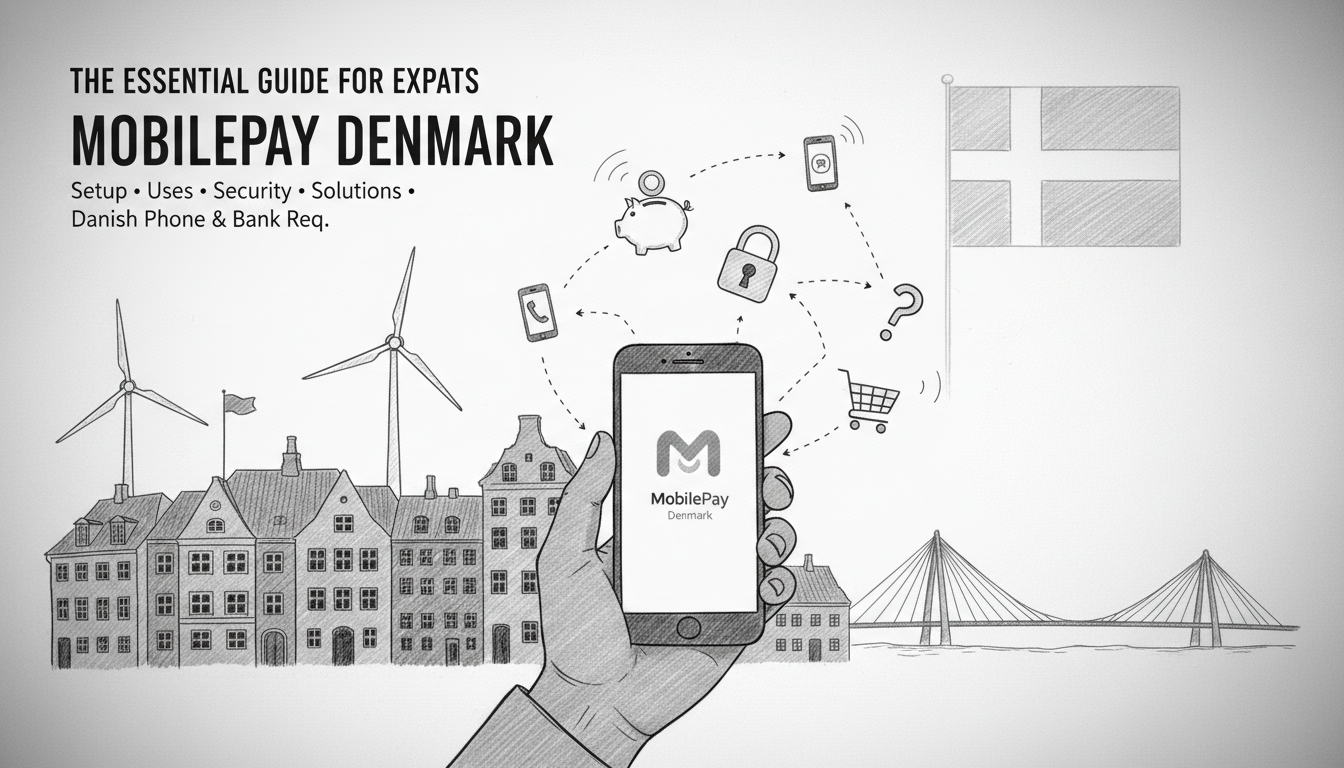
In Denmark, cash is nearly extinct. MobilePay processes over 100 million transactions monthly. For newcomers, this app is not optional. It is the primary way Danes split bills, pay merchants, and send money. Understanding MobilePay is essential for daily life.
Getting Started with MobilePay
First, download MobilePay from your app store. The app requires a Danish phone number. You must link a Danish bank account or debit card. Most major banks like Danske Bank, Nordea, and Jyske Bank work. Foreign credit cards often fail. The setup takes about 10 minutes. Verification involves a text message code.
Once registered, you create a profile. Use your real name. Friends find you by phone number. You can add a photo for recognition. The interface is in Danish by default. Switch to English in settings immediately. The app is free for personal use. Businesses pay a small fee per transaction.
Tools
Call home for less
Save up to 90% on international calls to family and friends.
Links may be monetized via affiliate partners.
Three Essential Use Cases
Splitting Bills at Restaurants
Danes rarely use cash for group meals. When dining out, one person pays the full bill. Others then send their share via MobilePay. For example, a meal costs 600 kroner for three people. Each person sends 200 kroner to the payer. This happens instantly. No one calculates exact change. Restaurants like Gasoline Grill and Höst expect this method.
Paying at Small Shops and Markets
Many small vendors only accept MobilePay or cash. At a Copenhagen flea market, a vintage lamp costs 350 kroner. The seller displays their MobilePay QR code. You scan it with your phone. Enter the amount and confirm. The payment completes in seconds. Farmers' markets, food trucks, and craft stalls operate similarly. Always ask before assuming card payment works.
Sending Money to Friends and Landlords
Rent splits, gift contributions, and shared costs flow through MobilePay. Your landlord might request rent via the app. You send the exact amount on the first of the month. For a birthday gift, friends collect money digitally. One person coordinates and transfers the total. This eliminates bank transfers and delays. Transactions appear in your bank statement within a day.
Security and Limits
MobilePay uses bank-level security. Each payment requires your PIN or biometric confirmation. The app notifies you for every transaction. You can set a daily spending limit. The default is often 10,000 kroner. You can lower this in settings. For lost phones, immediately contact your bank. They can block MobilePay access. Never share your PIN.
Common Pitfalls and Solutions
New users sometimes send money to wrong numbers. Double-check the recipient's name before confirming. If you make a mistake, contact MobilePay support quickly. They can sometimes reverse transactions. Another issue involves international numbers. The app requires a Danish number to function. Getting a local SIM card is the first step. You can buy one at any Telia or 3 store for about 100 kroner.
Some expats struggle with Danish bank accounts. Opening one takes weeks. You need a CPR number and proof of address. Until then, you cannot use MobilePay fully. Consider alternatives like cash or Revolut for small payments. Once your bank account activates, switch to MobilePay for convenience.
Frequently Asked Questions
Can I use MobilePay without a Danish bank account?
No. You must link a Danish debit card or bank account. Foreign credit cards rarely work. Some digital banks like Lunar or Revolut offer Danish account details. These might function with MobilePay. Check with the bank first.
What are the costs for using MobilePay?
Personal use is free. Sending money to friends costs nothing. Businesses pay 1% per transaction, capped at 5 kroner. Withdrawing money to your bank account is free. There are no monthly fees.
How long do transfers take?
Transfers between MobilePay users are instant. Moving money to your bank account takes one business day. Weekends might delay processing until Monday.
Is MobilePay safe for large payments?
Yes, but use caution. The app has strong security features. Verify the recipient's identity thoroughly. For apartment deposits, consider a bank transfer instead. It provides more documentation.
Can I use MobilePay in other Nordic countries?
MobilePay works in Denmark only. Finland and Norway have separate systems. In Sweden, Swish dominates mobile payments. Do not expect MobilePay to function abroad.
What if I lose my phone?
Contact your bank immediately. They can disable MobilePay access. You can also log into your bank's website. Some banks let you block the app remotely. Report the loss to the police if needed.
Are there transaction limits?
Yes. Default daily limits are often 10,000 kroner. You can adjust this in the app settings. Lower limits improve security. Higher limits require bank approval.
The Future of Payments
MobilePay continues evolving. New features include business invoices and charity donations. The app integrates with more online stores each month. For expats, mastering MobilePay is a critical step. It unlocks seamless social and commercial interactions. Life without it is possible but inconvenient. Embrace the system most Danes use daily.