
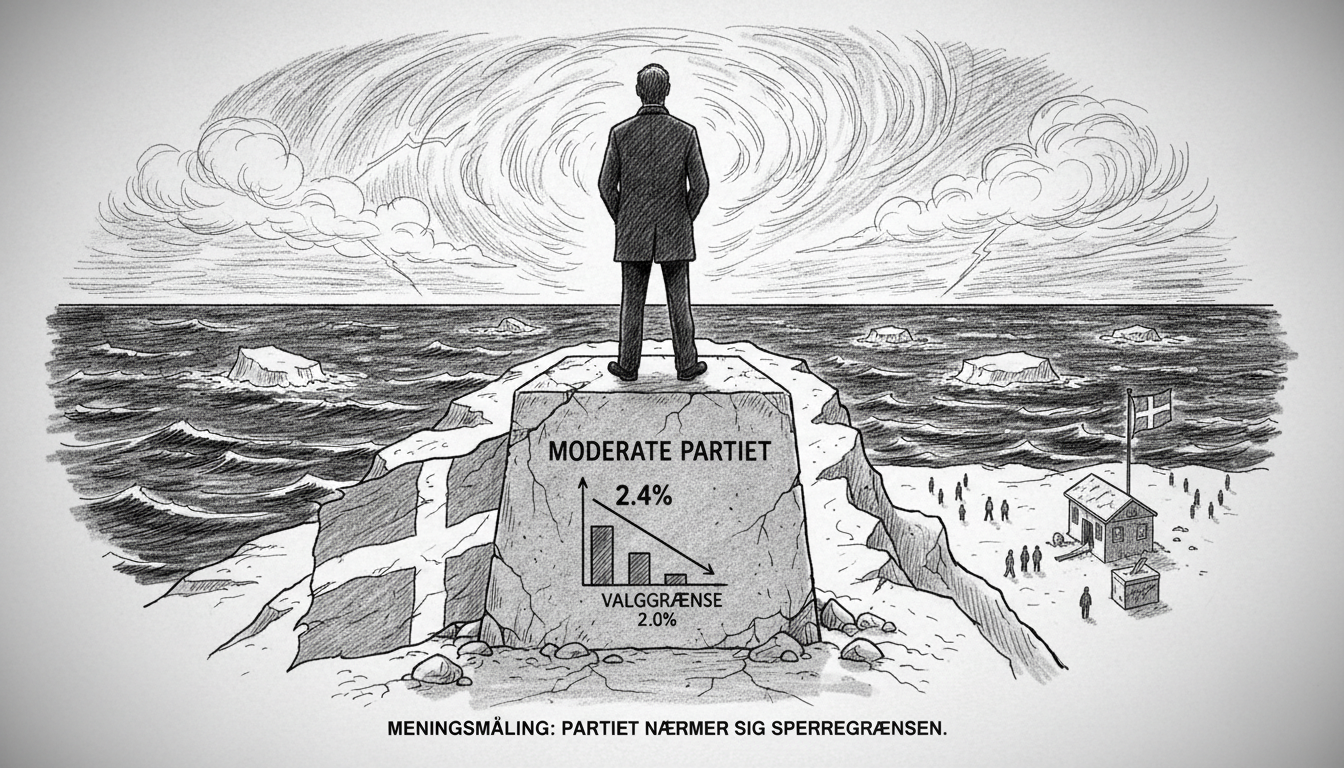
Denmark's Moderate Party faces a critical moment as new polling shows the governing party dangerously close to falling below the electoral threshold. Recent survey data reveals the party now stands at just 2.4 percent voter support, barely above the 2 percent minimum required for parliamentary representation. This represents the lowest polling numbers for the Moderates since their entry into government.
The party's decline appears consistent across multiple measurements. Support dropped from 3.1 percent two weeks ago to 2.9 percent last week before reaching the current concerning level. The statistical uncertainty of 0.9 percentage points means the party could theoretically already be below the threshold in reality.
This dramatic slide contrasts sharply with the party's electoral performance just two years ago. During that campaign, the Moderates surged forward to capture 9.3 percent of votes and 16 parliamentary seats. Party leader Lars Løkke Rasmussen translated that support into government participation, but the journey since has been challenging.
The party has faced several high-profile media controversies and lost two parliamentary members. These developments have clearly impacted voter confidence. The timing of this poor polling comes immediately following Denmark's municipal and regional elections, where the Moderates performed even worse.
At the municipal level, the governing party secured only 1.3 percent of votes nationwide. This translated to just six mandates across Denmark's 98 municipalities. Before these local elections, the party counted 31 members in city councils and municipal boards, primarily politicians who had switched from other parties.
Regional elections offered slightly better results with 1.8 percent support and a single mandate in Region East Denmark. The modest improvement provides little comfort given the broader downward trend.
Party leader Rasmussen addressed the election results with measured words. He stated he refuses to stand as a bitter and disappointed man about the outcome. The leader expressed satisfaction that the party secured representation in five municipalities with absolute certainty, though he spoke before the final mandate was confirmed.
The Moderate Party's situation reflects broader challenges within Danish coalition politics. Governing parties often face difficult balancing acts between policy implementation and maintaining voter enthusiasm. The proximity to the electoral threshold creates practical governing concerns beyond mere political embarrassment.
Parties below the threshold cannot participate in proportional mandate distribution. This would eliminate the Moderates' parliamentary influence despite their current government position. The statistical uncertainty in current polling means the party leadership cannot even be certain they remain above the critical line.
Danish political observers note that the Moderate Party's centrist positioning creates particular challenges. They must distinguish themselves from both left and right while demonstrating concrete achievements to voters. The recent local election results suggest this balancing act has proven difficult in practice.
The coming months will prove crucial for the party's survival. They must rebuild voter trust while continuing their governing responsibilities. How they navigate this period could determine whether Denmark's political landscape maintains its current configuration or undergoes significant rearrangement.