
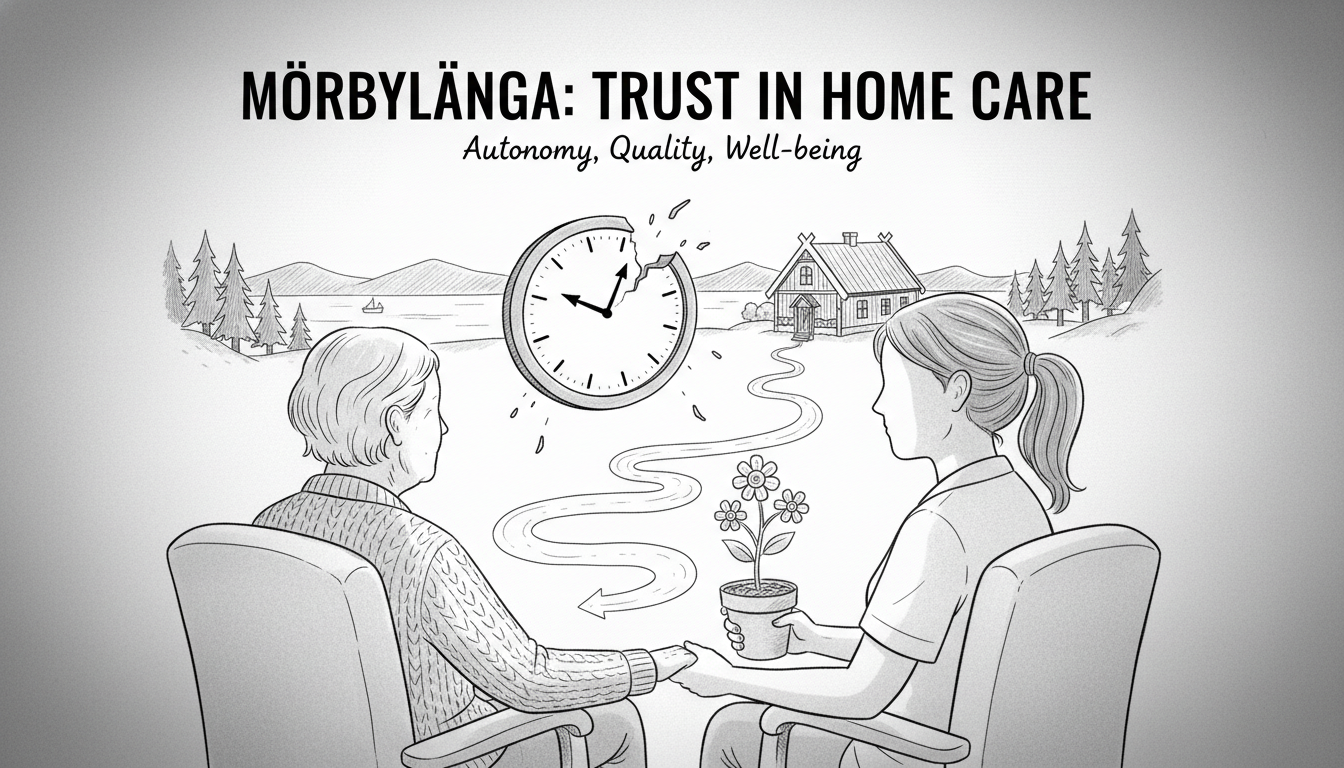
A Swedish municipality has eliminated strict time monitoring for its home care workers. Mörbylånga removed minute-by-minute scheduling in home care services during the fall of 2021. The change came after signals of poor work environment and services not meeting user needs.
Now staff set their own schedules in a trust-based system. All work groups in the municipality report less stress despite having larger responsibility areas than before.
The entire system operates on trust according to care worker Emelie Fransson. She said managers trust that staff know what is best for users and can take responsibility.
Template times that dictated how long each task should take went straight in the trash. Fransson explained it was stressful constantly seeing countdowns in phones. Those template times did not match reality she noted.
After staff took over scheduling responsibility, they created much more flexible timetables. The new approach also made it easier to adjust when emergency calls come in.
Emergency alerts now connect directly to care staff. They decide how to prioritize and whether to call emergency services.
Care plans develop together with users. This allowed home care services to reduce unnecessary trips.
Liane Nilsson receives home care in Mörbylånga municipality. She previously received eye drops at 5:00 PM but found this unnecessary. Now staff administer them during lunchtime visits instead.
Liane moved from three daily visits to two. This change saved staff time significantly.
The number of approved home care hours has decreased in recent years. Overtime costs dropped each year under the new model.
Overtime spending reached nearly two million kronor in 2022. Two years later it stood at 753,000 kronor.
This Swedish approach shows how trusting professional caregivers can improve both working conditions and service quality. The model demonstrates that rigid time controls often create inefficiencies rather than solving them.