
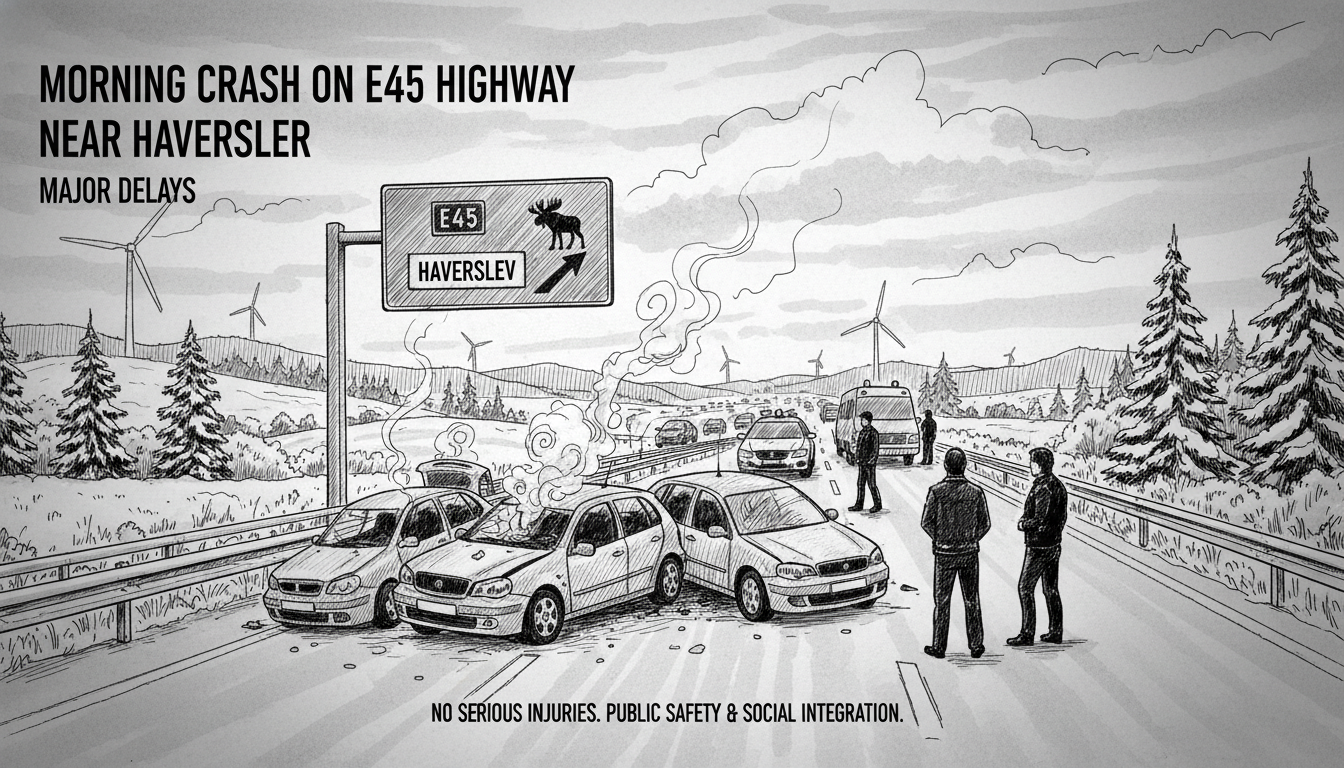
A multi-vehicle collision on Denmark's E45 motorway south of Haverslev caused significant traffic disruptions during the Thursday morning commute. Authorities reported three cars were involved in the southbound lanes, blocking traffic and creating queues with delays of up to thirty minutes. Emergency services responded quickly, and police confirmed no serious injuries resulted from the incident. The road remained closed for cleanup operations, with drivers advised to exercise caution due to sudden braking risks.
This routine traffic incident, while minor in outcome, offers a lens into the daily pressures on Denmark's infrastructure and the societal systems that respond. As a reporter focused on integration, I see these events through a dual lens. The efficient response by Nordjyllands Police and road authorities reflects the high-functioning public systems many Danes rely on. For new residents and international commuters, understanding these protocols is part of navigating Danish society. The immediate public messaging on social media, advising careful driving, exemplifies the direct communication style prevalent here.
Denmark's welfare system extends into public safety and traffic management, with coordinated responses between police, rescue services, and the Road Directorate. Municipalities like those in North Jutland manage local consequences, such as redirecting traffic through alternative routes. Social centers and community networks often become informal information hubs during such disruptions, especially for residents less fluent in Danish who might miss rapid-fire traffic alerts.
Statistics often highlight successful integration through employment or education metrics. Yet, daily life integration involves navigating these mundane systems. A traffic jam on the E45 affects the Danish worker, the international student, and the newly arrived family equally. The response demonstrates a societal expectation of collective responsibility. Officials tell drivers to be careful, trusting public compliance. This reflects a broader social contract where individual action supports communal welfare, a concept central to understanding Danish social policy.
The incident's resolution was swift, with no serious injuries—a positive outcome. But it underscores a constant tension. Denmark invests heavily in its social and physical infrastructure to ensure safety and efficiency. Events like this test that infrastructure. For Copenhagen integration specialists and policymakers, the seamless operation of these systems is a benchmark of societal health. When they function well, they support all residents. When strained, they reveal gaps that can affect newer community members most acutely. The real test of any immigration policy is not just at the border, but on highways like the E45 during a morning crisis, where everyone must navigate the same rules and the same delays.