
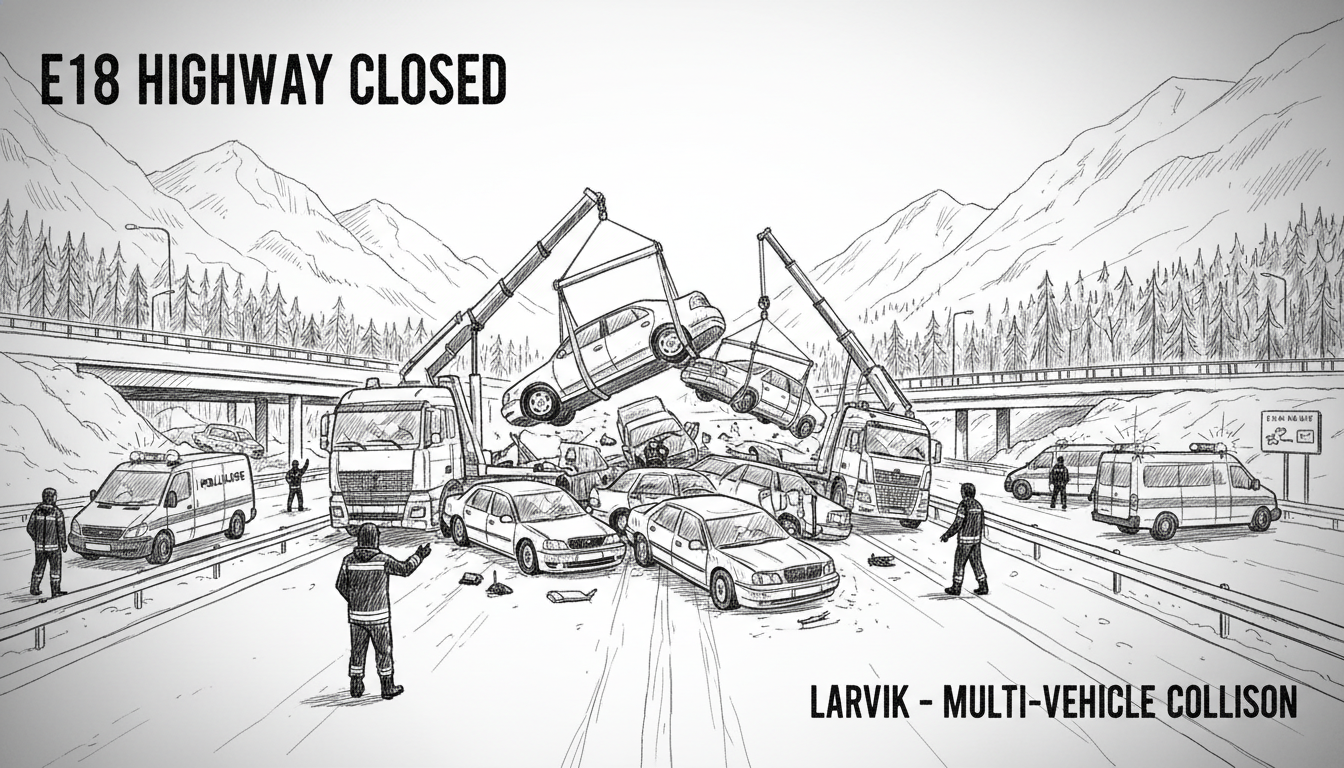
A serious multi-vehicle collision disrupted traffic on Norway's vital E18 highway near Larvik on Saturday evening. The incident involved six vehicles traveling in the same direction toward Porsgrunn. Emergency services responded quickly to the scene as material damage mounted across several vehicles.
Police operations manager Espen Reite confirmed the highway's Porsgrunn-bound lanes have now reopened to traffic. Three vehicles required towing services due to extensive damage. Ambulance personnel assessed all involved parties at the scene. Medical transport to emergency clinics remains under consideration according to official statements.
This highway disruption carries economic implications beyond immediate traffic delays. The E18 serves as a critical transportation corridor connecting Oslo to southern coastal regions. Any closure affects commercial transport and regional mobility. The incident occurred during weekend travel hours when highway usage typically peaks.
Norwegian highway safety records generally rank among Europe's best. Yet this collision highlights persistent challenges facing the country's transportation infrastructure. Aging road networks require continuous maintenance and upgrades. The Larvik area specifically handles substantial traffic volumes from both local commuters and international freight.
Emergency response protocols demonstrated effectiveness in this situation. Police established traffic control measures while medical teams evaluated potential injuries. The coordinated effort prevented secondary incidents and ensured prompt lane reopening. Such response capabilities remain essential along Norway's extensive highway system.
Infrastructure maintenance represents an ongoing priority for Norwegian authorities. Road safety improvements frequently feature in parliamentary transportation committee discussions. The Storting continues allocating substantial budgets to highway upgrades and safety enhancements nationwide.
Regional development depends heavily on reliable transportation networks. The E18's temporary closure illustrates how single incidents can disrupt economic activity across multiple municipalities. Business transport, tourism flows, and daily commuting all face immediate impacts from such highway incidents.
Norwegian drivers should anticipate possible residual delays as traffic normalizes. Authorities typically conduct post-incident reviews to identify potential safety improvements. These assessments often lead to targeted infrastructure upgrades or modified traffic management strategies.
The Larvik area's highway network remains crucial for both regional connectivity and national transportation systems. This incident serves as a reminder of infrastructure's vulnerability to unexpected disruptions. Continuous investment in road maintenance and safety technology represents the most effective preventive measure against future occurrences.