
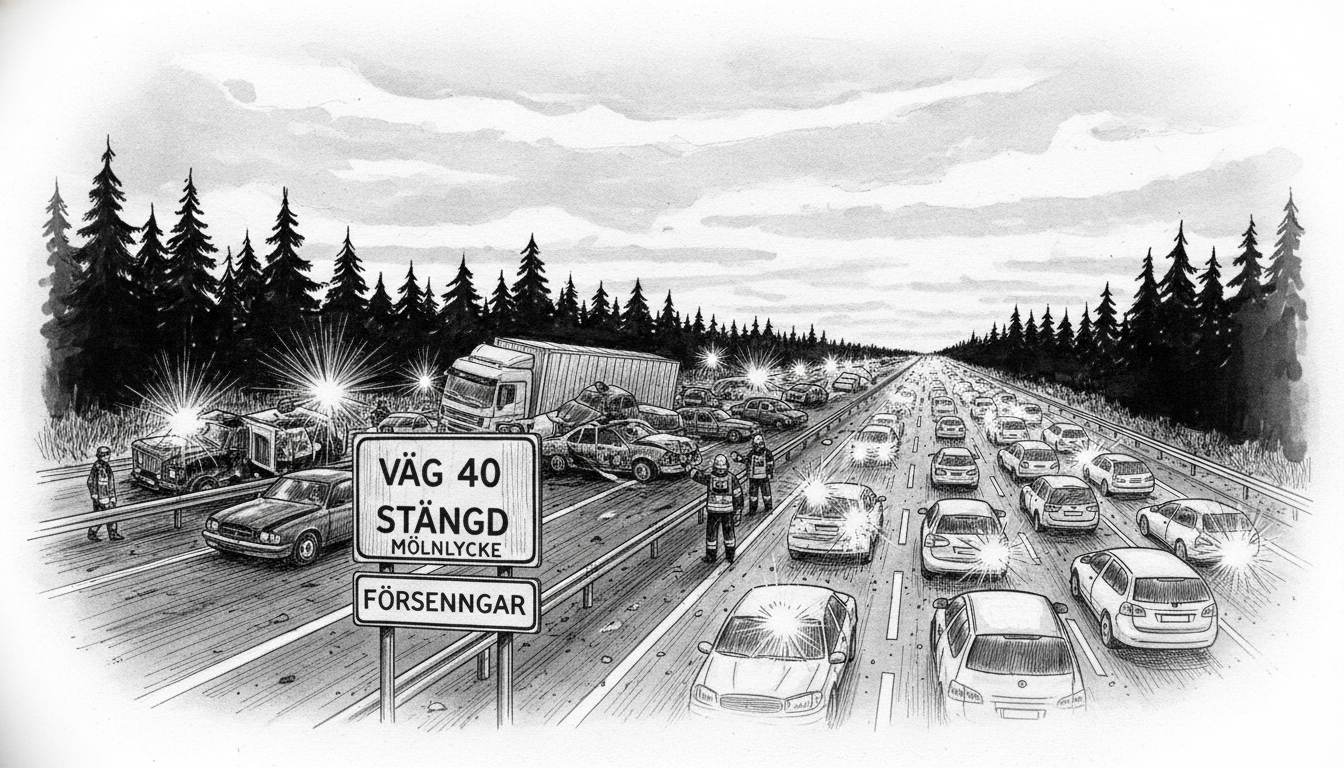
A serious multi-vehicle collision has shut down Highway 40 near the Mölnlycke interchange during Monday morning rush hour. The accident occurred around 7 AM, creating extensive traffic delays for commuters heading toward Gothenburg. Traffic cameras show long queues building as emergency services work at the scene.
This stretch of Highway 40 serves as a crucial artery connecting Gothenburg with surrounding municipalities. Morning commutes along this route typically see heavy traffic as workers travel from residential areas to Sweden's second-largest city. The timing of this accident during peak travel hours means thousands of commuters face significant disruptions to their daily routines.
Swedish highway safety records show these types of multi-vehicle incidents often occur during changing weather conditions or reduced visibility. While we don't have specific details about this crash's cause, morning commutes in Western Sweden frequently involve challenging driving conditions during transitional seasons. The region's coastal climate can create unexpected fog patches or slippery roads that catch drivers off guard.
For international readers unfamiliar with Swedish infrastructure, it's worth noting that Highway 40 represents one of several major routes connecting Gothenburg to eastern regions. When accidents close these vital corridors, the ripple effects extend throughout the transportation network. Commuters often face few practical alternatives, which explains the immediate buildup of lengthy queues.
Local emergency response protocols typically involve multiple agencies coordinating to clear accidents efficiently. Swedish traffic management systems are generally well-regarded, but even the most advanced infrastructure cannot prevent all incidents during dense commuting periods. The economic impact of these disruptions extends beyond individual inconvenience to affect business operations and delivery schedules across the region.
What does this mean for travelers today? Expect continued delays throughout the morning as investigators document the scene and crews work to clear damaged vehicles. Commuters should check real-time traffic updates and consider alternative routes if possible. These incidents serve as important reminders about maintaining safe following distances and adjusting speed to match road conditions, especially during busy travel periods.
The human cost of such accidents extends beyond traffic delays to potential injuries and vehicle damage. While Swedish roads maintain good safety records overall, morning rush hours present particular challenges as tired drivers navigate congested routes. Today's incident highlights the ongoing need for vigilance on Sweden's highways during peak travel times.