
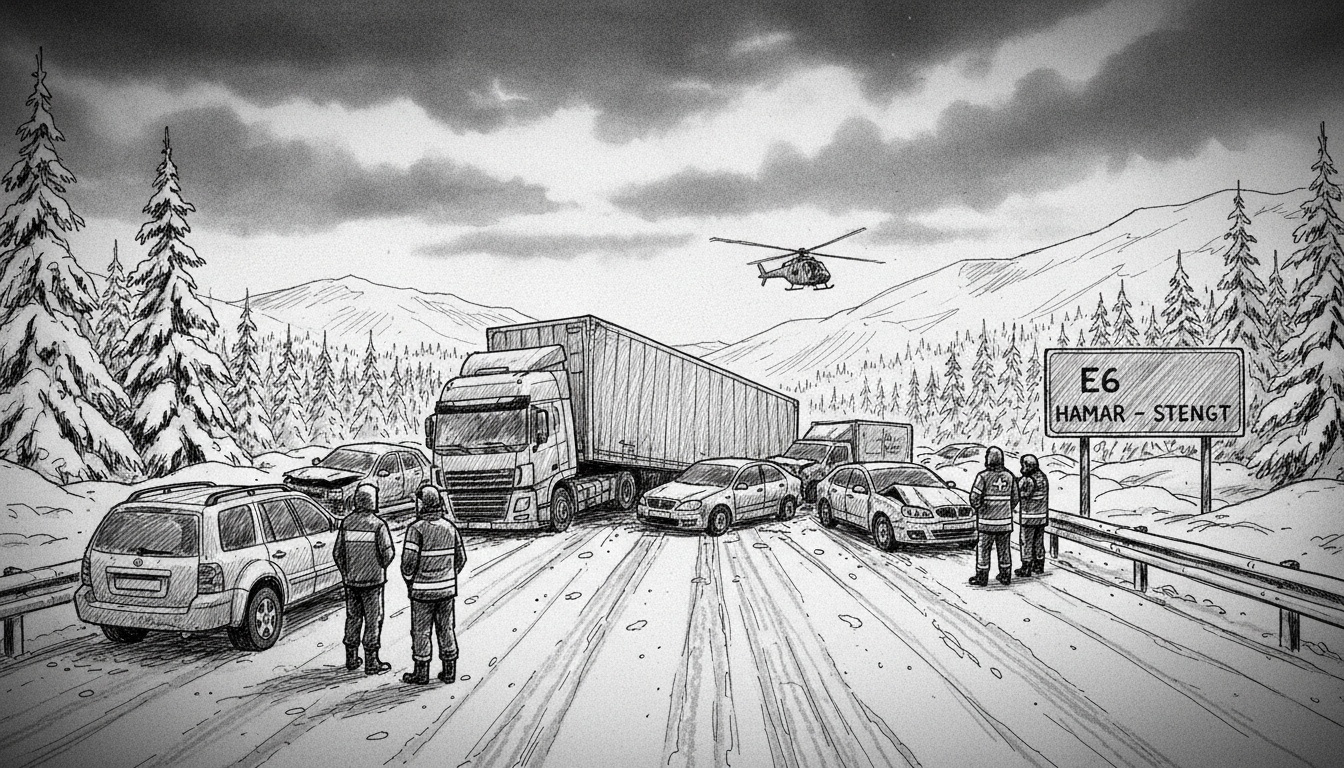
Eastern Norway experienced dangerous driving conditions with multiple vehicles sliding off roads during morning hours. Emergency services responded to numerous incidents across the region's major transportation corridors. The E6 highway near Hamar saw complete traffic stoppage after vehicles lost control on icy surfaces. A separate collision between a truck and wheel loader occurred in Hurdal during Friday morning commute hours. All emergency units deployed to manage the hazardous situation.
Norwegian winter road maintenance faces scrutiny following these incidents. The Eastern Norway region contains critical transportation infrastructure connecting Oslo to northern regions. Highway E6 serves as the main arterial road for both passenger and commercial traffic. This vital corridor supports Norway's export economy by connecting industrial centers to coastal ports. Road safety directly impacts the nation's economic output during winter months.
Norway's Public Roads Administration maintains strict winter maintenance protocols. The agency deploys over 2,000 snowplows and spreads thousands of tons of salt annually. Despite these measures, sudden temperature fluctuations create black ice conditions that challenge even experienced drivers. The mountainous terrain around Hamar and Hurdal creates particular microclimates where road conditions change rapidly.
International readers should understand Norway's unique transportation challenges. The country spans 13 degrees of latitude with dramatic elevation changes. Winter driving requires specialized skills and equipment that many foreign visitors lack. Norwegian authorities recommend winter tires from November through April, but even these prove insufficient during extreme ice events. The government continues investing in road heating systems and improved weather forecasting to reduce accident rates.
These incidents highlight the ongoing balance between mobility and safety in Nordic countries. Norway maintains one of Europe's lowest traffic fatality rates despite harsh winter conditions. The country's systematic approach to winter road management includes continuous monitoring and rapid response capabilities. Today's accidents demonstrate that even advanced infrastructure faces limitations against nature's unpredictability.
Transportation officials will likely review today's incidents to identify potential improvements. The concentration of accidents in specific areas suggests localized weather phenomena overwhelmed standard prevention measures. Norway's commitment to Vision Zero traffic safety means each incident receives detailed analysis. The findings could influence future winter maintenance strategies across Scandinavia's challenging transportation networks.