
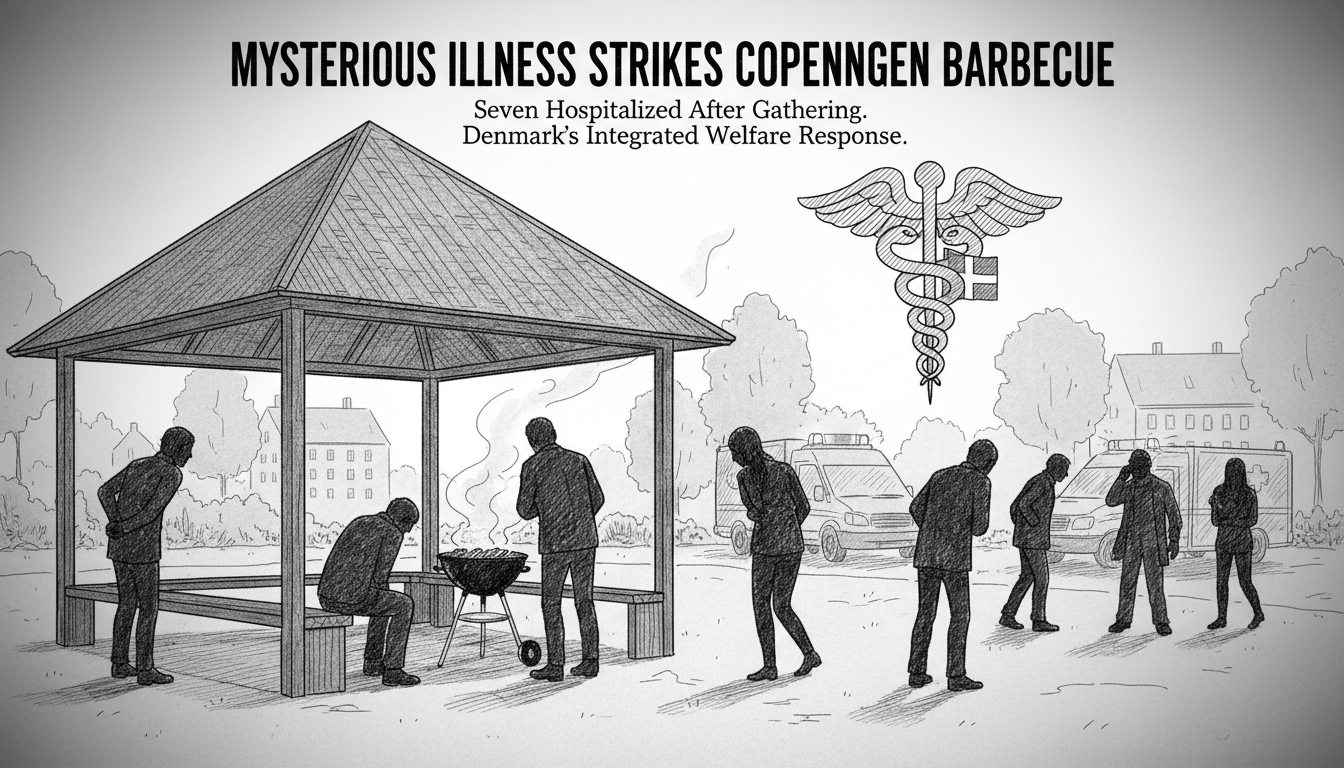
Emergency services rushed to a residential area in Taastrup this week after seven people simultaneously fell ill during an evening barbecue. Police, ambulances, and fire departments responded to Sankt Mikkels Alle following emergency calls reporting multiple individuals feeling unwell and some fainting. The incident occurred around 9:38 PM during an outdoor gathering where all affected persons were cooking together.
Copenhagen West Police operations manager Lars Guldborg described the puzzling situation. We received reports that they suddenly felt sick and some had fainted, he stated in a police briefing. The simultaneous nature of their symptoms immediately raised concerns about potential carbon monoxide poisoning. But investigators found this explanation unlikely despite the timing.
Medical professionals conducted on-site assessments and various measurements of the affected individuals. All test results fell within normal ranges according to official statements. Nothing at the location indicated what might have caused their sudden illness, Guldborg confirmed during the night operations.
All seven individuals were transported to hospital for precautionary examinations as emergency crews completed their work before midnight. The rapid response demonstrates Denmark's integrated emergency systems where police, medical, and fire services coordinate seamlessly in suburban Copenhagen areas. This incident highlights how Danish welfare systems prioritize preventive healthcare measures even when causes remain unclear.
Such community health incidents often prompt broader discussions about Copenhagen integration policies and public health monitoring. Denmark's social policy framework emphasizes early intervention and thorough medical follow-ups regardless of immediate findings. The Taastrup case reflects typical municipal responses where precaution outweighs convenience in healthcare decisions.
Danish society news frequently covers these integrated emergency responses that showcase the country's comprehensive welfare approach. The Danish welfare system maintains robust protocols for multi-agency coordination during public health concerns. This ensures consistent care standards across different municipalities and social service districts.
Denmark immigration policy and integration programs often intersect with public health initiatives in diverse communities. While this incident involved residents enjoying typical Danish summer activities, it demonstrates how social services respond uniformly across different neighborhood contexts. The equal treatment principle remains fundamental to Danish social policy implementation.
What causes sudden group illness without clear environmental factors? Medical professionals continue studying such cases to improve public health responses. The Taastrup incident represents ongoing challenges in community health monitoring where symptoms appear collectively but origins remain medically unexplained. Such events test the limits of current diagnostic capabilities within urban environments.
Community centers and local organizations often serve as first points of contact for health concerns in Danish neighborhoods. This infrastructure supports the broader social safety net that characterizes Denmark's approach to citizen wellbeing. The system aims to catch potential health issues early through coordinated municipal services.