
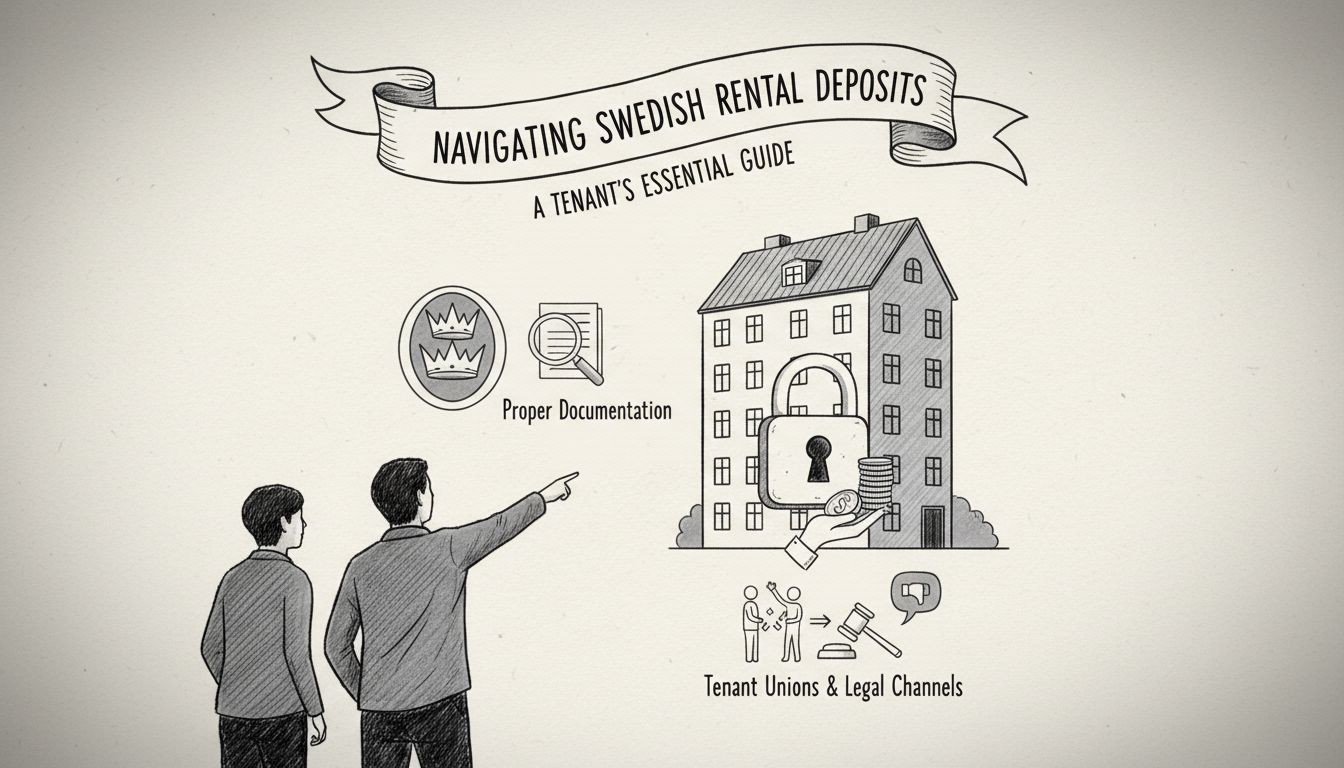
A tenant in Stockholm paid a 50,000 SEK deposit for a one-bedroom apartment. They moved out two years later. The landlord claimed damages worth 45,000 SEK. The tenant disputed this. They contacted the Swedish Union of Tenants. The union helped them recover 40,000 SEK. This story is common. Rental deposits in Sweden protect landlords. They also create risks for tenants. Understanding the system prevents financial loss.
How Swedish Rental Deposits Work
Swedish law caps deposits at three months' rent. Most landlords require one or two months. The deposit secures the property against damage. It also covers unpaid rent. Landlords must place deposits in special bank accounts. These accounts earn interest for tenants. The interest rate is low, often under 1%. Landlords cannot use deposit money for other purposes. Tenants receive a contract specifying the deposit amount. This contract includes bank account details. Tenants should verify this information immediately.
Deposit disputes often involve cleaning costs. A tenant named Linnea left her Gothenburg apartment spotless. The landlord still deducted 5,000 SEK for cleaning. Linnea had photos from move-in and move-out. She used these to challenge the deduction. She succeeded. Documentation is crucial. Always photograph the property before moving in. Use a checklist from the Swedish Union of Tenants. This checklist records the property's condition. Both parties should sign it. This prevents later disagreements over pre-existing damage.
Tools
Call home for less
Save up to 90% on international calls to family and friends.
Links may be monetized via affiliate partners.
Recovering Your Deposit Successfully
Start the process one month before moving out. Schedule a final inspection with the landlord. Use your original condition checklist. Note any new damage. Agree on necessary repairs. The landlord must provide a cost estimate for any deductions. Tenants can perform repairs themselves. This often costs less than the landlord's estimate. For example, repainting a wall might cost 2,000 SEK if you do it. A landlord might charge 5,000 SEK. Doing minor repairs yourself saves money.
Landlords must return deposits within a reasonable time. This usually means 30 days after move-out. Delays are common. Send a written reminder after 30 days. Use registered mail for proof. If the landlord still does not pay, contact the Swedish Enforcement Authority. You can file a claim online. The fee is 900 SEK for claims under 22,500 SEK. The authority will pursue the landlord legally. This process typically takes two to three months.
Some landlords use deposit insurance instead of cash deposits. Companies like Qasa and Hyresbostäder offer these plans. Tenants pay a monthly fee, often 5-10% of the deposit amount. This fee is non-refundable. The insurance company guarantees the deposit to the landlord. Tenants avoid large upfront payments. This option benefits people with limited savings. It costs more over time. A 10,000 SEK deposit insured at 8% monthly costs 800 SEK per month. Over a year, that totals 9,600 SEK. The tenant never gets this money back.
When Disputes Arise
The Swedish Union of Tenants provides free initial advice. Membership costs 100-200 SEK per month. Members get full legal support. The union wins about 80% of deposit cases. Another option is Allmänna reklamationsnämnden. This is the General Complaints Board. They handle consumer disputes. Their service is free. The process takes four to six months. For faster resolution, consider mediation. Many municipalities offer free mediation services. These sessions often resolve issues in weeks.
Landlords sometimes make unreasonable deductions. A tenant named Elias had 15,000 SEK deducted for 'wear and tear'. Normal wear and tear is not deductible. Swedish law distinguishes damage from normal use. Faded paint from sunlight is normal. A large hole in the wall is damage. Elias contested the deduction. He cited the Swedish Land Code. The landlord reduced the deduction to 3,000 SEK. Knowing the law protects tenants.
Frequently Asked Questions
What is the maximum rental deposit in Sweden?
The maximum is three months' rent. Most common deposits are one or two months' rent. First-time tenants often pay two months. Long-term tenants might negotiate one month.
How long can a landlord hold my deposit after I move out?
Landlords should return deposits within 30 days. Delays beyond 45 days warrant a formal complaint. Contact the Swedish Union of Tenants if delays exceed 60 days.
Can a landlord deduct for normal wear and tear?
No. Normal wear and tear includes faded paint, worn carpets, and minor scratches. Landlords cannot charge for these. They can charge for damage beyond normal use.
What proof do I need to recover my full deposit?
Take dated photos before moving in and after moving out. Use the Swedish Union of Tenants' condition checklist. Get the landlord's signature on it. Keep all communication in writing.
Are there alternatives to paying a large cash deposit?
Yes. Deposit insurance from Qasa or Hyresbostäder lets you pay monthly. You pay 5-10% of the deposit amount each month. This costs more over time but requires less upfront cash.
What if my landlord refuses to return my deposit?
First, send a written demand. Then contact the Swedish Union of Tenants. Finally, file a claim with the Swedish Enforcement Authority. The claim fee starts at 900 SEK.
Do I get interest on my deposit?
Yes. Landlords must place deposits in interest-bearing accounts. Interest rates are low, often below 1%. You receive interest when the deposit is returned.