
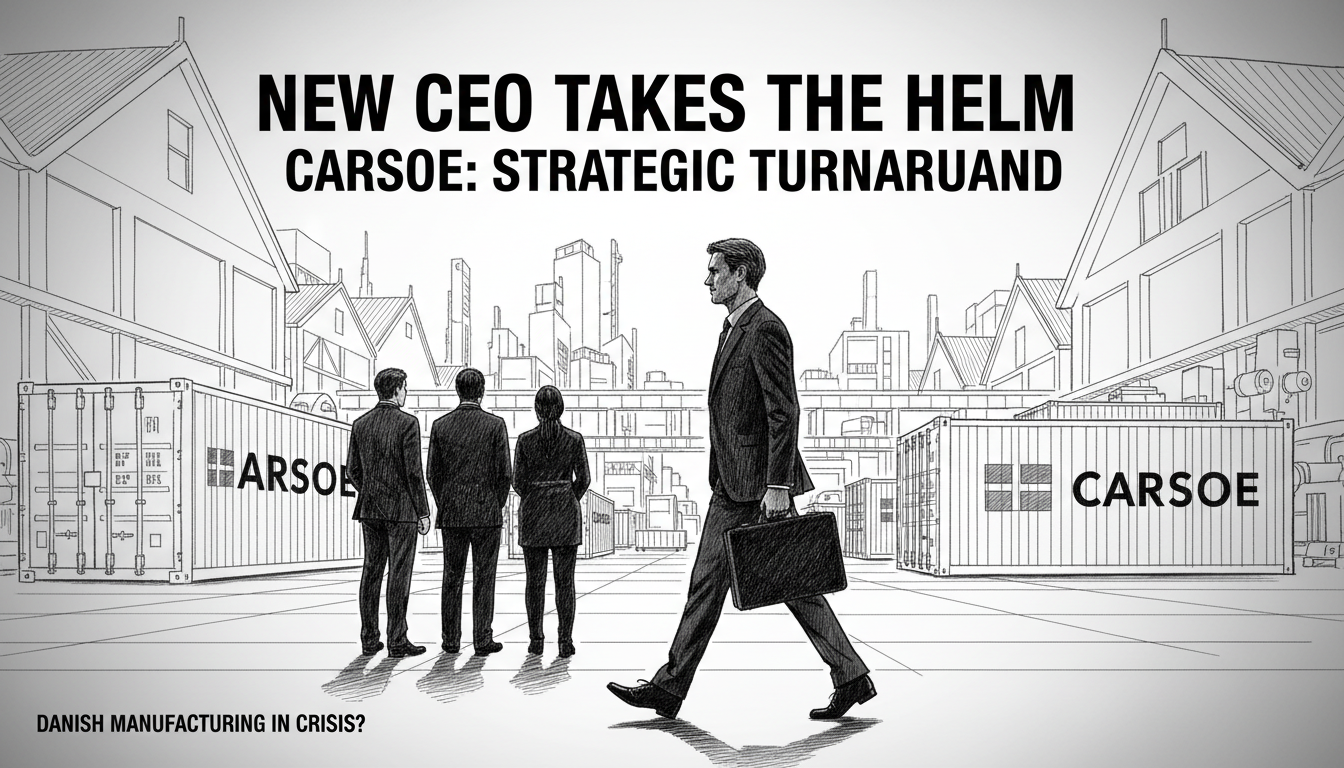
Danish industrial manufacturer Carsoe has appointed a new chief executive to steer the company out of a deep financial crisis. Søren Klyvø assumed the role on December 1, following the abrupt dismissal of the previous managing director two weeks prior. The move comes after three consecutive years of heavy losses totaling 228 million Danish kroner, a situation the board has deemed unsustainable. This leadership shake-up signals a critical turning point for a key player in Denmark's industrial export sector, which is closely watched by investors on the Copenhagen stock exchange.
The board has set clear and demanding expectations for the incoming CEO. They require an immediate strategic shift to halt the financial bleeding and return the company to profitability. Carsoe's performance directly impacts regional employment and contributes to Denmark's broader trade figures, particularly within specialized industrial exports. The company's struggles reflect the intense competitive pressures facing mid-sized European manufacturers, even within Denmark's traditionally strong industrial base. Can a single leadership change reverse three years of negative momentum? That is the multi-million kroner question now facing the board and employees.
Carsoe's challenges are not occurring in a vacuum. They arrive amid broader economic headwinds affecting manufacturing across the Øresund region, including rising energy costs and supply chain complexities. The appointment of Søren Klyvø suggests the board seeks operational expertise and a steady hand to navigate these turbulent conditions. His immediate task will be to stabilize operations, likely involving a thorough review of product lines, cost structures, and market positioning. The company's future is pivotal for its local community in Northern Jutland, where it is a significant employer and part of the regional economic fabric.
For international observers of Danish business news, this case is a telling example of corporate governance in action. The board's decisive move to replace leadership after sustained losses demonstrates a low tolerance for underperformance, a common trait in Denmark's transparent and accountability-driven corporate culture. The success or failure of this intervention will be measured in upcoming quarterly reports and will influence investor confidence in similar Danish industrial firms. The path to recovery will require more than new management; it demands a credible plan to adapt Carsoe's offerings to modern market demands while restoring fiscal discipline. The entire Copenhagen business community will be watching this turnaround attempt closely.